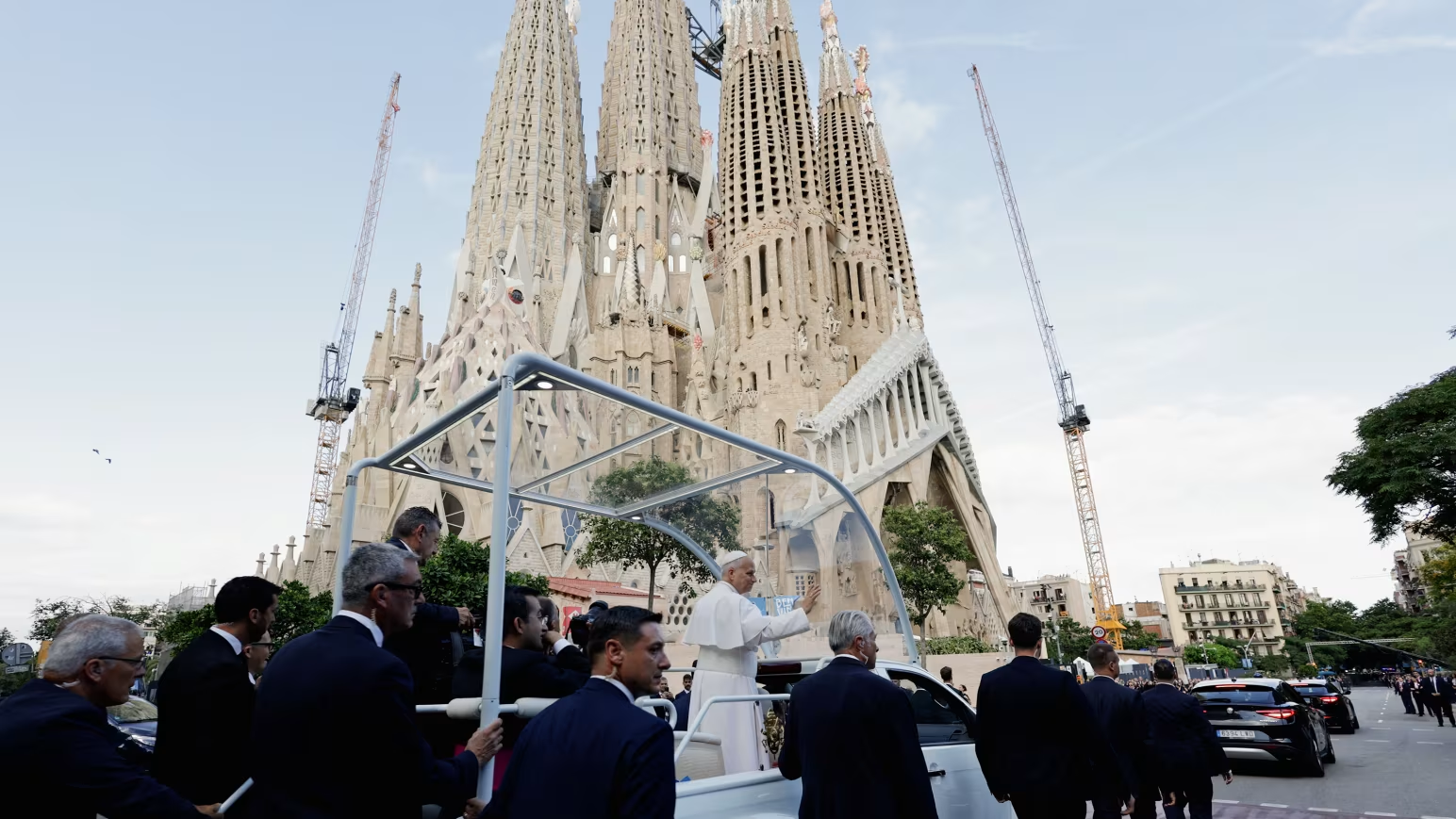
Pope Leo XIV Honors Sagrada Familia During Gaudí Centenary Celebration/ Newslooks/ WASHINGTON/ J. Mansour/ Morning Edition/ Pope Leo XIV celebrated the centenary of Antoni Gaudí’s death with a special Mass at Barcelona’s iconic Sagrada Familia Basilica. The pontiff inaugurated the basilica’s final Tower of Jesus Christ, completing its status as the world’s tallest church. The event drew massive crowds and highlighted both Gaudí’s architectural legacy and Spain’s enduring Catholic heritage.
Sagrada Familia Centenary Quick Looks
- Pope Leo XIV visited Barcelona for the first papal trip to Spain in 15 years.
- Mass commemorated 100 years since Antoni Gaudí’s death.
- The pope inaugurated the final Tower of Jesus Christ.
- Sagrada Familia is now the world’s tallest church.
- More than 120,000 people gathered around the basilica.
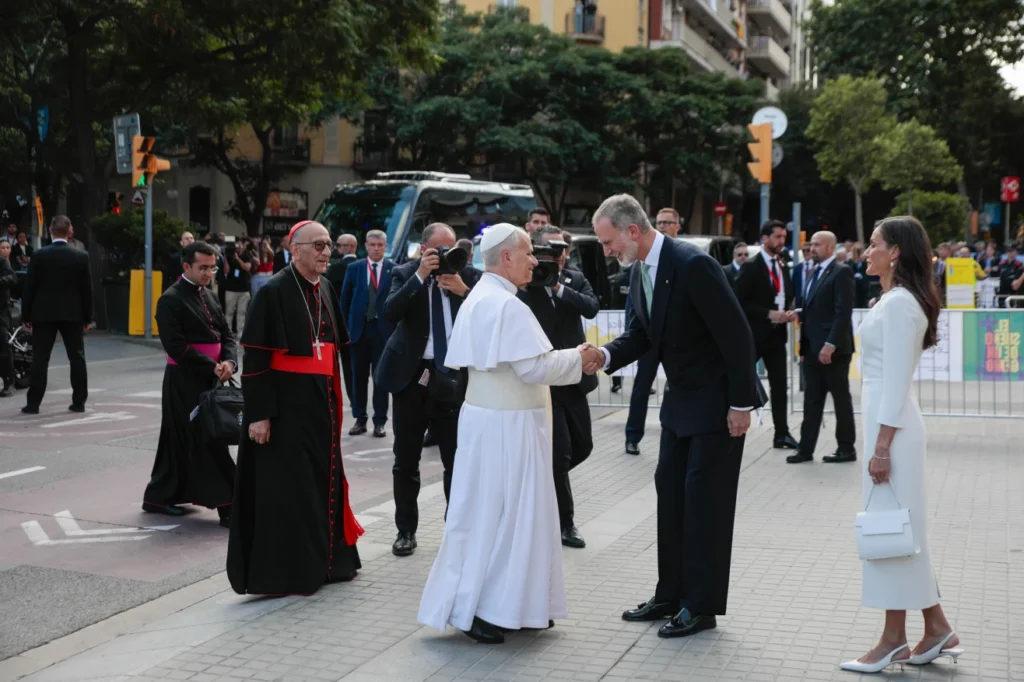
- King Felipe VI and Queen Letizia attended the ceremony.
- Gaudí is currently on the path toward possible sainthood.
- Construction of the basilica is expected to be completed within a decade.
- The church attracts more than 5 million visitors annually.
- Leo called the basilica a symbol of unity and harmony for Spain.
Sagrada Familia Centenary Quick Looks
Pope Leo XIV Marks Historic Milestone at Barcelona’s Iconic Basilica
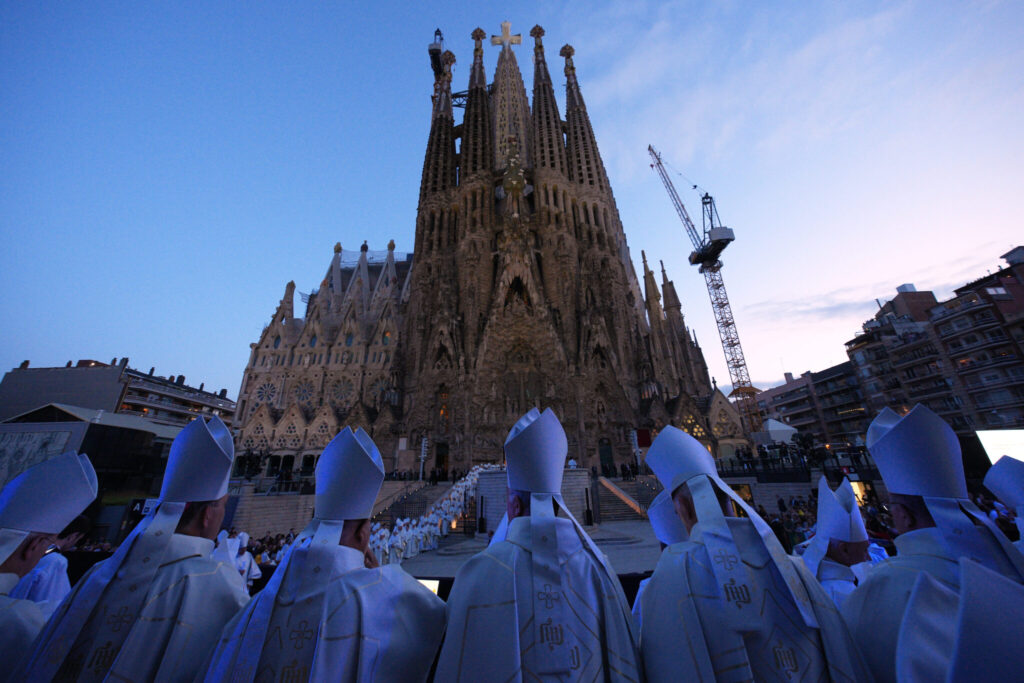
Pope Leo XIV celebrated the enduring legacy of architect Antoni Gaudí on Wednesday with a special Mass at Barcelona’s world-famous Sagrada Familia Basilica, marking the 100th anniversary of Gaudí’s death and inaugurating the monument’s final towering spire.
The ceremony represented one of the most significant moments in the basilica’s history and served as the highlight of the pope’s weeklong visit to Spain. The event drew tens of thousands of faithful, civic leaders, clergy and tourists to one of Christianity’s most recognizable architectural landmarks.
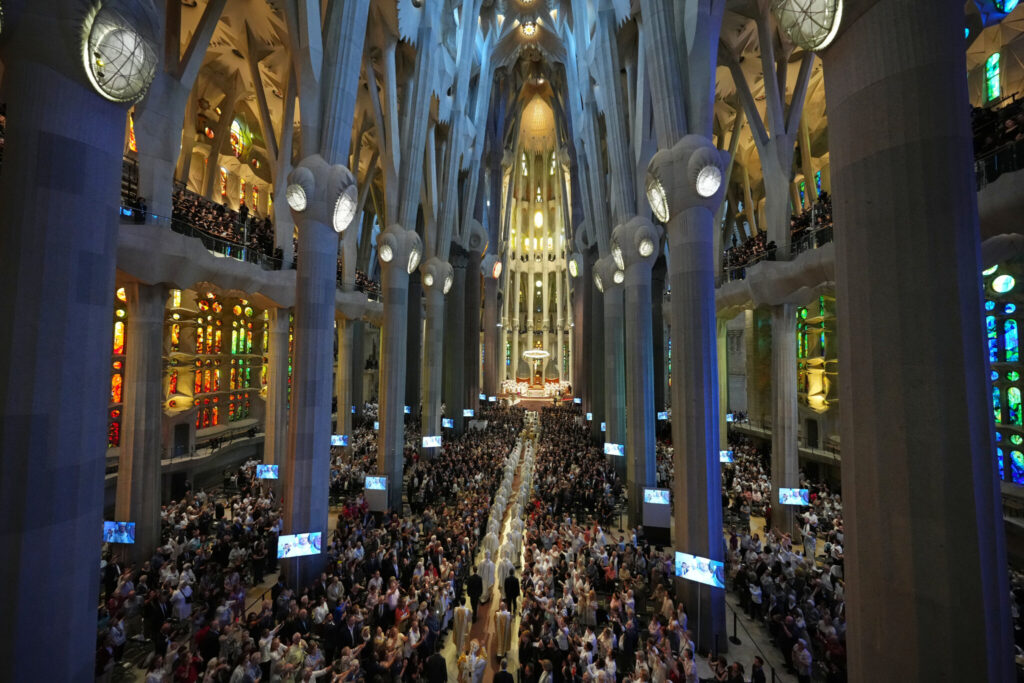
Standing before worshippers inside the soaring church, Leo praised the basilica as a spiritual and artistic masterpiece.
“We are all the living stones of this edifice,” Leo said.
The pope described Sagrada Familia as a monument built not only from stone but also from faith, calling it a place where architecture, spirituality and human creativity unite.
Massive Crowds Welcome the Pope
An estimated 120,000 people gathered around Barcelona’s streets surrounding the basilica to witness the historic celebration.
Security was extensive as Spanish King Felipe VI, Queen Letizia and Prime Minister Pedro Sánchez attended the event alongside religious leaders from across Spain and beyond.
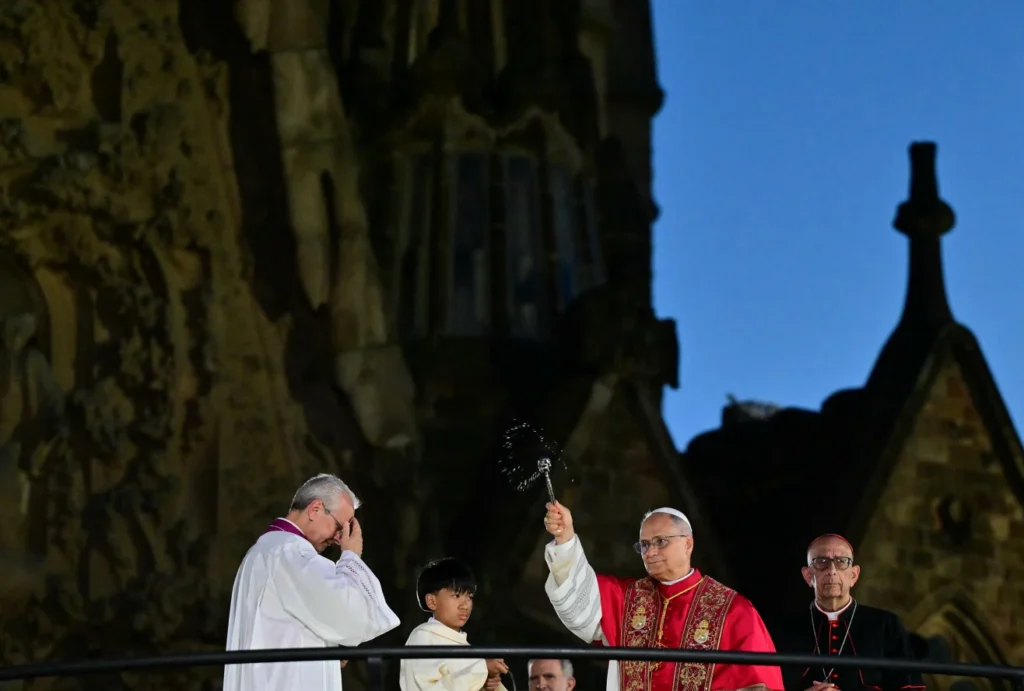
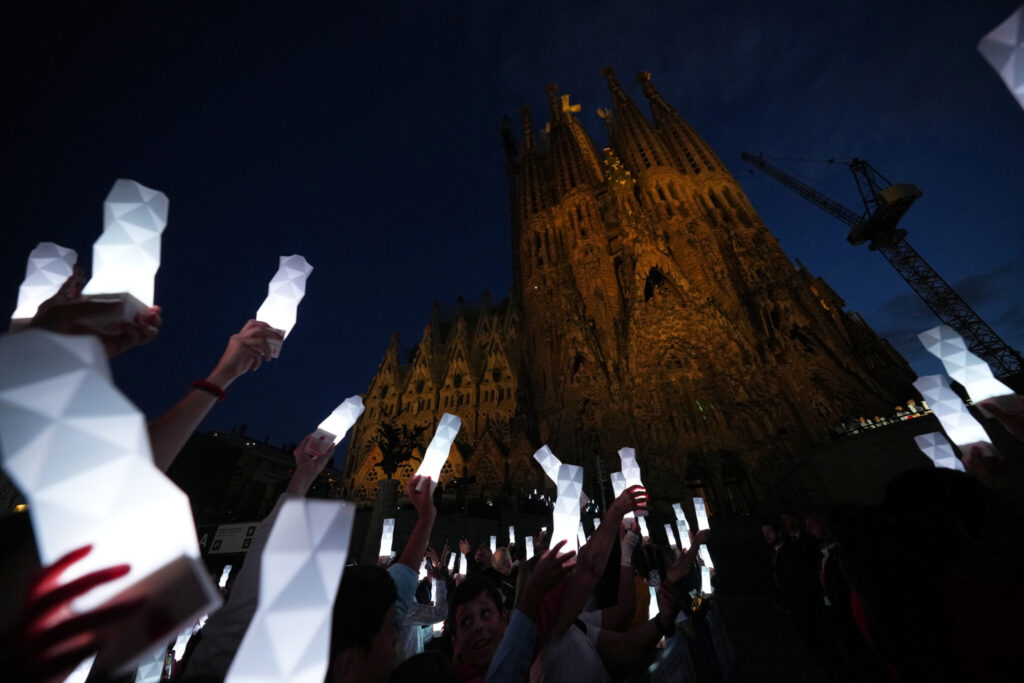
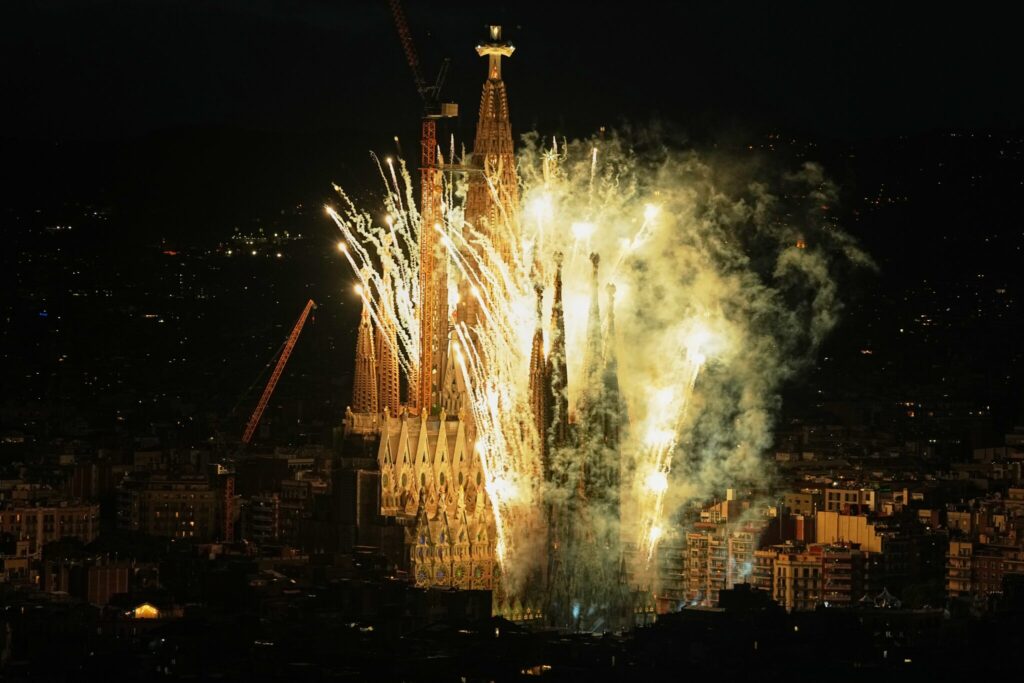
After the Mass concluded, many remained outside to watch the pope bless and inaugurate the Tower of Jesus Christ, the final and tallest structure of Gaudí’s vision.
Speaking in both Catalan and Spanish, Leo blessed the illuminated ceramic cross that crowns the tower while choirs performed and fireworks illuminated the skyline.
The dramatic ceremony transformed Barcelona’s most famous landmark into a celebration of both faith and cultural identity.
Visit Begins at Montserrat
Before arriving at Sagrada Familia, Pope Leo visited Montserrat, one of Catalonia’s most important religious sites.
The mountain sanctuary, located outside Barcelona, is home to an 11th-century Benedictine abbey, a revered Black Madonna statue and Europe’s oldest boys’ choir.
Thousands of worshippers gathered at the monastery to greet the pope.
Church bells echoed across the mountain landscape as Leo arrived and met with religious leaders and pilgrims.
The visit also highlighted ongoing efforts within the Catholic Church to address past clergy abuse scandals. Montserrat has been included in investigations into abuse allegations that emerged throughout Spain.
“It’s very painful because there are members of the church who committed errors,” said the Rev. Cesario Escarda, a Toledo priest.
“What the pope wants to do is shine a light on the truth and ask forgiveness and bring in the victims and listen to them and accompany them.”
Celebrating Antoni Gaudí’s Legacy
The central purpose of the pope’s visit was honoring Antoni Gaudí, the visionary Catalan architect whose work transformed Sagrada Familia into one of the world’s most recognizable structures.
Gaudí devoted more than four decades of his life to designing and constructing the basilica. He viewed the church as a complete expression of Christian faith, combining biblical symbolism with forms inspired by nature.
He died in 1926 at age 73 after being struck by a tram.
One hundred years later, his influence remains visible in every corner of the unfinished basilica.
Commemorating the anniversary, Leo thanked generations of architects, artisans, engineers and laborers who helped bring Gaudí’s vision to life.
“cooperated in the construction of an architectural masterpiece, which is also an eloquent catechesis made of stones, colors and light.”
A Monument of Faith and Architecture
The Sagrada Familia has evolved into one of the world’s most visited monuments, attracting more than five million visitors annually.
Despite its fame, construction remains ongoing.
The basilica features eighteen towering spires, each carrying religious symbolism. Twelve represent Christ’s apostles, four honor the Evangelists, one celebrates the Virgin Mary and the tallest is dedicated to Jesus Christ.
The completion of the Tower of Jesus Christ last year elevated the structure to 172.5 meters (564 feet), officially making it the tallest church on Earth.
Construction crews continue working toward full completion, which is expected within the next decade.
Leo used the occasion to reflect on the spiritual meaning of the unfinished project.
“Much more than a monument, the Basilica of the Sagrada Familia remains a work in progress today, reminding us that the Christian life is always a journey, because it is a project that God is carrying out,” Leo said in his homily.
Nature and Faith United in Stone
One of the defining features of Gaudí’s design is its deep connection to nature.
The architect often described the natural world as his greatest source of inspiration.
“Nature is my teacher,” Gaudí once said. “Everything comes from the great book of nature, always open that we must read.”
Inside the basilica, towering columns resemble trees rising toward the heavens. Sunlight filters through stained-glass windows that bathe the interior in shifting colors throughout the day.
The eastern side of the church glows with blue and green hues associated with Christ’s birth, while the western side radiates reds and oranges connected to Christ’s Passion.
Above the altar, golden light symbolizes divine glory.
The Meaning Behind the Design
Historians and church scholars often describe Sagrada Familia as a Bible carved in stone.
Its three monumental facades tell the story of Christ’s life, death and ultimate glory.
Historian Mònica Santín explained that Gaudí drew inspiration primarily from two sources: the Gospels and nature.
“The way he lets in the natural light is also an invitation to the Christian mystery,” she said.
“And when you enter inside, it is all light,” Santín said. “What is that the symbol of? We can’t see God, but we perceive his light all around us. I think that is how you can read this message, and it is fascinating.”
Visitors often describe the experience as walking through a forest transformed into sacred architecture.
Laura Rincón, one of thousands gathered outside for the Mass, shared her admiration for the basilica.
“The entire structure of the Sagrada Familia is striking,” she said.
“If you look at it just for its architecture, it is amazing,” she said. “Inside, its columns make you feel like you are inside a forest.”
A Symbol of Spain’s Religious Heritage
Pope Leo’s visit underscored Spain’s complex religious identity.
While the country has become increasingly secular over recent decades, the enormous crowds that gathered throughout the visit demonstrated that Catholic traditions remain deeply rooted in Spanish society.
By honoring Gaudí and celebrating the completion of the basilica’s final tower, Leo emphasized the church’s role as both a spiritual home and a symbol of national unity.
For many Catholics, the ceremony marked not only the remembrance of a visionary architect but also a celebration of faith expressed through one of humanity’s most extraordinary architectural achievements.