

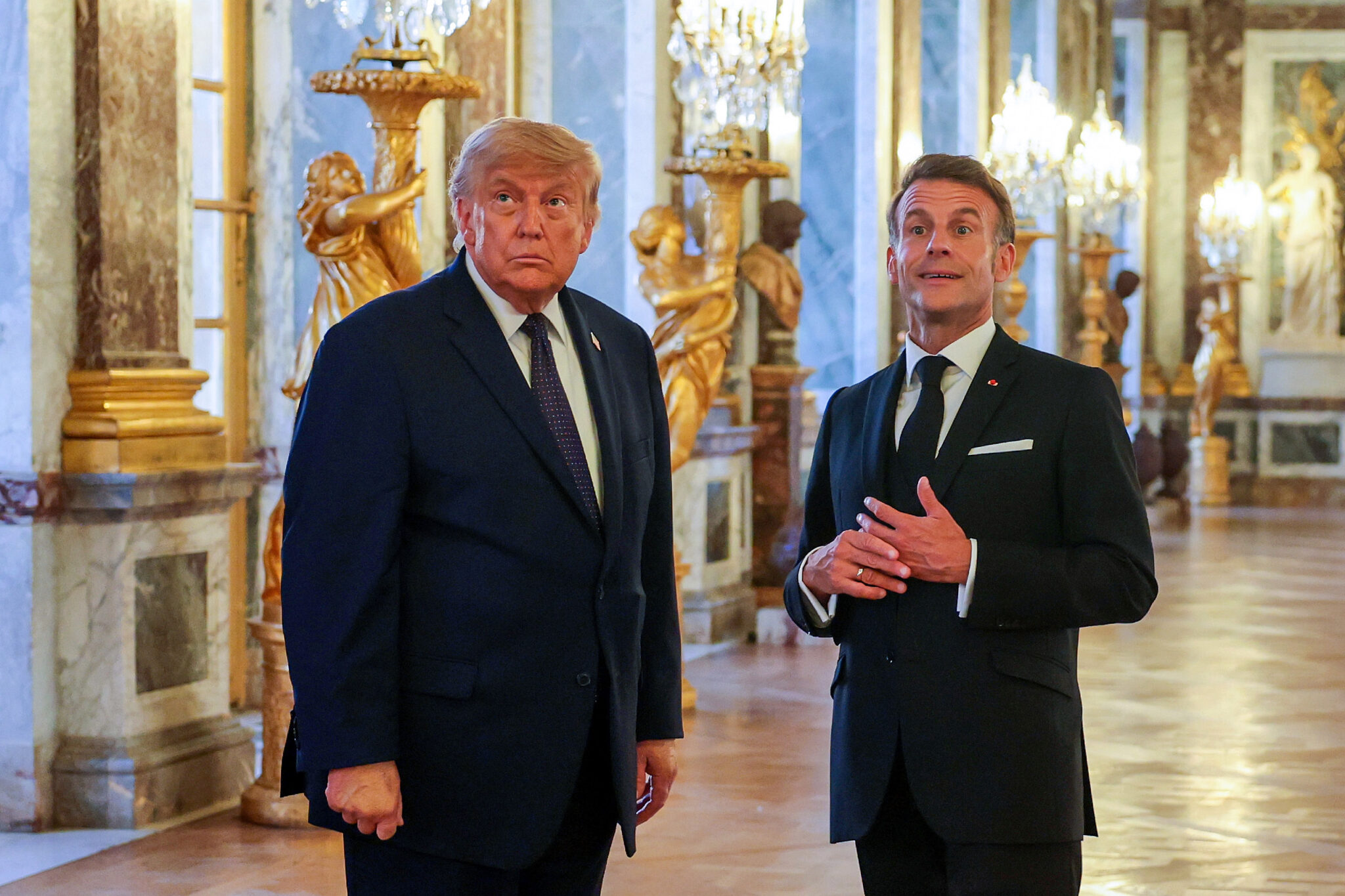
Macron Uses Versailles Diplomacy to Strengthen Ties With Trump/ Newslooks/ WASHINGTON/ J. Mansour/ Morning Edition/ French President Emmanuel Macron hosted President Donald Trump at Versailles during the G7 summit in a high-profile diplomatic effort. Trump delayed his departure from France, toured the palace, and signed the Iran memorandum during the event. The lavish setting highlighted France’s use of historical prestige and soft power to influence global diplomacy.
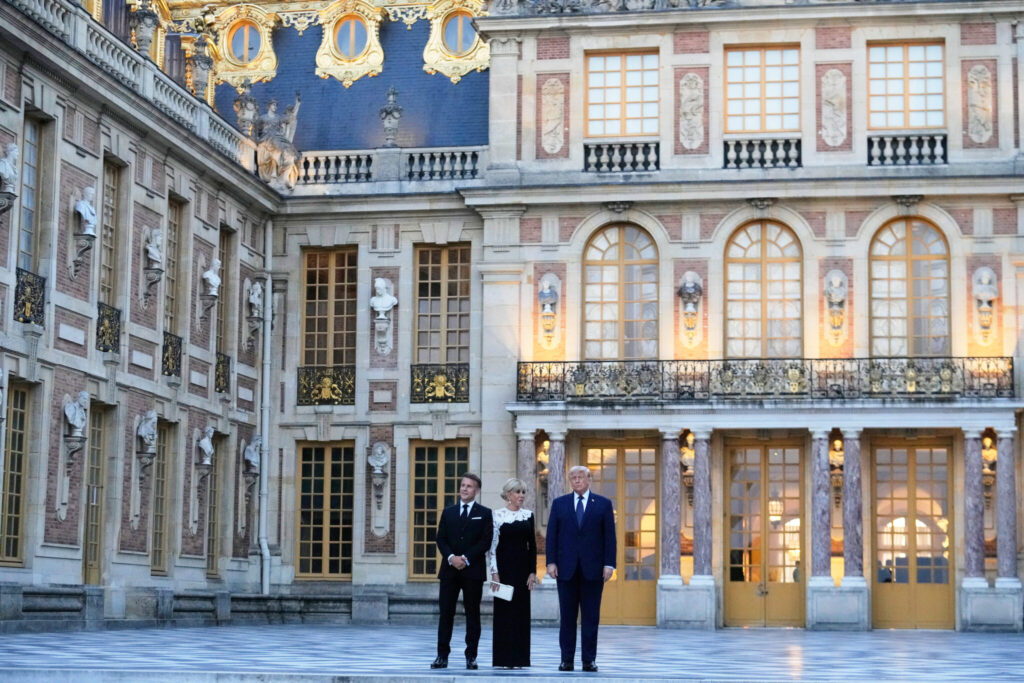
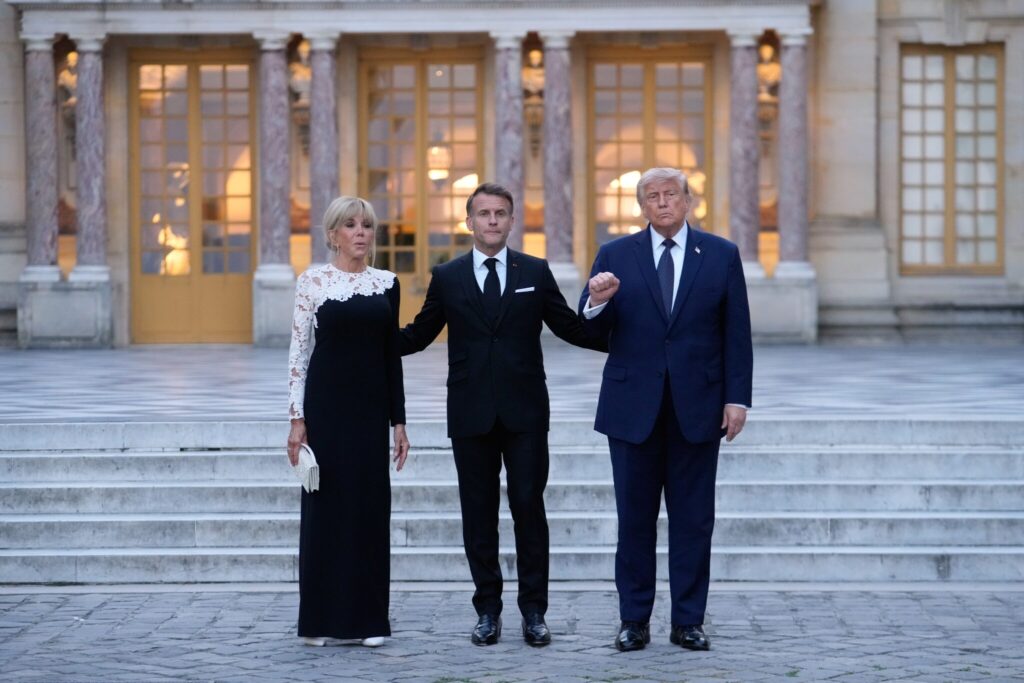
Macron Trump Versailles Quick Looks
- Macron hosted Trump at the Palace of Versailles after the G7 summit.
- Trump described Versailles as “the real deal.”
- The visit coincided with celebrations surrounding America’s 250th anniversary.
- Trump signed the Iran memorandum during the Versailles dinner.
- The event featured a private palace tour and fountain show.
- Macron used the gathering to maintain dialogue on Iran, Ukraine, and trade.
- Versailles remains one of France’s most powerful diplomatic tools.
- Trump has long admired Versailles-inspired architecture.
- The visit revived memories of Macron’s earlier efforts to cultivate ties with Trump.
- Critics questioned whether the spectacle would produce meaningful policy gains.
Deep Look
Macron Turns to Versailles in High-Stakes Diplomacy With Trump
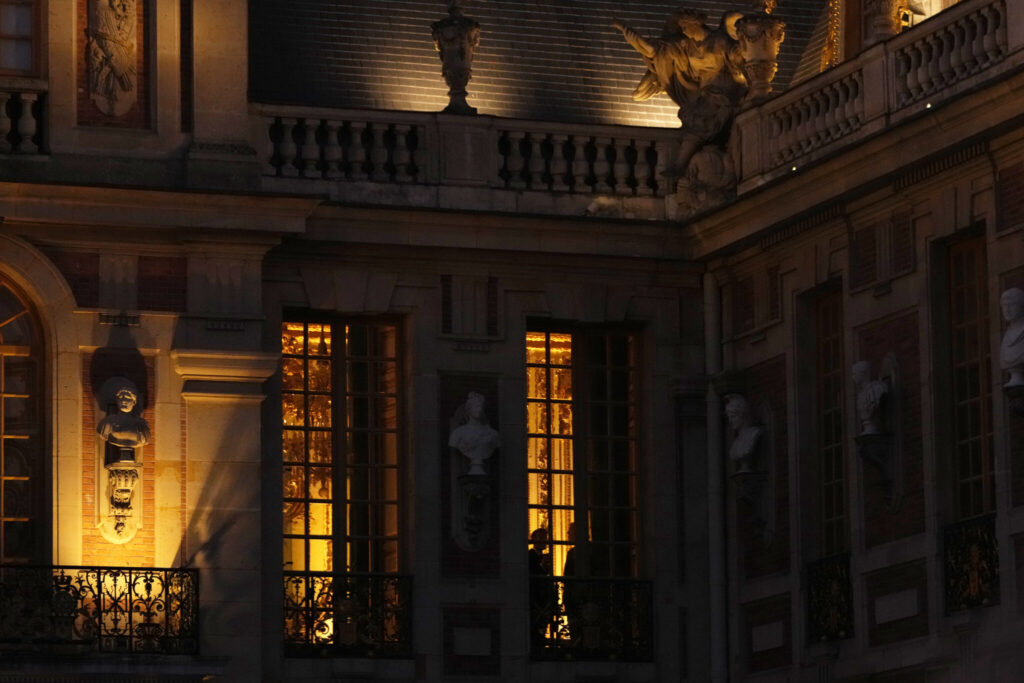
As global leaders gathered in France for the Group of Seven summit, Macron extended a special invitation to President Donald Trump for an evening reception and private dinner inside the former royal residence of King Louis XIV.
The event was designed to celebrate America’s upcoming 250th anniversary while also serving a broader diplomatic purpose—preserving a direct relationship with Trump at a time when the United States and Europe remain divided on several major issues.
Those issues include the Iran agreement, support for Ukraine, and ongoing trade disputes.
For Macron, the evening was about far more than hospitality.
It was an exercise in strategic diplomacy.
Trump Delays Departure for Versailles Invitation
Trump acknowledged that the invitation influenced his decision to remain in France longer than planned.
Speaking to reporters, he praised the iconic palace and described it as authentic in a way that modern reproductions are not.
“Versailles is not gold leaf — Versailles is the real deal,” Trump said.
The president had originally considered departing the summit earlier but changed course after receiving the invitation.
During the evening, Trump toured the palace’s historic rooms, attended a fountain display, and joined Macron for a formal dinner featuring lobster, caviar, and vanilla ice cream.
The gathering took on added significance when Trump signed the memorandum aimed at ending the conflict with Iran during the event.
Versailles as a Tool of French Influence
For centuries, Versailles has served as a symbol of French power, prestige, and cultural influence.
Macron has repeatedly used the palace to host prominent international figures, including Russian President Vladimir Putin in 2017 and Britain’s King Charles III during a state visit.
The French leader openly acknowledged that the venue serves as a diplomatic instrument.
“Whether I’m playing at home or away, my goal is to score goals,” Macron said, comparing diplomacy to soccer.
Analysts note that France’s influence over Washington often relies less on military or economic leverage and more on symbolism, culture, and personal relationships.
Versailles represents the ultimate expression of that strategy.
A Relationship Built on Personal Chemistry
The Macron-Trump relationship has always mixed rivalry with mutual respect.
Their first meeting in 2017 became famous for an unusually intense handshake that analysts interpreted as a contest of wills.
Since then, Macron has repeatedly sought opportunities to engage Trump through highly visible displays of diplomacy.
These have included:
- A Bastille Day celebration in Paris
- Dinner at the Eiffel Tower
- Multiple bilateral meetings in France
- The latest Versailles reception
Political observers say Macron understands Trump’s appreciation for spectacle, ceremony, and historic architecture.
That understanding may explain why Versailles was selected as the backdrop for such an important meeting.
The Hall of Mirrors and the Power of Symbolism
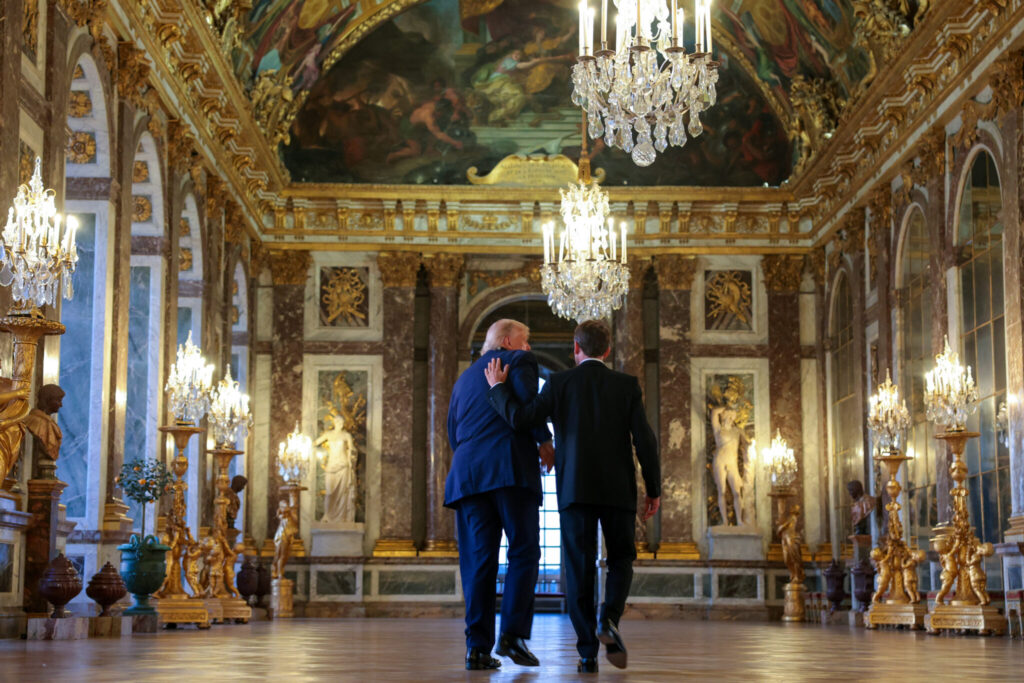
One of the evening’s highlights was a visit to Versailles’ famed Hall of Mirrors.
The gallery contains 357 mirrors arranged across 17 arches stretching more than 240 feet.
Originally built to showcase French craftsmanship and royal power, the hall remains one of Europe’s most recognizable symbols of state prestige.
Historians note that every royal procession once multiplied across the mirrors, creating a visual display of authority.
For a leader like Trump, whose public image often emphasizes grandeur and architecture, the setting carried particular appeal.
Trump has previously stated that parts of his Mar-a-Lago estate were inspired by Versailles.
Can Spectacle Produce Results?
While the evening demonstrated France’s ability to deploy soft power, questions remain about whether symbolism can influence policy.
Trump and Macron continue to disagree on several important issues.
The United States and France have clashed over tariffs, Ukraine policy, and aspects of Middle East strategy.
Trump has previously threatened significant tariffs on French exports, including wine and Champagne.
Meanwhile, Macron has voiced concerns about some U.S. foreign policy decisions.
Political analysts caution that ceremonial diplomacy has limits.
Historical examples show that even lavish receptions and personal relationships do not necessarily resolve major geopolitical disagreements.
Former President Ronald Reagan famously attended a G7 gathering at Versailles in 1982, yet key disputes between allies persisted afterward.
A Diplomatic Victory—At Least for One Evening
Whether the event produces tangible policy gains remains uncertain.
Yet Macron succeeded in achieving one immediate objective: keeping communication channels open with one of the world’s most influential leaders.
The Versailles gathering demonstrated how France continues to leverage history, culture, and symbolism as instruments of international diplomacy.
At a time when global alliances face growing strains, Macron’s strategy reflects a belief that relationships matter—and that sometimes diplomacy begins not in conference rooms, but beneath crystal chandeliers and centuries-old mirrors.






You must Register or Login to post a comment.