

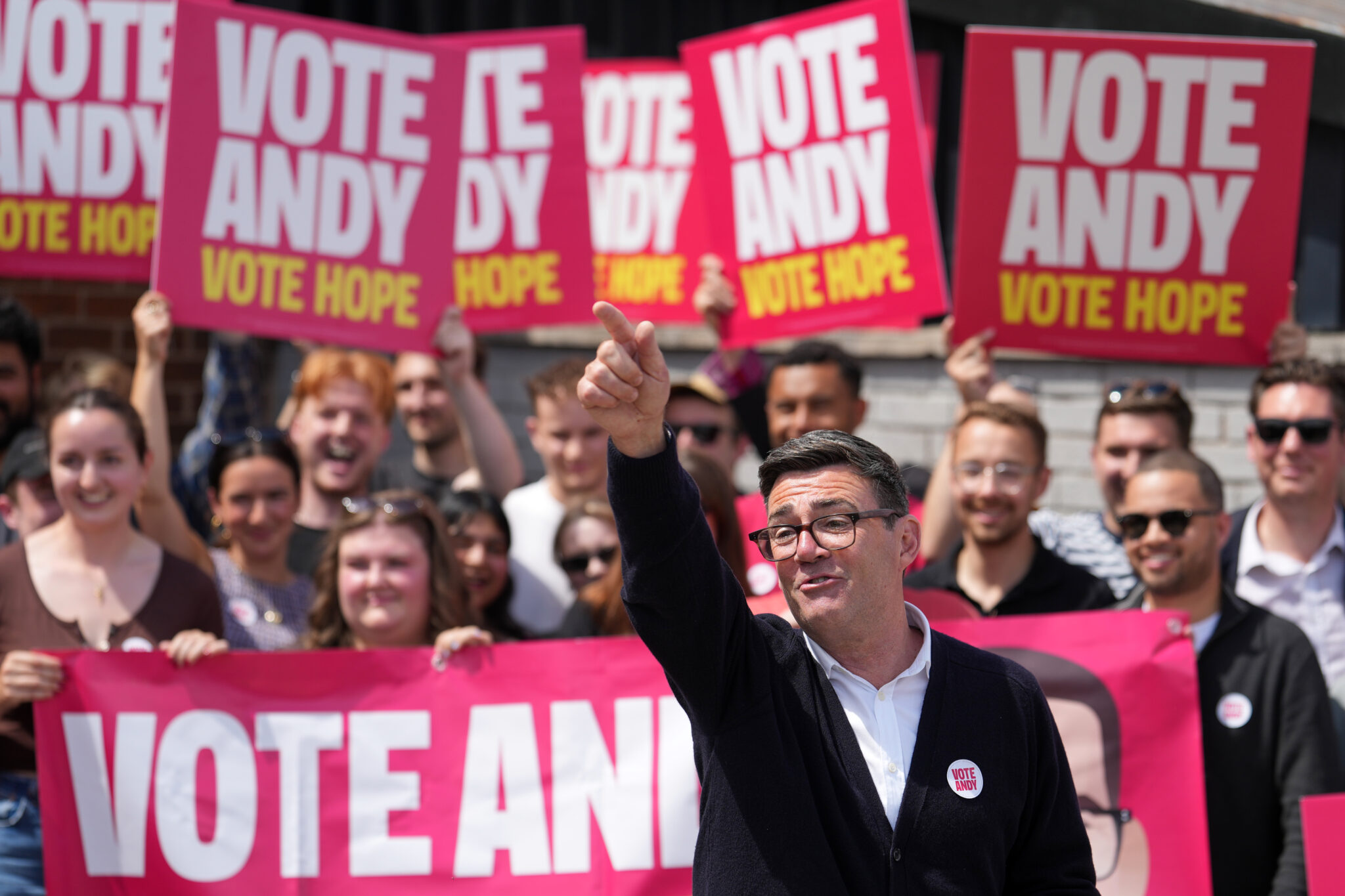
Starmer Vows to Fight as Burnham’s Election Win Fuels UK Labour Leadership Showdown/ Newslooks/ WASHINGTON/ J. Mansour/ Morning Edition/ Andy Burnham won the Makerfield parliamentary by-election and immediately positioned himself as a potential challenger to Prime Minister Keir Starmer. The victory strengthens Burnham’s standing within Labour amid growing dissatisfaction with Starmer’s leadership. Burnham’s return to Parliament has sparked fresh debate about Labour’s future direction ahead of the next general election.
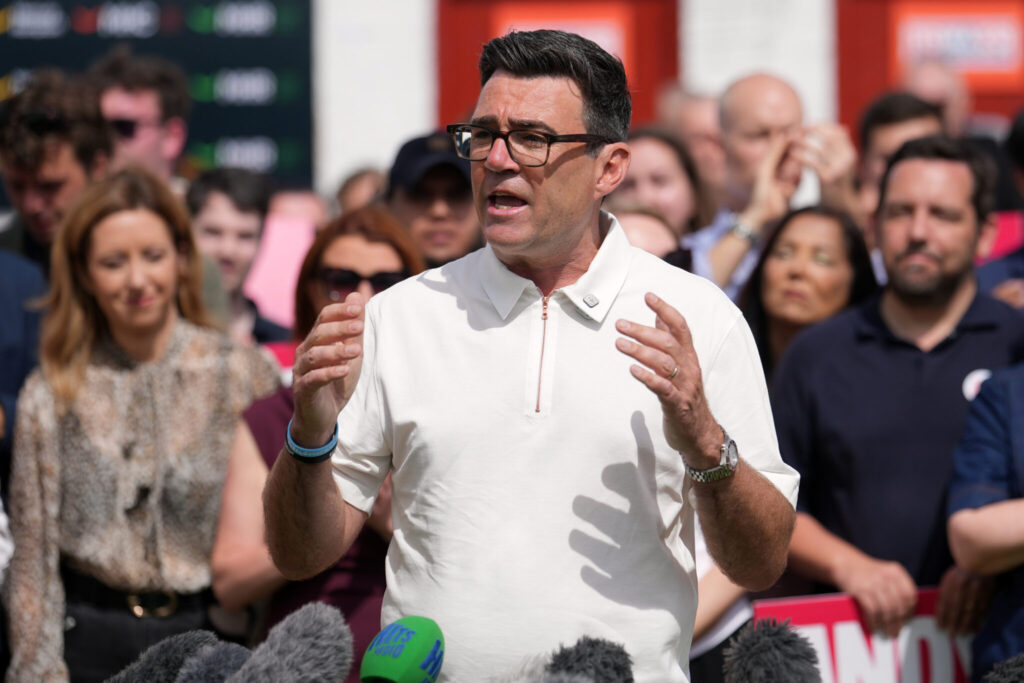
Andy Burnham Labour Leadership Challenge Quick Looks
- Andy Burnham won the Makerfield by-election with nearly 55% of the vote.
- The victory establishes him as the leading contender to replace Keir Starmer.
- Burnham defeated Reform UK candidate Rob Kenyon by more than 9,000 votes.
- Starmer pledged to fight any leadership challenge.
- Labour continues to struggle with declining public approval despite being in government.
- Reform UK remains a growing force in northern England.
- Burnham pledged to bring his “Manchesterism” model to the national stage.
- Labour lawmakers are increasingly discussing leadership succession.
- Burnham is expected to take his seat in Parliament next week.
- The result adds significant pressure on Starmer’s premiership.
Deep Look
Burnham’s Victory Reshapes Labour’s Political Landscape
Andy Burnham’s commanding victory in the Makerfield by-election has dramatically altered the political conversation inside Britain’s governing Labour Party, raising fresh questions about Prime Minister Keir Starmer’s future as party leader.
The Greater Manchester mayor secured a decisive win in the northwestern England constituency, defeating Reform UK challenger Rob Kenyon and signaling that his ambitions extend far beyond representing a single parliamentary district.
Burnham’s success immediately intensified speculation that he intends to launch a challenge for Labour’s top job and ultimately become Britain’s next prime minister.
The result comes at a sensitive moment for Starmer, whose popularity has fallen sharply despite leading Labour back into power after years in opposition.
Burnham Signals National Ambitions
During his victory speech, Burnham left little doubt about his aspirations.
Rather than focusing solely on local concerns, he framed the result as a broader opportunity to reshape British politics and restore public confidence in government.
“Tonight could, just could, be the turning point,” Burnham told supporters.
The 56-year-old politician argued that voters are increasingly frustrated with the political system and believe Britain is not functioning as effectively as it should.
He pledged to create a new political path centered on economic fairness, regional investment and national unity.
Burnham has built his reputation as mayor of Greater Manchester, where he has overseen major urban redevelopment projects and become one of Britain’s most recognizable regional leaders.
His supporters believe the same approach could be replicated nationally.
Starmer Refuses to Step Aside
While congratulating Burnham on social media, Prime Minister Keir Starmer made clear he has no intention of surrendering the leadership.
Asked whether he would contest a leadership challenge, Starmer responded firmly.
“Yes, I will run, I will stand,” he said.
The prime minister insisted that voters elected Labour with a mandate for change and argued that his government still has time to deliver on its promises.
Starmer’s defiant response underscores what could become a prolonged and potentially divisive internal struggle within the governing party.
Labour Faces Growing Political Pressure
Although Labour won a landslide victory in the 2024 general election, the party has struggled to maintain public support.
Persistent economic challenges, pressure on public services and the ongoing cost-of-living crisis have contributed to growing dissatisfaction among voters.
The government has also faced criticism over several political controversies and personnel decisions.
As a result, Labour has seen support erode on multiple fronts.
Progressive voters have increasingly gravitated toward the Green Party, while Reform UK has made significant gains among working-class voters in many traditional Labour strongholds.
Burnham’s Northern Appeal
One reason Burnham’s victory is attracting so much attention is his proven ability to connect with voters in northern England.
Nicknamed the “King of the North,” Burnham has cultivated an image as a champion of regional communities that often feel neglected by political elites in London.
His campaign emphasized practical economic solutions, local empowerment and restoring faith in politics.
Burnham argued that Britain needs an economy that benefits ordinary people rather than concentrating opportunities in a few wealthy areas.
His success in Makerfield reinforces the perception that he may be uniquely positioned to reconnect Labour with voters drifting toward Reform UK.
Reform UK Remains a Major Threat
Despite Burnham’s victory, Reform UK continues to pose a serious challenge to Labour.
The anti-immigration party led by Nigel Farage has consistently performed strongly in national polling and has expanded its presence in former Labour heartlands.
Makerfield was viewed as an important test of whether Labour could halt Reform’s momentum.
Burnham’s comfortable victory provides some reassurance for Labour strategists, but the broader challenge remains.
Political analysts note that Reform’s appeal continues to grow among voters who feel disconnected from traditional political institutions.
How a Leadership Challenge Could Happen
Under Labour Party rules, a leadership contest can be triggered if a challenger receives support from at least one-fifth of Labour’s parliamentary lawmakers.
With Labour holding more than 400 seats in the House of Commons, that threshold currently stands at 81 MPs.
Burnham’s return to Parliament significantly strengthens his ability to build support among lawmakers.
His allies have already begun suggesting that Starmer should consider facilitating an orderly transition rather than risking a prolonged internal conflict.
Allies Push for a Transition
Several Labour figures aligned with Burnham have called for discussions about the party’s future leadership.
Labour MP Louise Haigh said Starmer should consider what is best for both the country and the party.
She expressed hope that Burnham and Starmer could reach an agreement regarding a leadership transition.
Burnham’s supporters stress that he is unlikely to launch an immediate challenge but believe his electoral success gives him significant leverage inside the party.
Political Experts See Momentum Building
Political analysts argue that Burnham’s by-election victory strengthens his credentials as a national leader.
University of Manchester political scientist Rob Ford noted that Burnham can now claim he successfully defended a constituency that many believed Reform UK could potentially win.
That achievement allows him to argue that he offers something distinct from the current Labour leadership.
Political historian Tim Bale warned that political fortunes can shift rapidly once doubts emerge about a prime minister’s authority.
According to Bale, discussions behind closed doors among senior Labour figures are likely to intensify over the coming days.
What Happens Next?
Burnham is expected to take his seat in Parliament early next week, immediately placing him at the center of Westminster politics.
Attention will quickly turn to whether he seeks a direct meeting with Starmer and how Labour lawmakers respond to his growing influence.
For now, Starmer remains leader and prime minister.
But Burnham’s victory has transformed what had been quiet speculation into an open discussion about Labour’s future.
The Makerfield result may ultimately be remembered as the moment Britain’s governing party entered a new and potentially decisive chapter in its leadership debate.






You must Register or Login to post a comment.