

Democratic Socialists Gain Ground in Major US Mayoral Races/ Newslooks/ WASHINGTON/ J. Mansour/ Morning Edition/ Democratic Socialist candidates are winning key mayoral races in major U.S. cities amid growing opposition to President Donald Trump. Victories in Washington, New York, Seattle, and Los Angeles signal increasing support for progressive economic policies. The movement now faces pressure to translate campaign promises into effective governance.
Democratic Socialists Surge in Mayoral Races Quick Looks
- Washington, D.C. candidate Janeese Lewis George is favored to become mayor after winning the Democratic primary.
- Democratic Socialists of America (DSA) members have recently won or advanced in major city races.
- New York Mayor Zohran Mamdani and Seattle Mayor Katie Wilson represent the movement’s growing influence.
- Los Angeles candidate Nithya Raman advanced to a runoff election.
- The DSA has expanded from a few thousand members to more than 100,000 nationwide.
- Progressive candidates are campaigning on affordability, housing, childcare and public services.
- Many candidates are positioning themselves as strong opponents of Trump administration policies.
- Democratic strategists see growing voter demand for economic populism.
- Critics question whether progressive victories can be replicated outside liberal urban centers.
- Success in governing may determine whether the movement gains national influence.

Deep Look
Democratic Socialists Gain Momentum in America’s Largest Cities
A new wave of democratic socialist candidates is reshaping politics in some of America’s biggest cities, capitalizing on voter frustration with traditional political leadership, concerns about affordability and renewed opposition to President Donald Trump.
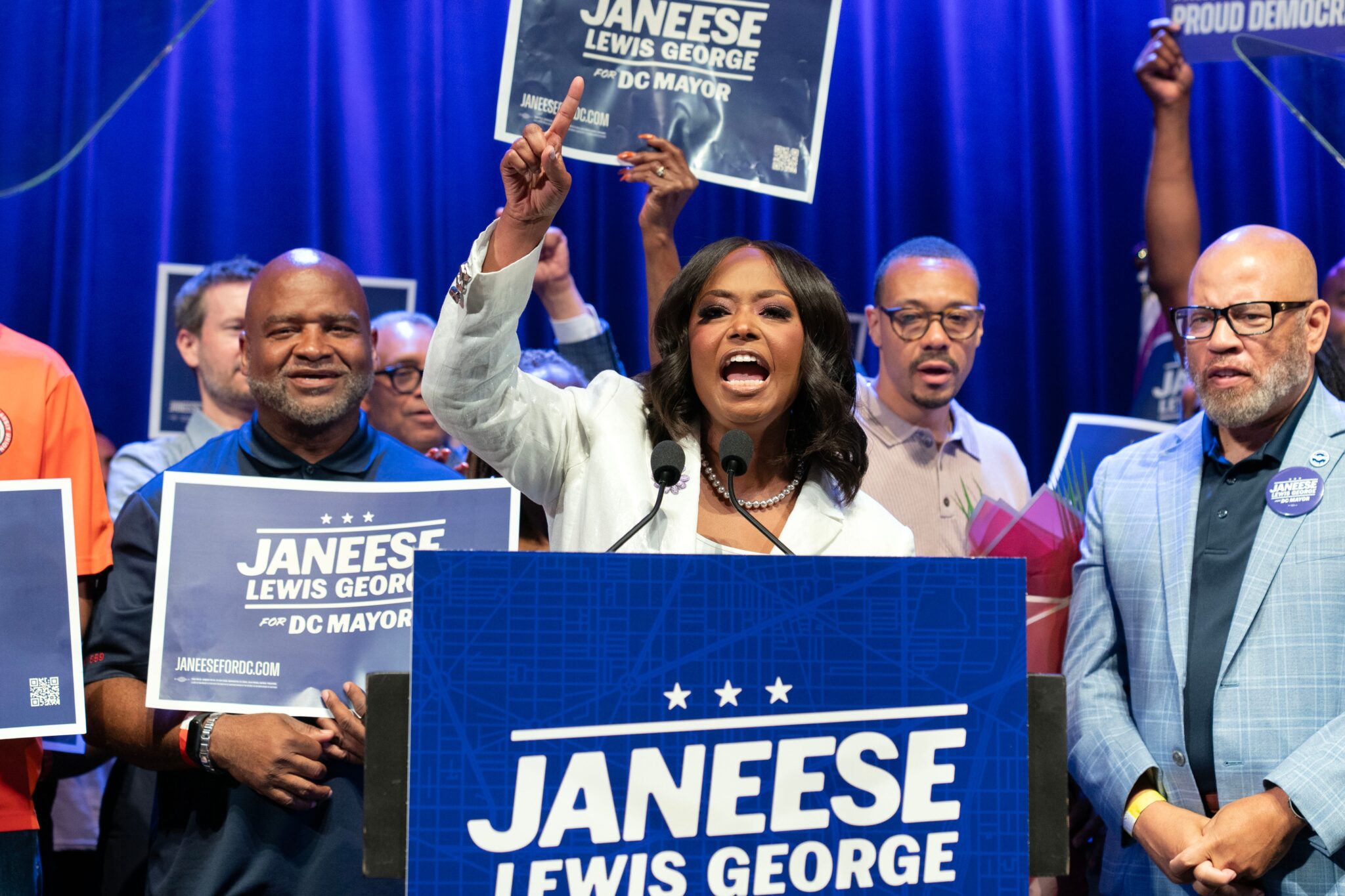
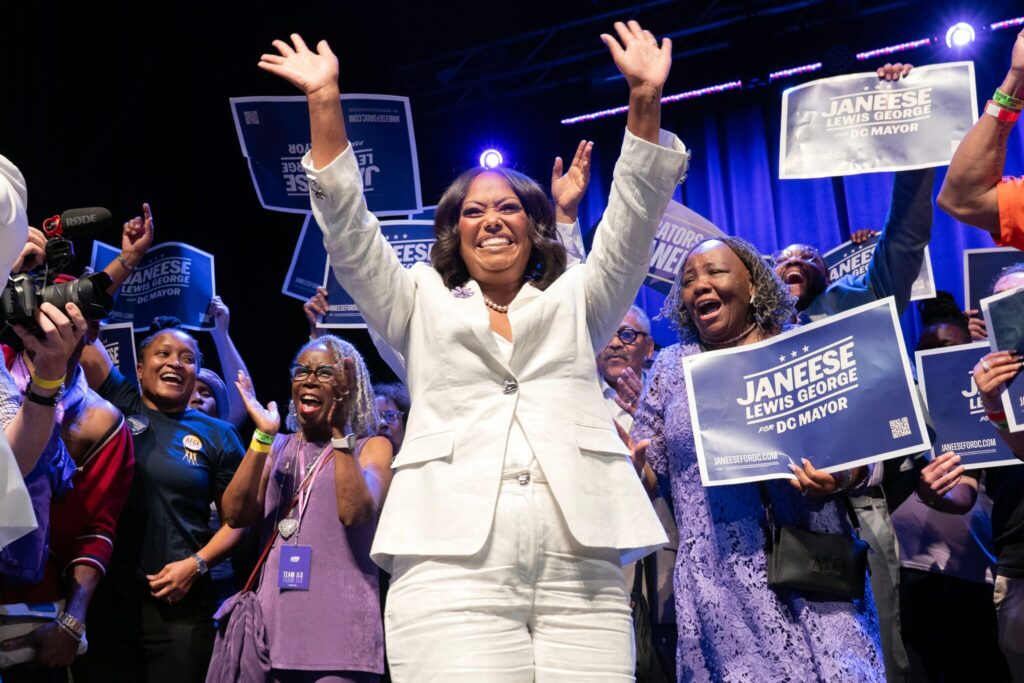
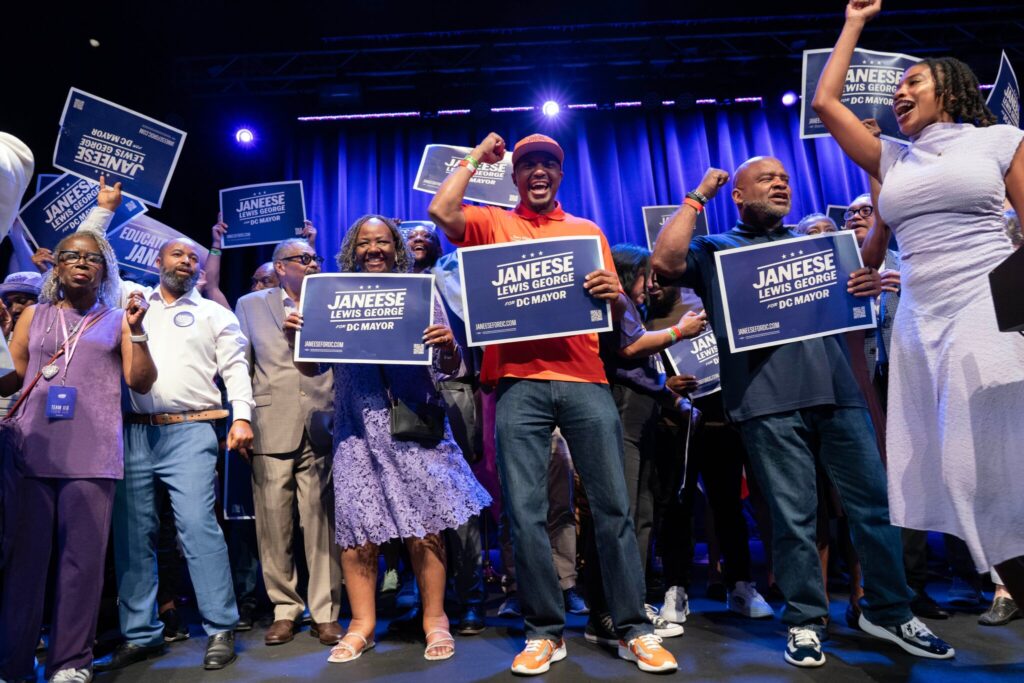
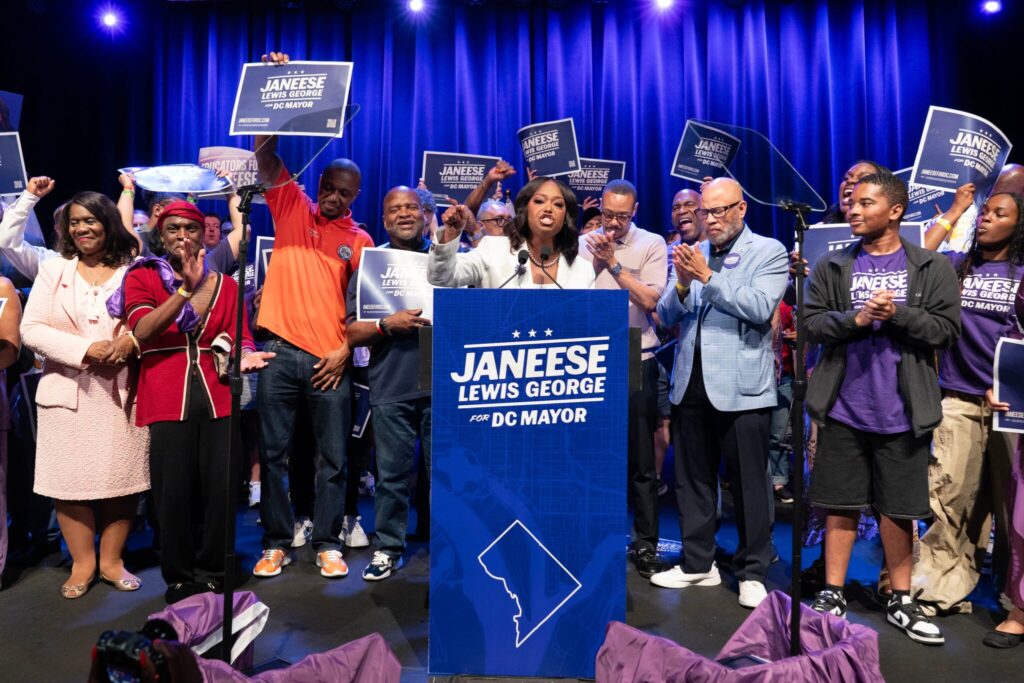
The latest sign of the movement’s growing strength came in Washington, D.C., where Janeese Lewis George secured a major victory in the Democratic mayoral primary. In a city dominated by Democratic voters, the win places her in a strong position heading into the general election and potentially marks the end of more than two decades of centrist leadership in the nation’s capital.
Lewis George has campaigned on an ambitious platform that includes expanded childcare programs, increased assistance for first-time homebuyers, investments in community-based crime prevention efforts and a commitment to challenge Trump administration policies affecting Washington.
Her message centers on the idea that government can actively improve people’s lives rather than simply manage existing problems.
Progressive Victories Stretch Coast to Coast
Washington’s race is part of a broader trend that has emerged across major metropolitan areas.
In New York City, Zohran Mamdani scored a high-profile victory by defeating former Governor Andrew Cuomo and eventually becoming mayor. In Seattle, Katie Wilson won an upset election last year, while Los Angeles councilmember Nithya Raman recently secured a place in the city’s upcoming mayoral runoff election.
All three candidates are affiliated with the Democratic Socialists of America (DSA), one of the fastest-growing political organizations on the American left.
The organization has experienced dramatic growth over the last decade, fueled largely by younger voters inspired by the presidential campaigns of Senator Bernie Sanders. Once a relatively small political movement, the DSA now claims membership exceeding 100,000 people nationwide.
Economic Populism Drives Support
Political strategists say the success of these candidates reflects widespread dissatisfaction with economic conditions and a growing appetite for leaders willing to challenge established political institutions.
Rather than focusing primarily on ideological debates, many of today’s democratic socialist candidates emphasize practical issues affecting everyday life.
Their campaigns often center on housing affordability, rising living costs, public transportation, healthcare access, childcare support and stronger public services.
According to Democratic strategist Eric Stern, these candidates are tapping into frustrations that many voters feel toward the political establishment.
Rather than merely supporting progressive policies, voters appear drawn to candidates who offer bold visions and promise transformative change.
Supporters argue that these campaigns are inspiring renewed engagement with the political process by offering voters ambitious solutions instead of incremental reforms.
The Influence of Anti-Trump Sentiment
Opposition to President Trump has also become a powerful force behind the progressive surge.
Many of the successful candidates openly position themselves as adversaries of the administration and defenders of local autonomy against federal intervention.
This dynamic is particularly visible in Washington, D.C., where Trump has openly criticized the possibility of democratic socialist leadership.
Because the District of Columbia operates under unique federal oversight, conflicts between local leaders and the White House carry heightened political significance.
Lewis George has framed her campaign as part of a broader effort to protect local governance and defend residents against policies she views as harmful.
For many voters, support for progressive candidates is tied as much to opposition to Trump as it is to ideological alignment.
Challenges Ahead for Progressive Leaders
While recent victories have energized the movement, governing may prove more difficult than campaigning.
Several progressive leaders have faced significant challenges after taking office.
Chicago Mayor Brandon Johnson, who received support from local democratic socialist organizations during his campaign, has faced criticism from both moderates and fellow progressives over issues ranging from public safety and immigration to budget management.
Elsewhere, criminal justice reform advocates who once enjoyed strong public support have faced voter backlash amid concerns about crime and public disorder.
These experiences illustrate the difficulties progressive leaders face when translating ambitious campaign promises into effective public policy.
Voters often demand rapid improvements in public services, housing affordability and public safety — areas where meaningful change can take years to achieve.
The Rise of ‘Sewer Socialism’
Many of today’s democratic socialist candidates have embraced a concept known as “sewer socialism,” a term originally used to describe early socialist politicians who focused on practical improvements to public services and infrastructure.
Rather than emphasizing ideological battles over capitalism, modern proponents focus on delivering efficient government services, improving neighborhoods and addressing affordability concerns.
The strategy aims to make progressive politics more relatable to voters who may be skeptical of socialism as a label but support expanded public investment and stronger social programs.
Candidates like Mamdani and Lewis George have adopted this approach, emphasizing tangible improvements in daily life over abstract political theory.
National Implications Remain Unclear
Despite the movement’s success in large urban areas, analysts caution against assuming it represents a broader national trend.
Many Democratic leaders in cities such as Atlanta, Houston, Miami and San Francisco have recently won elections while running on more moderate platforms.
The Democratic Party remains divided over how aggressively it should embrace progressive policies, particularly in competitive suburban and rural districts.
Still, the recent victories demonstrate that democratic socialist candidates are becoming increasingly influential in major cities, where concerns about housing costs, inequality and public services continue to dominate local politics.
Whether these local victories eventually translate into greater national influence may depend less on campaign rhetoric and more on the ability of newly elected leaders to govern effectively and deliver measurable results.
For now, the movement’s leaders believe voters are seeking candidates who challenge powerful institutions and offer ambitious solutions to everyday problems.
As the 2026 election cycle continues, their performance in office may determine whether this progressive surge becomes a lasting political realignment or remains concentrated in America’s largest urban centers.






You must Register or Login to post a comment.