

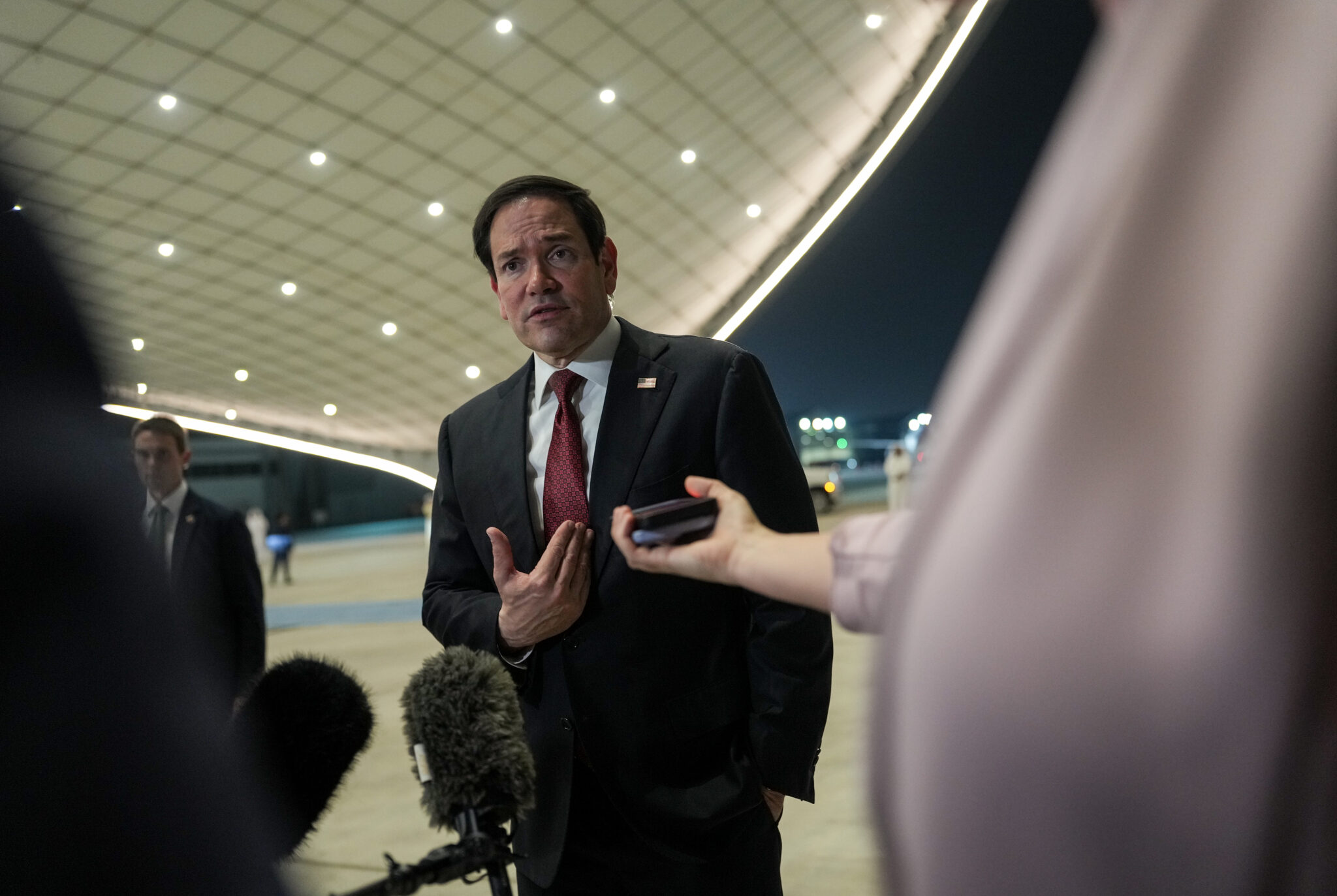
Rubio Visits Gulf Allies to Defend Iran Deal and Reassure Regional Partners/ Newslooks/ WASHINGTON/ J. Mansour/ Morning Edition/ Secretary of State Marco Rubio arrived in the UAE to begin a Gulf tour focused on the U.S.-Iran agreement. Gulf allies remain skeptical about aspects of the deal, including Iran’s missile program and regional influence. Rubio argued the agreement lays the groundwork for ending hostilities and keeping the Strait of Hormuz open.

Rubio Gulf Tour Quick Looks
- Rubio arrived in Abu Dhabi for the first stop of a three-country Gulf tour.
- The trip follows recent U.S.-Iran negotiations in Switzerland.
- Gulf nations have expressed concerns about the tentative agreement with Iran.
- UAE, Kuwait and Bahrain were targeted by Iranian missiles and drones during the conflict.
- The agreement aims to end regional hostilities and reopen the Strait of Hormuz.
- Gulf leaders remain concerned about Iran’s missile program and proxy networks.
- Rubio said Iranian-backed groups are covered under the broader peace framework.
- The U.S. opposes any attempt to charge tolls in the Strait of Hormuz.
- A proposed $300 billion investment fund for Iran remains conditional.
- Regional diplomacy is expected to intensify during the 60-day negotiation period.
Deep Look
Rubio Launches Gulf Diplomacy Mission After Iran Agreement
Secretary of State Marco Rubio arrived in the United Arab Emirates on Tuesday, launching a diplomatic tour designed to reassure Gulf allies uneasy about the Trump administration’s emerging agreement with Iran.
The trip comes immediately after intensive negotiations in Switzerland between senior U.S. and Iranian officials, which produced a memorandum of understanding intended to end the conflict that began earlier this year.
Rubio’s visit to the UAE, Kuwait and Bahrain signals the administration’s effort to maintain support among regional partners while advancing negotiations aimed at securing a broader peace agreement.
Gulf Allies Seek Clarity on Iran Deal
Although the agreement has been presented by Washington as a pathway toward stability, several Gulf nations remain cautious.
The United Arab Emirates, Bahrain and Kuwait were all targeted by Iranian missile and drone attacks during the conflict, leaving leaders in those countries wary of any arrangement that they believe may not sufficiently address long-term security threats.
Some regional officials have expressed concerns that key issues remain unresolved, particularly Iran’s missile program, support for armed proxy groups and the future of its nuclear activities.
The current agreement postpones final decisions on Tehran’s nuclear program while negotiators continue discussions over the next 60 days.
Rubio Defends Framework for Ending Hostilities
Upon arriving in Abu Dhabi, Rubio argued that the agreement offers a realistic path toward ending regional conflict if fully implemented.
He highlighted proposals aimed at reducing tensions and creating economic incentives for Iran to pursue a different course.
Referring to discussions surrounding a possible investment initiative, Rubio said a proposed $300 billion fund would only move forward if Iran fundamentally changes its behavior.
He stated that such opportunities would depend on whether “its leadership makes a decision that they want to be a country instead of a revolutionary movement that exports terror.”
The secretary emphasized that economic benefits would be linked to Iran demonstrating long-term commitment to peace and stability.
Debate Continues Over Iran’s Proxy Network
One of the major concerns among Gulf nations is whether the agreement sufficiently addresses Iran’s support for groups such as Hamas, Hezbollah and the Houthis.
Critics argue the memorandum does not explicitly mention those organizations.
Rubio rejected that interpretation.
He said the agreement’s objective of ending regional hostilities necessarily includes stopping support for armed proxy groups.
“You can’t have the end of hostilities and conflicts in a region as long as Iranian proxies are launching missiles and drones from Iraq, and are participating in terrorism, like Hamas did, and like Hezbollah did,” Rubio said.
“So, I do think it’s covered by the MOU, and it is an issue that will be gotten to at the appropriate time in these negotiations.”
His comments suggest that future rounds of negotiations may focus more directly on Iran’s regional alliances and military networks.
Strait of Hormuz Remains a Critical Issue
Another major topic during Rubio’s Gulf meetings is expected to be the future of the Strait of Hormuz, one of the world’s most strategically important shipping routes.
The waterway handles a significant share of global energy exports and has remained a central point of concern throughout the conflict.
Although the memorandum calls for reopening the strait and ensuring free navigation, questions remain over how the arrangement will operate in practice.
Iran has reportedly explored plans that could involve charging service fees for vessels passing through the waterway.
Many governments and shipping companies view those proposals as a form of toll that could disrupt global trade.
US Rejects Any Hormuz Tolls
Rubio made clear that Washington opposes any attempt to impose fees on international shipping using the strait.
“It’s an international waterway,” he said. “No country is allowed to charge tolls or fees on an international waterway. That’s existing international law. That’s the way it is.”
The secretary expressed confidence that Gulf governments share the U.S. position.
“I don’t think we have anybody to convince around here in that regard. I think all the countries in this region would agree with us,” he said.
Maintaining unrestricted access through the Strait of Hormuz remains one of the most important economic and security priorities for both regional governments and the international community.
Gulf Nations Want Stronger Guarantees
Despite diplomatic progress, Gulf states are expected to seek stronger assurances that the agreement will prevent future attacks and limit Iran’s ability to destabilize neighboring countries.
The UAE has been particularly vocal in demanding concrete measures to guarantee shipping security and protect regional infrastructure.
Officials across the Gulf continue to monitor negotiations closely as technical discussions proceed in Switzerland.
The success of the agreement may ultimately depend on whether it delivers not only a ceasefire but also lasting confidence among regional partners who have experienced direct consequences from the conflict.
Next Phase of Negotiations
Rubio’s tour comes at a critical moment in the diplomatic process.
Negotiators now face the challenge of transforming a broad framework into a comprehensive agreement that addresses nuclear issues, sanctions relief, maritime security and regional stability.
The coming weeks are likely to determine whether the memorandum becomes a durable peace arrangement or encounters resistance from skeptical allies and unresolved disputes.
For now, Rubio’s mission is clear: reassure Gulf partners that their security concerns remain central to the administration’s strategy while keeping momentum behind the ongoing talks with Tehran.





You must Register or Login to post a comment.