

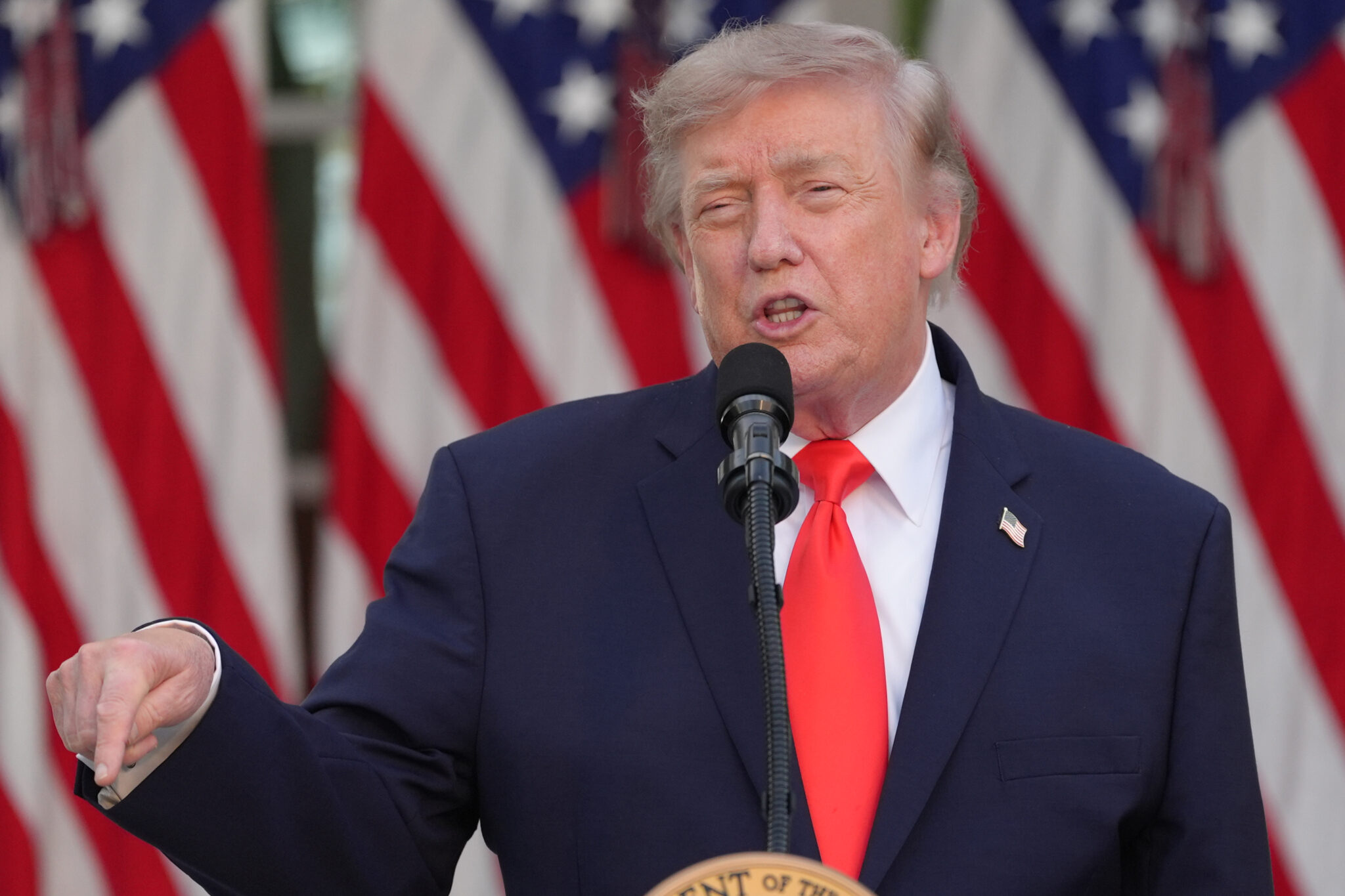
Trump Threatens 100% Tax on European Imports if Countries Impose Tax on Digital Services/ Newslooks/ WASHINGTON/ J. Mansour/ Morning Edition/ President Donald Trump threatened to impose a 100% tariff on imports from countries that introduce digital services taxes targeting U.S. technology companies. The warning, aimed primarily at Europe, raises the prospect of a new transatlantic trade dispute as the EU vows to defend its tax policies.
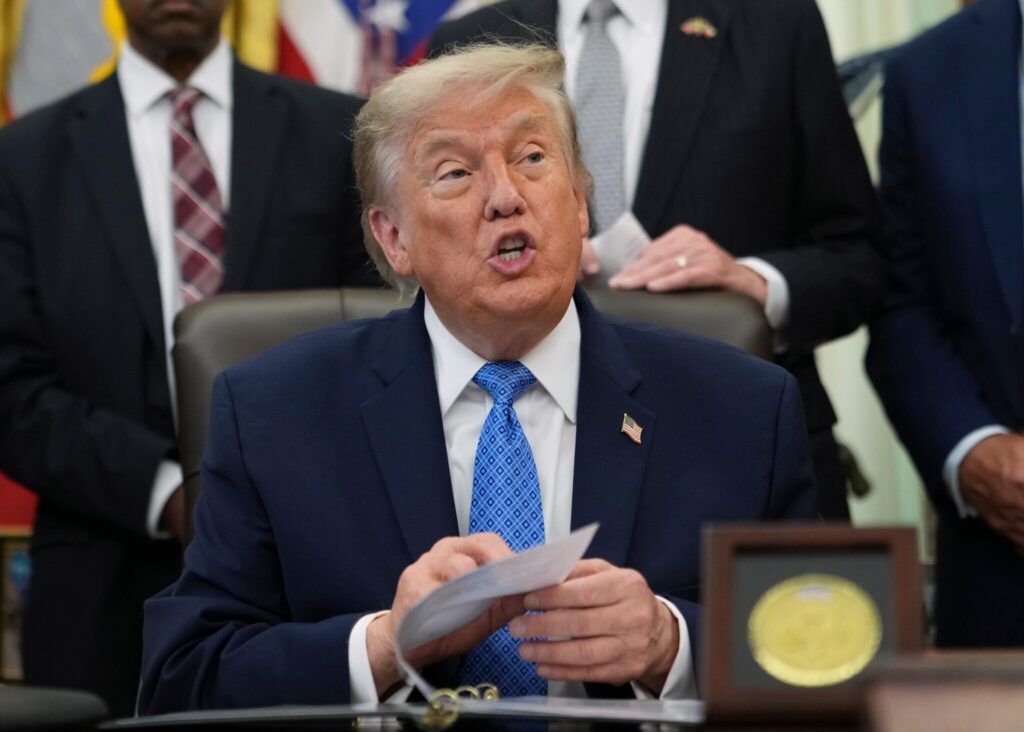
Trump Digital Tax Tariff Threat Quick Looks
- Trump threatens 100% tariffs on countries taxing U.S. digital companies.
- European nations are the primary focus of the warning.
- EU says it will respond if the U.S. follows through.
- Digital taxes remain outside the current U.S.-EU trade agreement.
- Britain continues enforcing its digital services tax introduced in 2020.
- Analysts warn the dispute could trigger a broader trade conflict.
Deep Look
Trump Issues New Trade Warning
President Donald Trump warned Friday that the United States will impose a 100% tariff on imports from any country that adopts digital services taxes targeting American technology companies.
In a social media post, Trump argued that several European countries are preparing to move ahead with new digital tax policies and vowed to retaliate if those measures are implemented.
He said any country imposing such taxes would immediately face sweeping tariffs on goods exported to the United States.
Trump also declared that the proposed tariff would override any previous trade agreements negotiated with affected countries.
European Nations Remain Main Target
Although Trump said the policy would apply globally, his remarks were directed primarily at European governments that have pushed for taxes on large multinational technology companies.
Many countries argue that digital businesses generate significant revenue within their borders but often pay relatively little local corporate tax because profits are booked elsewhere.
As digital commerce expands, governments have increasingly sought new tax revenues from companies operating online, many of which are headquartered in the United States.
European Union Pushes Back
The European Commission quickly rejected Trump’s warning.
Commission spokesperson Olof Gill defended digital services taxes as legitimate, saying they are applied without discrimination to all qualifying large companies regardless of where they are based.
Gill also warned that if Washington moves ahead with unilateral tariffs, the European Union would respond swiftly to protect its economic interests and regulatory independence.
The exchange raises the possibility of another round of retaliatory trade measures between the world’s two largest economic blocs.
Trade Agreement Leaves Digital Taxes Unresolved
Trump’s latest warning comes just days before a July 4 deadline tied to the recently negotiated U.S.-EU trade agreement, which caps tariffs on most European exports at 15%.
While that agreement eased months of trade tensions, it did not resolve disagreements over digital taxation.
Digital services taxes remain one of the biggest unresolved issues in U.S.-European economic relations, with Washington arguing they unfairly target American technology companies.
Britain Maintains Its Digital Tax
Outside the European Union, the United Kingdom continues enforcing its digital services tax introduced in 2020.
The measure applies a 2% tax on revenues earned by large search engines, social media platforms and online marketplaces that generate value from U.K. users.
British officials have argued that traditional corporate tax rules fail to properly tax digital businesses where economic value is created, making the levy necessary to ensure multinational companies contribute fairly to public services.
The tax only applies to companies exceeding certain revenue thresholds, meaning it primarily affects the world’s largest technology firms.
Potential for Broader Trade Conflict
While the Trump administration has previously investigated digital taxes under Section 301 of the Trade Act, it remains unclear how a new 100% tariff policy would be implemented or which countries would be targeted first.
Economists warn that escalating tariff disputes could increase costs for consumers, disrupt global trade flows and slow economic growth if both sides respond with additional trade barriers.
The latest dispute signals that technology taxation is likely to remain a major flashpoint in international trade negotiations.






You must Register or Login to post a comment.