

Touring Trump’s Washington During America’s 250th Anniversary/ Newslooks/ WASHINGTON/ J. Mansour/ Morning Edition/ As the United States celebrates its 250th anniversary, visitors to Washington, D.C., are witnessing sweeping changes driven by President Donald Trump’s second administration. From military deployments and federal building overhauls to controversial construction projects and symbolic landmarks, Trump has left an unmistakable mark on the nation’s capital.
Trump’s Washington Quick Looks
- Washington celebrates America’s 250th anniversary amid major changes.
- Trump has reshaped landmarks, federal buildings and public spaces.
- National Guard troops remain deployed throughout much of the city.
- Government agencies have been reorganized following federal workforce cuts.
- Construction projects and monument proposals continue generating legal challenges.
- White House renovations and symbolic changes have transformed historic sites.
- Black Lives Matter Plaza has been removed after political pressure.
Deep Look
America’s Birthday Brings Visitors to a Changing Capital
As Americans commemorate the nation’s 250th anniversary, Washington, D.C., remains one of the country’s most visited destinations. Yet visitors arriving in the capital today encounter a city that looks noticeably different from just a few years ago.
Since returning to office 17 months ago, President Donald Trump has overseen an ambitious effort to reshape both the appearance and symbolism of the nation’s capital. While iconic landmarks such as the Capitol, White House and National Mall remain central attractions, numerous additions, renovations and policy changes have altered the landscape surrounding them.
The changes reflect Trump’s broader effort to leave a lasting imprint on the federal city through construction projects, administrative decisions and symbolic displays.
National Guard Presence Becomes Part of Daily Life
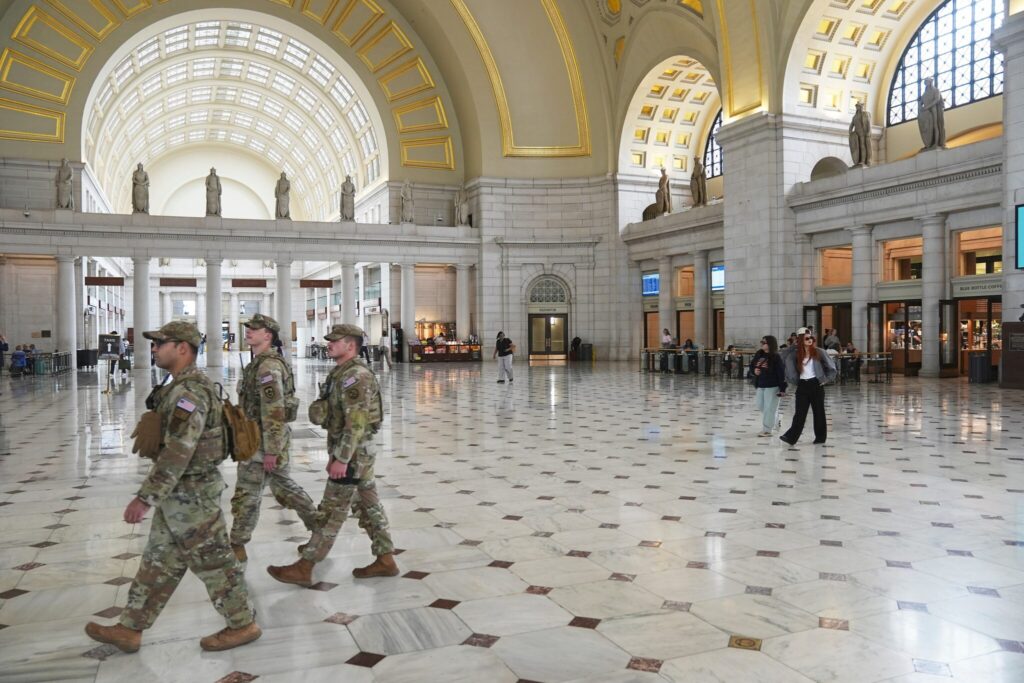
A visit beginning at Union Station or Metro Center immediately highlights one of the administration’s most visible initiatives.
National Guard troops remain stationed throughout Washington under an emergency deployment ordered by Trump in August 2025. The administration says the deployment is intended to combat crime and improve public safety.
Approximately 5,000 Guard members from Washington and other states are expected to remain in the city throughout much of 2026.
Although military forces have previously been deployed during periods including the Civil War, the 1968 riots following Martin Luther King Jr.’s assassination and the January 6 Capitol attack, today’s long-term deployment has become an everyday feature of the city’s streets and transit hubs.
DOGE Reshapes Federal Agencies
Walking down Pennsylvania Avenue brings visitors to the former headquarters of the U.S. Agency for International Development (USAID), one of the first agencies dramatically restructured during the administration’s government downsizing initiative.
Under the Department of Government Efficiency (DOGE), previously led by Elon Musk, thousands of federal positions were eliminated while approximately 90% of USAID’s foreign aid contracts were canceled.
The administration said the effort reduced government spending by roughly $60 billion, while critics argued the cuts disrupted humanitarian programs and contributed to rising unemployment across the Washington metropolitan region.
The building has since been repurposed for other federal operations.
Trump’s Image Appears Across Federal Buildings
Continuing toward Constitution Avenue and the National Mall reveals another visible change.
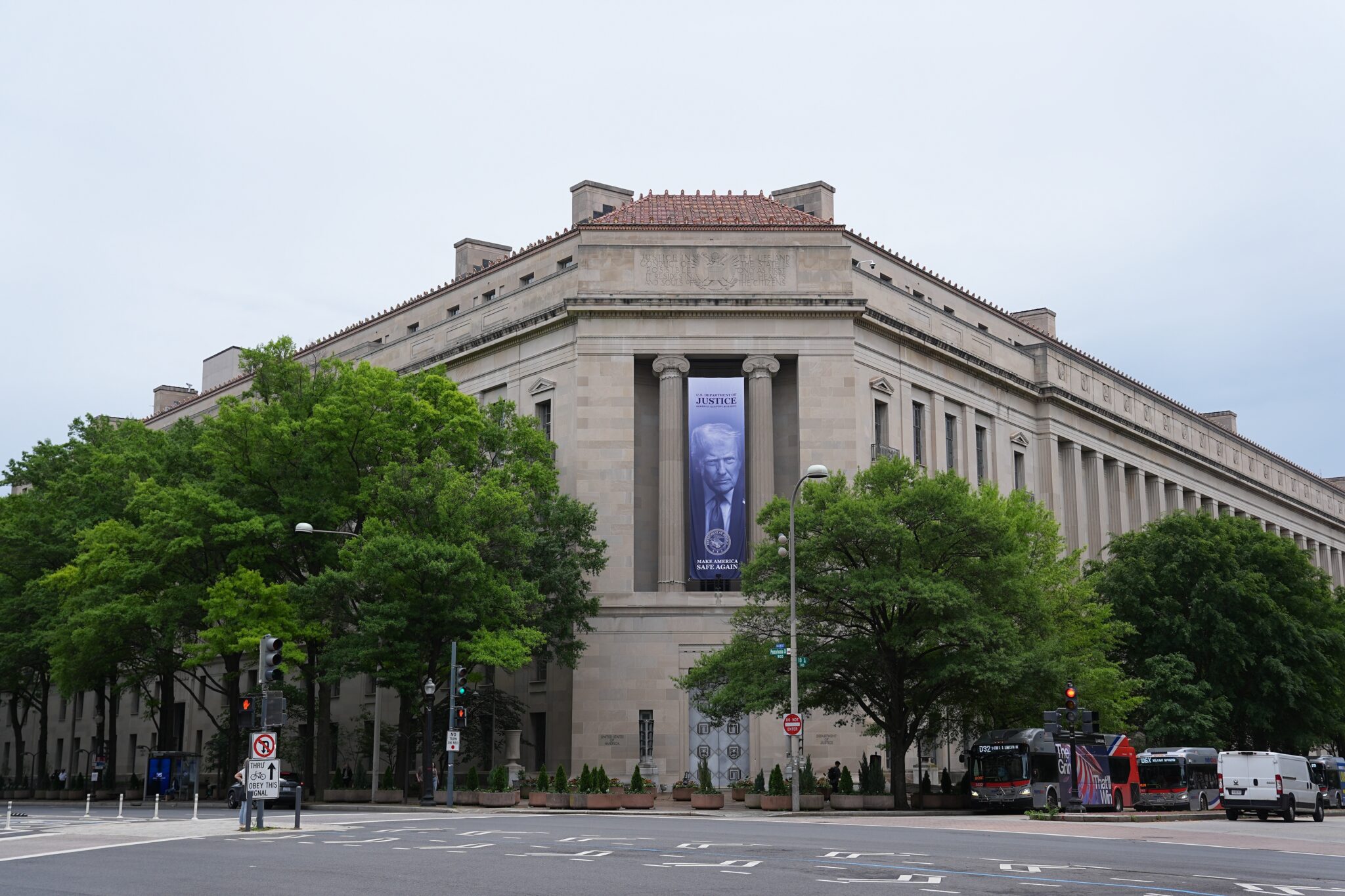
Large banners featuring President Trump’s image have appeared on several federal buildings, an uncommon display for a sitting American president.
At the Department of the Interior, banners featuring Trump and George Washington display slogans including “America’s First” and “America First.”
Nearby, the Department of Justice building also features the president’s image, reflecting the administration’s efforts to reshape the Justice Department and reinforcing Trump’s greater influence over federal law enforcement institutions.
Reflecting Pool Undergoes Dramatic Makeover
One of Washington’s most recognizable landmarks—the Reflecting Pool between the Lincoln Memorial and the Washington Monument—has also undergone significant changes.
Trump criticized the area as “filthy” before directing workers to repaint the pool in what he described as “American flag blue.”
Since the renovation, officials have dealt with algae growth, damage to the pool’s liner, vandalism and wildlife concerns, including reports of dead ducks.
Federal investigators said portions of the pool liner were intentionally cut, leading to arrests connected with the damage.
Plans for Monumental New Construction
Across the Potomac River, survey work has begun for a proposed 20-story triumphal arch honoring Trump.
Although still facing court challenges, the project has received preliminary federal approval.
Supporters view the monument as a patriotic addition to the capital, while critics argue it would alter one of Washington’s carefully designed symbolic sightlines connecting Arlington House and the Lincoln Memorial.
Urban planners note that new monuments in Washington often carry historical and political significance beyond their architectural design.
Kennedy Center and Other Presidential Tributes
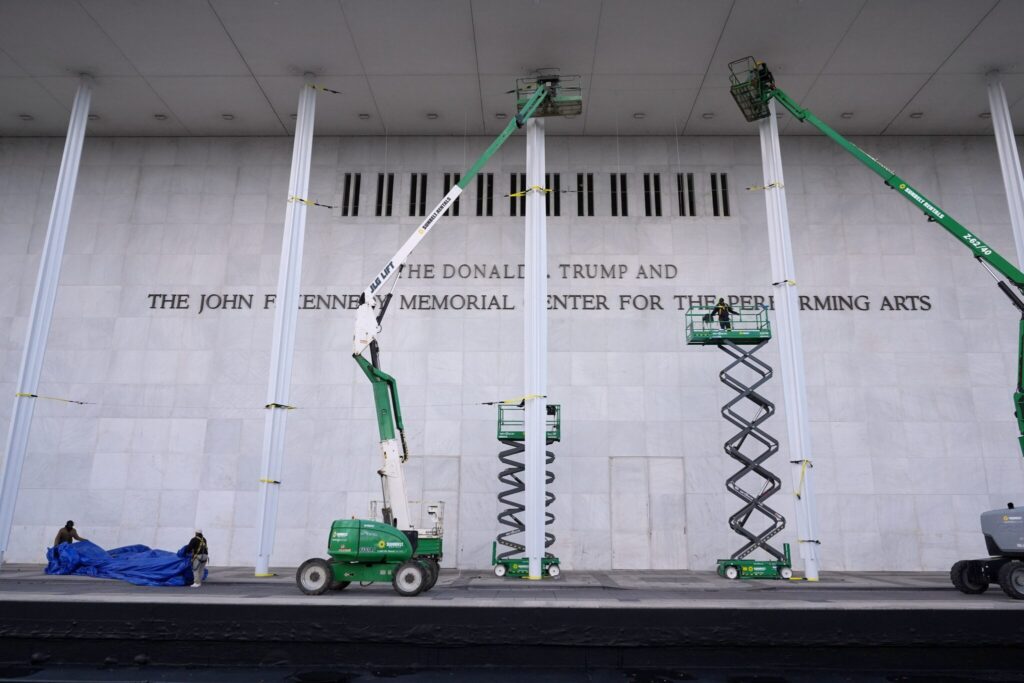
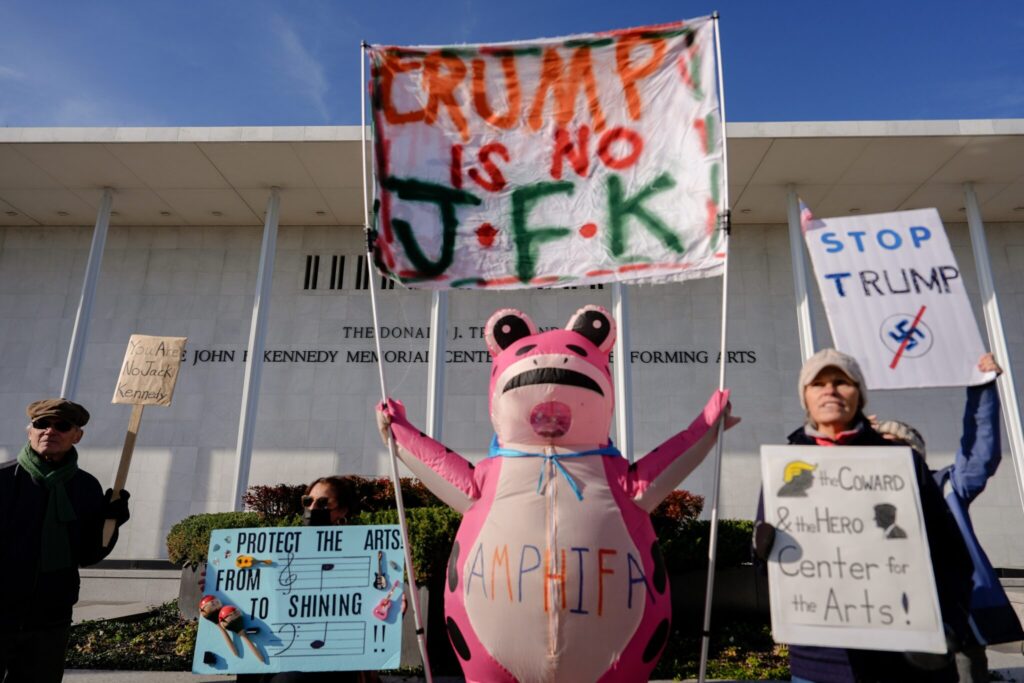
Nearby stands the John F. Kennedy Memorial Center for the Performing Arts.
Earlier this year, the facility temporarily displayed Trump’s name alongside Kennedy’s before a court ruled that federal law prohibits redesignating the center as a memorial for another individual.
Although Trump’s name has since been removed, temporary coverings remain visible while legal and administrative issues continue.
The administration has also placed Trump’s name on other federal institutions, including the U.S. Institute of Peace.
White House Renovations Continue
No visit to Washington is complete without passing the White House, where extensive construction remains underway.
The East Wing has largely been cleared to make way for a proposed presidential ballroom.
Administration officials estimate the ballroom project could cost roughly $400 million, with private donations covering construction while taxpayers fund expanded security infrastructure for the larger White House complex.
The proposal remains the subject of ongoing legal and congressional debate.
Elsewhere on the White House grounds, the historic Rose Garden originally redesigned by Jacqueline Kennedy has been replaced with a paved patio as part of the broader renovation effort.
Black Lives Matter Plaza Becomes History
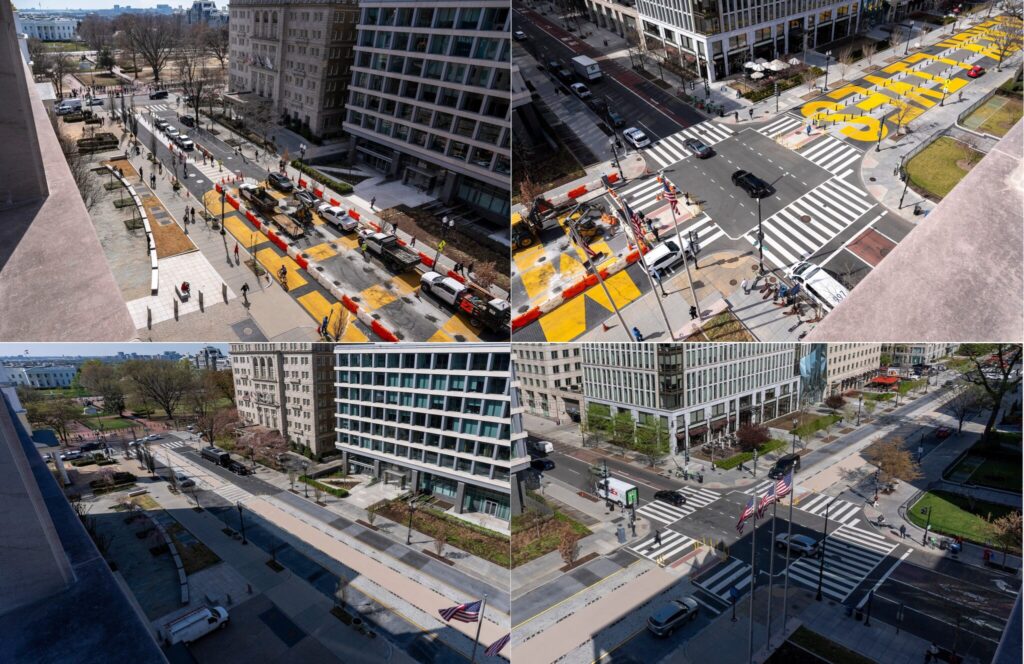
The final stop illustrates one of the city’s most symbolic political transformations.
Originally commissioned by Washington Mayor Muriel Bowser as both a memorial and protest site, the plaza became a nationally recognized gathering place for demonstrations and civic activism.
Its removal followed pressure from Congress over Washington’s funding and reflected changing political dynamics between the federal government and the District of Columbia.
The disappearance of the plaza marks one of the clearest visual reminders of how dramatically the nation’s capital has evolved during Trump’s second administration.
Washington Continues to Evolve
As millions of visitors arrive to celebrate America’s 250th birthday, they encounter both the familiar landmarks that define the nation’s history and a capital city undergoing one of its most significant political and physical transformations in decades.
Whether viewed as modernization or controversy, the changes have reshaped Washington’s appearance and ensured that Trump’s influence extends well beyond policy into the city’s architecture, public spaces and national symbolism.



You must Register or Login to post a comment.