

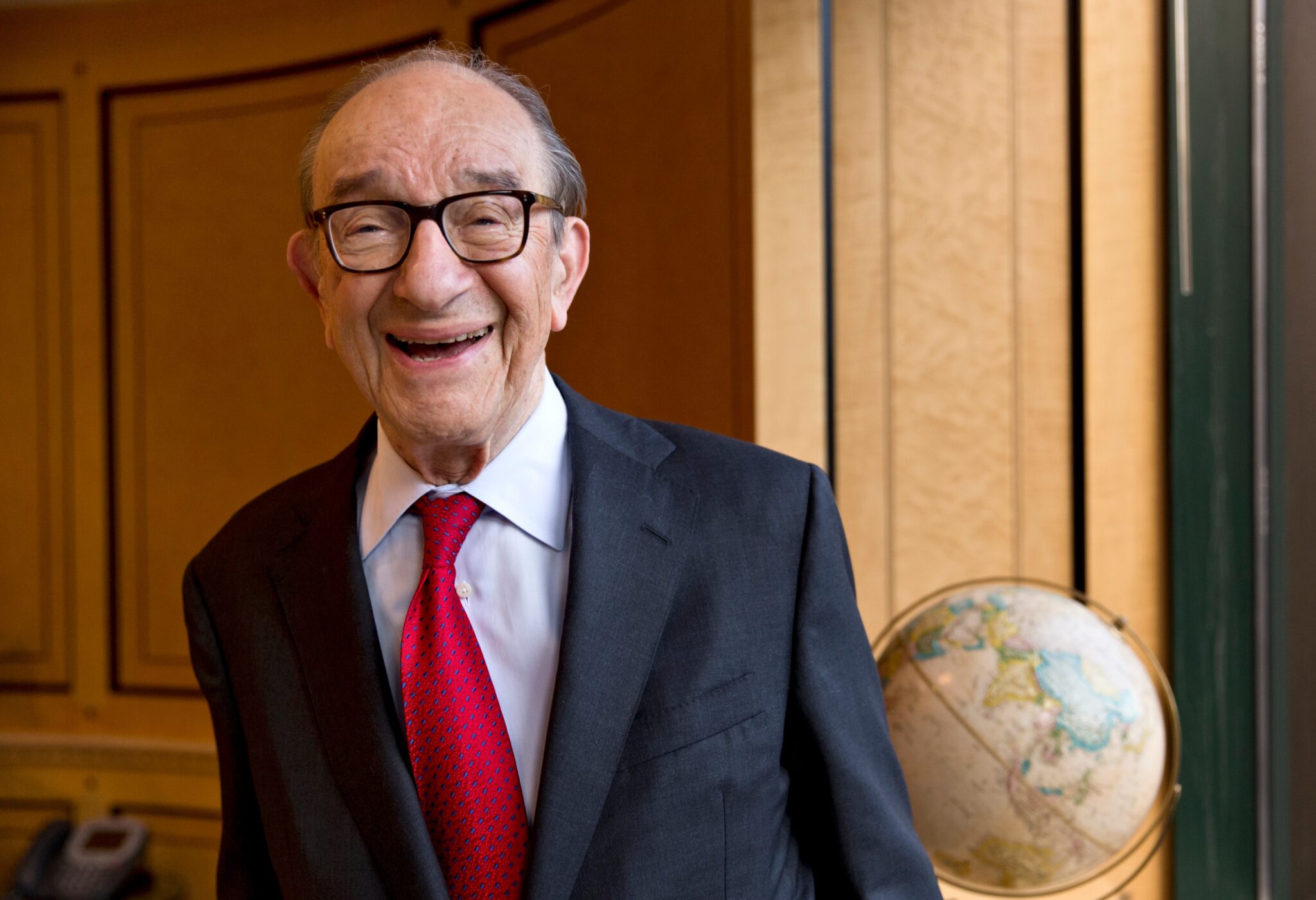
Alan Greenspan, Longtime Fed Chairman and Economic Influencer, Dies at 100/ Newslooks/ WASHINGTON/ J. Mansour/ Morning Edition/ Former Federal Reserve Chairman Alan Greenspan has died at age 100 from complications related to Parkinson’s disease. Greenspan led the Federal Reserve for nearly two decades, overseeing a long period of economic growth and stability. His legacy remains mixed, with praise for economic expansion and criticism tied to the 2008 financial crisis.
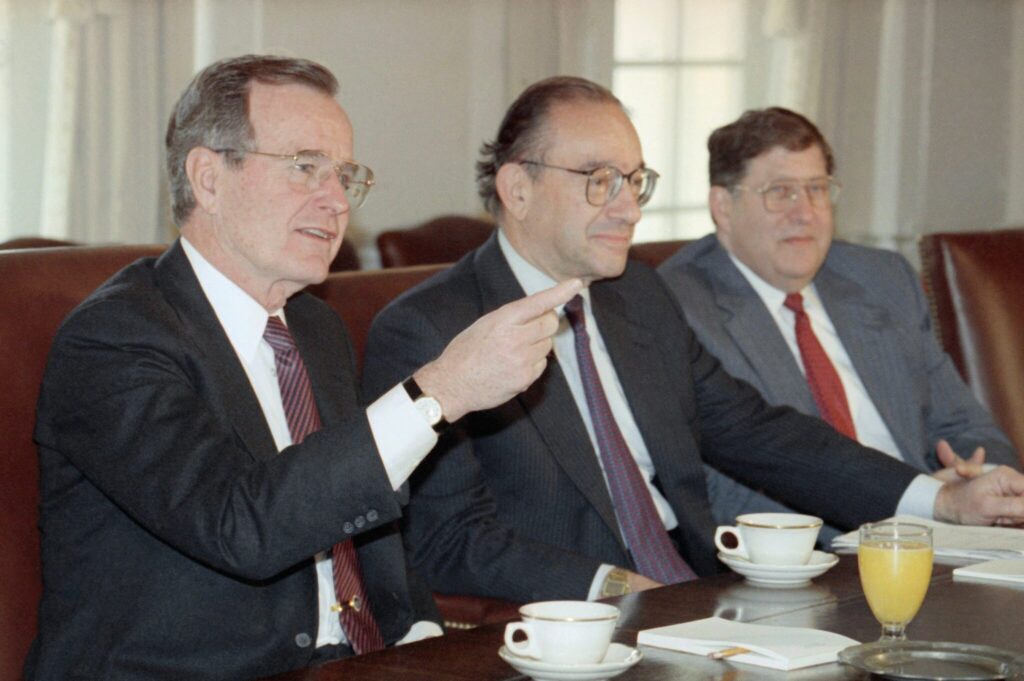
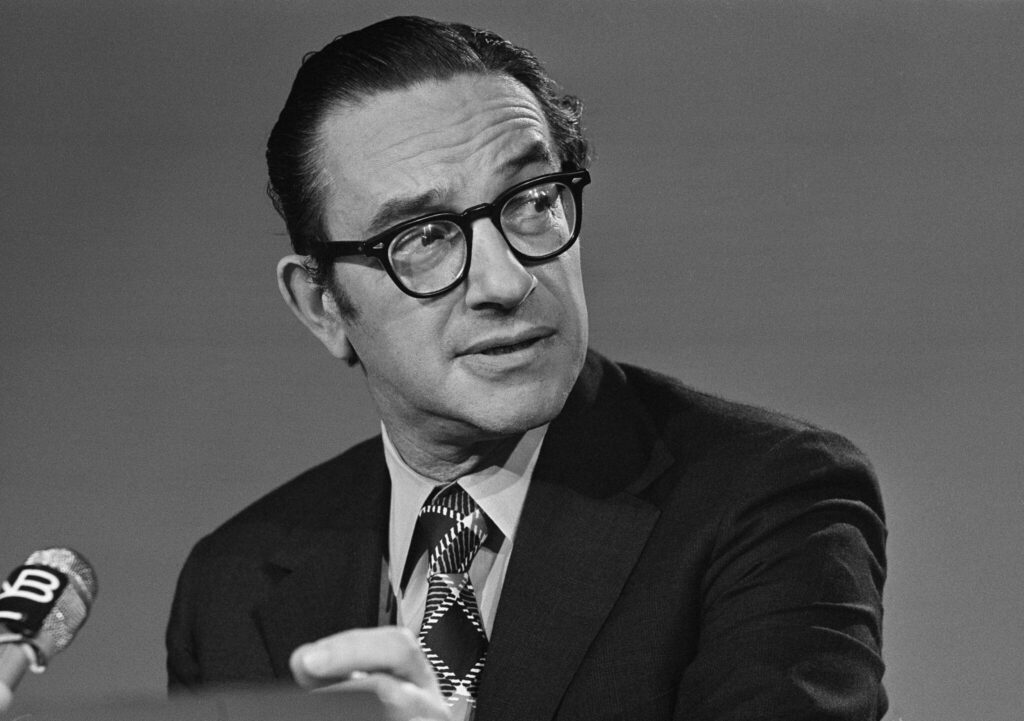
Alan Greenspan Quick Looks
- Alan Greenspan died at age 100.
- His wife, Andrea Mitchell, confirmed his death.
- He led the Federal Reserve from 1987 to 2006.
- Greenspan oversaw one of the longest economic expansions in U.S. history.
- He became known as the “Oracle” and “Maestro.”
- His “irrational exuberance” warning became a defining market phrase.
- Critics blamed some of his policies for contributing to the 2008 financial crisis.
- Greenspan later acknowledged mistakes regarding financial regulation.
- He remained active in economics and public policy after leaving the Fed.
- The Federal Reserve praised his role in building institutional credibility and price stability.
Deep Look
Former Federal Reserve Chairman Alan Greenspan Dies at 100
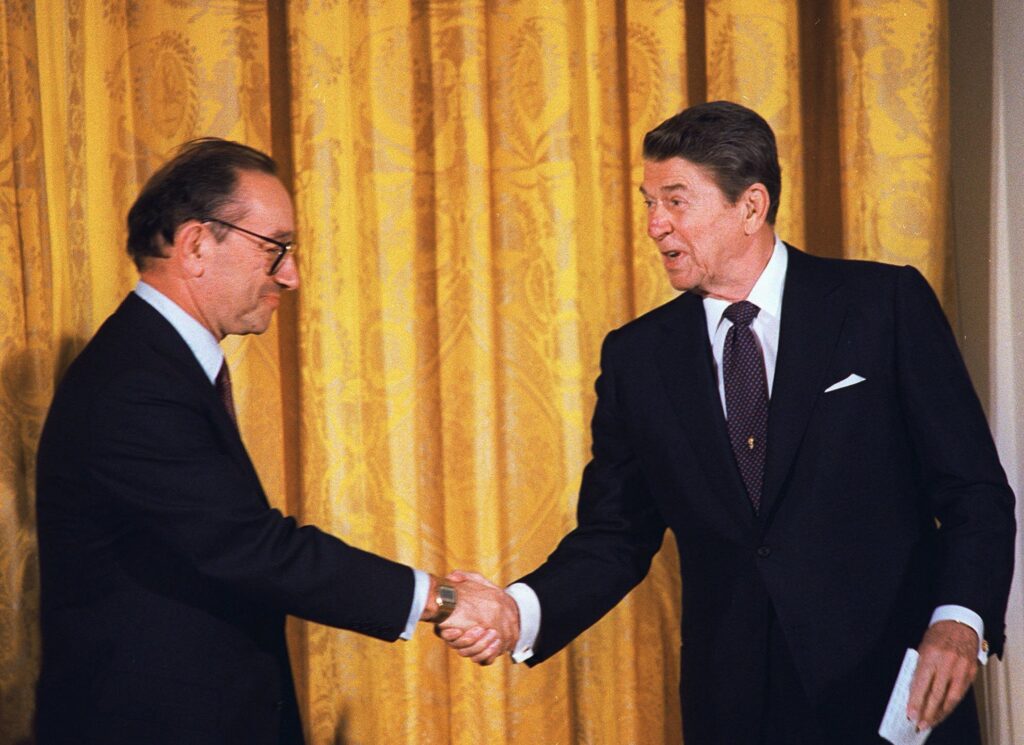
Former Federal Reserve Chairman Alan Greenspan, one of the most influential economic policymakers in modern American history, died Monday at the age of 100 from complications related to Parkinson’s disease.
His death was announced by his wife of nearly three decades, NBC News correspondent Andrea Mitchell.
“To me he was my husband, who shaped my life from our very first date in 1984,” Mitchell said. “He had ‘irrational exuberance’ for baseball, the Washington Commanders, tennis, golf, and music, especially jazz. He will be remembered for his brilliance and his kindness. Being his life partner was the joy of my life.”
Greenspan’s passing marks the end of an era for U.S. economic policy. His nearly 19-year tenure as chairman of the Federal Reserve made him one of the most recognizable and influential central bankers in the world.
Architect of a Long Economic Expansion
Greenspan served as Federal Reserve chairman from August 1987 until January 2006, guiding monetary policy through stock market crashes, financial crises, technological transformation and sustained economic growth.
During his tenure, the United States experienced a decade-long economic expansion beginning in 1991, accompanied by low inflation, rising productivity and significant gains in financial markets.
His influence became so significant that investors, economists and policymakers closely scrutinized every speech, testimony and public comment for clues about future interest rate decisions.
The Federal Reserve honored his contributions in a statement released following his death.
“Under his leadership, the Federal Reserve achieved a sustained era of price stability that supported economic growth and helped anchor the public’s confidence in the institution,” the Fed said in a statement Monday. “He brought rigorous analytical discipline to monetary policymaking and helped establish the credibility that remains one of the Federal Reserve’s most important assets.”
The “Maestro” and the Rise of Fed Influence
Greenspan became a global economic icon during the 1990s.
His ability to influence markets with even the briefest remarks earned him nicknames such as the “Oracle” and the “Maestro.”
Perhaps his most famous phrase came in December 1996 when he warned that stock prices may reflect “irrational exuberance,” a comment that triggered immediate reactions across global financial markets.
Despite his reputation, Greenspan often preferred vague and highly technical language.
His communication style became legendary in Washington and on Wall Street.
“I know you believe you understand what you think I said, but I am not sure you realize that what you heard is not what I meant,” Greenspan once told a befuddled congressional committee.
His remarks often became market-moving events, creating a culture where investors closely followed every signal from the Federal Reserve.
From Musician to Economic Powerhouse
Born in New York City’s Washington Heights neighborhood, Greenspan displayed extraordinary mathematical ability from a young age.
Before entering economics, he pursued music and studied at Juilliard. He performed professionally as a clarinet and saxophone player and even played alongside future jazz legend Stan Getz.
However, his experiences in music ultimately pushed him toward a different career path.
“I was a prop at parties,’’ he said in a 2007 interview with PBS NewsHour.
Greenspan later earned advanced degrees in economics from New York University and built a successful consulting business.
During the 1950s, he became associated with philosopher Ayn Rand and her circle of intellectual followers. Rand reportedly nicknamed him the “Undertaker” because of his reserved demeanor and preference for dark clothing.
Guiding the Economy Through Crisis
Greenspan’s leadership was tested almost immediately after taking office.
Only months into his tenure, the stock market suffered the historic crash of October 1987, known as Black Monday.
The Dow Jones Industrial Average plunged more than 22% in a single day.
Greenspan responded quickly by assuring financial institutions that the Federal Reserve would provide necessary liquidity to stabilize markets.
His actions were widely credited with helping restore confidence and preventing broader economic damage.
Throughout his career, he repeatedly navigated periods of uncertainty, including the Asian financial crisis of the late 1990s and numerous market disruptions.
His crisis-management reputation became one of the defining features of his leadership.
Financial Crisis Tarnishes His Legacy
Despite years of acclaim, Greenspan’s reputation suffered following the collapse of the U.S. housing market and the financial crisis of 2008.
Although he had left office two years earlier, many economists and policymakers argued that the low-interest-rate environment and deregulatory philosophy promoted during his tenure contributed to the buildup of systemic financial risks.
Greenspan later acknowledged shortcomings in his assumptions about financial institutions.
“I made a mistake’’ in assuming the nation’s banks, whose stability undergirds the financial system and the entire economy, could essentially regulate themselves.
Millions of Americans lost homes through foreclosure during the Great Recession, while governments worldwide struggled to contain the fallout.
The Financial Crisis Inquiry Commission later concluded:
“More than 30 years of deregulation and reliance on self-regulation by financial institutions, championed by former Federal Reserve chairman Alan Greenspan and others … had stripped away key safeguards, which could have helped avoid catastrophe.”
Active Public Voice After Leaving the Fed
Following his departure from the Federal Reserve, Greenspan remained highly active.
Through his consulting firm, Greenspan Associates, he advised financial institutions, delivered speeches and continued analyzing economic developments well into his 90s.
He authored several books, including his memoir and additional works examining economic trends and financial markets.
Greenspan also remained engaged in public policy debates.
In January 2026, he joined other former Federal Reserve chairs and Treasury secretaries in criticizing investigations targeting Federal Reserve Chair Jerome Powell.
The group warned such actions threatened the central bank’s independence and could have serious economic consequences.
Reflecting on Bubbles and Financial Risk
In his later years, Greenspan often revisited questions about financial bubbles, risk-taking and the limits of economic forecasting.
While defending aspects of his record, he acknowledged the difficulty of predicting speculative manias before they collapse.
“Bubbles go up very slowly as euphoria builds,” Greenspan said in a 2013 interview with The Associated Press. “Then fear hits, and it comes down very sharply. When I started to look at that, I was sort of intellectually shocked.”
His tenure remains one of the most consequential in Federal Reserve history, shaping monetary policy, global financial markets and economic thought for generations.
Whether remembered primarily for unprecedented prosperity or for the vulnerabilities exposed during the financial crisis, Alan Greenspan leaves behind a legacy that continues to influence economic policy around the world.


You must Register or Login to post a comment.