

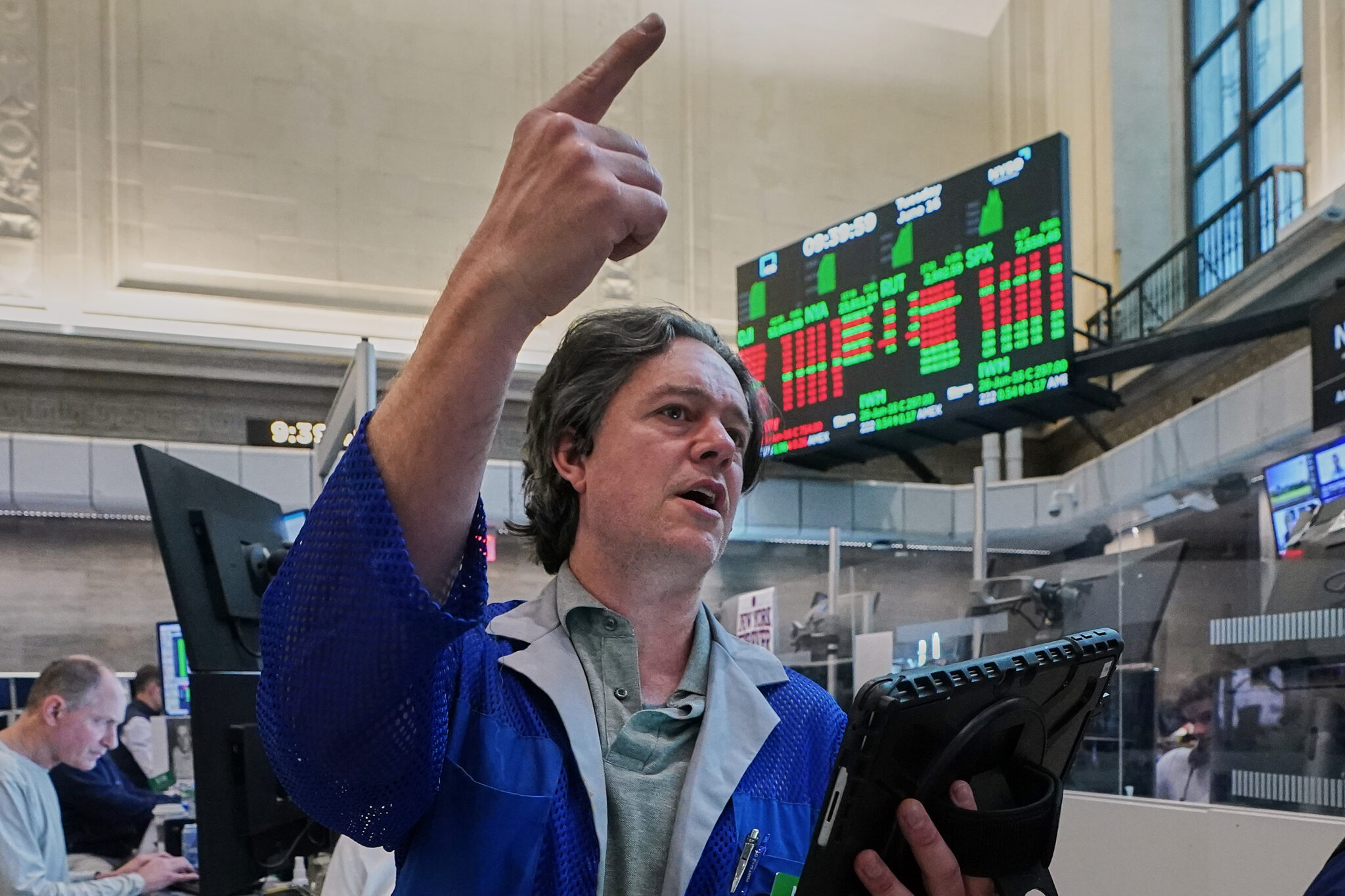
Wall Street Mixed as Oil Prices Fall on Iran Deal Optimism/ Newslooks/ WASHINGTON/ J. Mansour/ Morning Edition/ U.S. stock futures were mixed Monday as investors monitored progress in U.S.-Iran negotiations. Oil prices declined on hopes that diplomacy could bring a lasting end to the Iran conflict. Asian markets hit new highs, driven by continued enthusiasm for artificial intelligence-related stocks.

U.S.-Iran Talks and Oil Prices Quick Looks
- S&P 500 futures slipped 0.1% before the opening bell.
- Dow futures were little changed.
- Nasdaq futures gained 0.1%.
- Brent crude fell 2% to $79.02 per barrel.
- U.S. crude dropped to $75.11 per barrel.
- Negotiators reported progress in Switzerland talks.
- Technical discussions between U.S. and Iranian officials will continue this week.
- Investors remain cautious about the stability of any future agreement.
- AI-driven gains pushed Japanese and South Korean indexes to record highs.
- Markets are awaiting key U.S. inflation data later this week.
Deep Look
Wall Street Opens Week on a Mixed Note
U.S. stock futures traded quietly Monday as investors weighed developments in ongoing negotiations between the United States and Iran while keeping an eye on upcoming inflation data that could influence Federal Reserve policy.
Before the opening bell, futures tied to the S&P 500 slipped 0.1%, while Dow Jones Industrial Average futures were unchanged. Nasdaq futures edged 0.1% higher as technology shares continued to attract investor interest.
The restrained movement reflects a market searching for direction after recent gains fueled by easing geopolitical concerns and enthusiasm surrounding artificial intelligence investments.
Oil Prices Decline as Diplomatic Progress Emerges
Energy markets reacted positively to reports of progress in negotiations aimed at ending the conflict involving Iran.
Brent crude, the international benchmark, dropped $1.55, or 2%, to $79.02 per barrel. U.S. benchmark crude declined 74 cents to $75.11 per barrel.
Oil prices had surged significantly since the conflict began in late February, when Brent crude traded near $70 per barrel. The latest decline reflects growing optimism that diplomacy could help stabilize energy markets and reduce supply disruptions.
High-level negotiations between U.S. and Iranian officials concluded early Monday in Switzerland. Mediators from Qatar and Pakistan described the discussions as showing “encouraging progress,” while lower-level technical talks are expected to continue throughout the week.
Strait of Hormuz Remains a Key Focus
One of the central issues remains the Strait of Hormuz, one of the world’s most important shipping routes for oil and natural gas exports.
Although Iran claimed over the weekend that the strategic waterway had been closed again, U.S. officials said commercial traffic continued to move through the region.
Market analysts remain cautious despite the positive headlines.
“Moving towards a more permanent deal will be challenging, with very real risks of a flare-up in hostilities,” ING commodities strategists Warren Patterson and Ewa Manthey wrote in a commentary on Monday.
Thomas Mathews, head of markets for Asia Pacific at Capital Economics, noted that any recovery in shipping activity is likely to take time.
“With the controversial — and fragile — U.S.-Iran peace process now underway, attention is turning to how quickly tankers return to the Strait of Hormuz to load energy supplies,” he wrote.
Investors Await Key Inflation Report
Attention is also turning toward economic data later this week.
The U.S. government is scheduled to release the May Personal Consumption Expenditures (PCE) Price Index, the inflation measure most closely monitored by the Federal Reserve.
Recent economic reports have indicated persistent inflation pressures alongside a resilient labor market. Those factors have increased expectations among many analysts that the Fed could raise interest rates before the end of the year.
Higher borrowing costs could affect everything from mortgages and business loans to stock market valuations, making the upcoming inflation report a major event for investors.
European Markets React to UK Political Shift
European markets delivered mixed performances Monday as investors digested political developments in Britain.
Germany’s DAX traded flat, while France’s CAC 40 slipped 0.4%.
The leadership transition in the United Kingdom adds another layer of uncertainty for investors already navigating geopolitical tensions and central bank policy concerns.
AI Boom Drives Asian Markets to Fresh Records
Asian markets continued their remarkable rally, with technology stocks leading the way.
Japan’s Nikkei 225 climbed 1.6% to close at a new all-time high of 72,353.96.
Investors poured into companies positioned to benefit from the global artificial intelligence boom. Shares of SoftBank Group gained 1.9%, while semiconductor equipment maker Tokyo Electron advanced 3.2%.
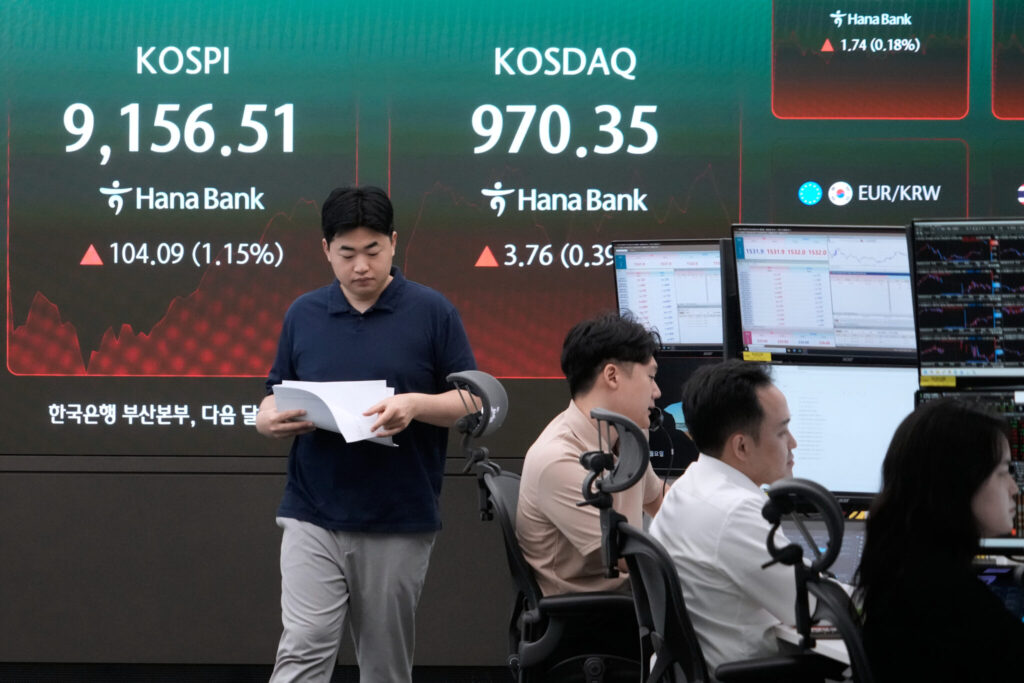
South Korea’s Kospi also reached a record closing high, rising 0.7% to 9,114.55.
Memory-chip giant SK Hynix surged 5.6% as demand expectations linked to AI infrastructure continued to strengthen.
The performance has been extraordinary. Over the last six months, the Nikkei has gained more than 40%, while the Kospi has surged more than 120%.
“We’re seeing another strong market today,” Neil Newman, managing director and head of strategy at Astris Advisory Japan, said. He cautioned that the Japanese market is “probably getting a little stretched” from an investor’s point of view, “especially with what’s going (on) in the Middle East.”
Mixed Performance Across the Region
Elsewhere in Asia, market performance was more varied.
Hong Kong’s Hang Seng Index fell 0.7% to 23,768.52, while mainland China’s Shanghai Composite rose 1.8% to 4,163.10.
Australia’s S&P/ASX 200 slipped 0.1%.
Taiwan’s Taiex surged 2.8%, continuing its strong technology-led rally, while India’s Sensex advanced 0.5%.
Outlook Remains Tied to Diplomacy and Inflation
For investors, two themes are likely to dominate markets in the coming days.
The first is whether negotiations between Washington and Tehran can evolve into a durable agreement that stabilizes energy markets and reduces geopolitical risk.
The second is whether incoming U.S. inflation data will strengthen the case for additional Federal Reserve rate hikes later this year.
With oil prices easing, stock markets near record highs and central banks remaining vigilant, investors are balancing optimism with caution as the second half of 2026 approaches.






You must Register or Login to post a comment.