

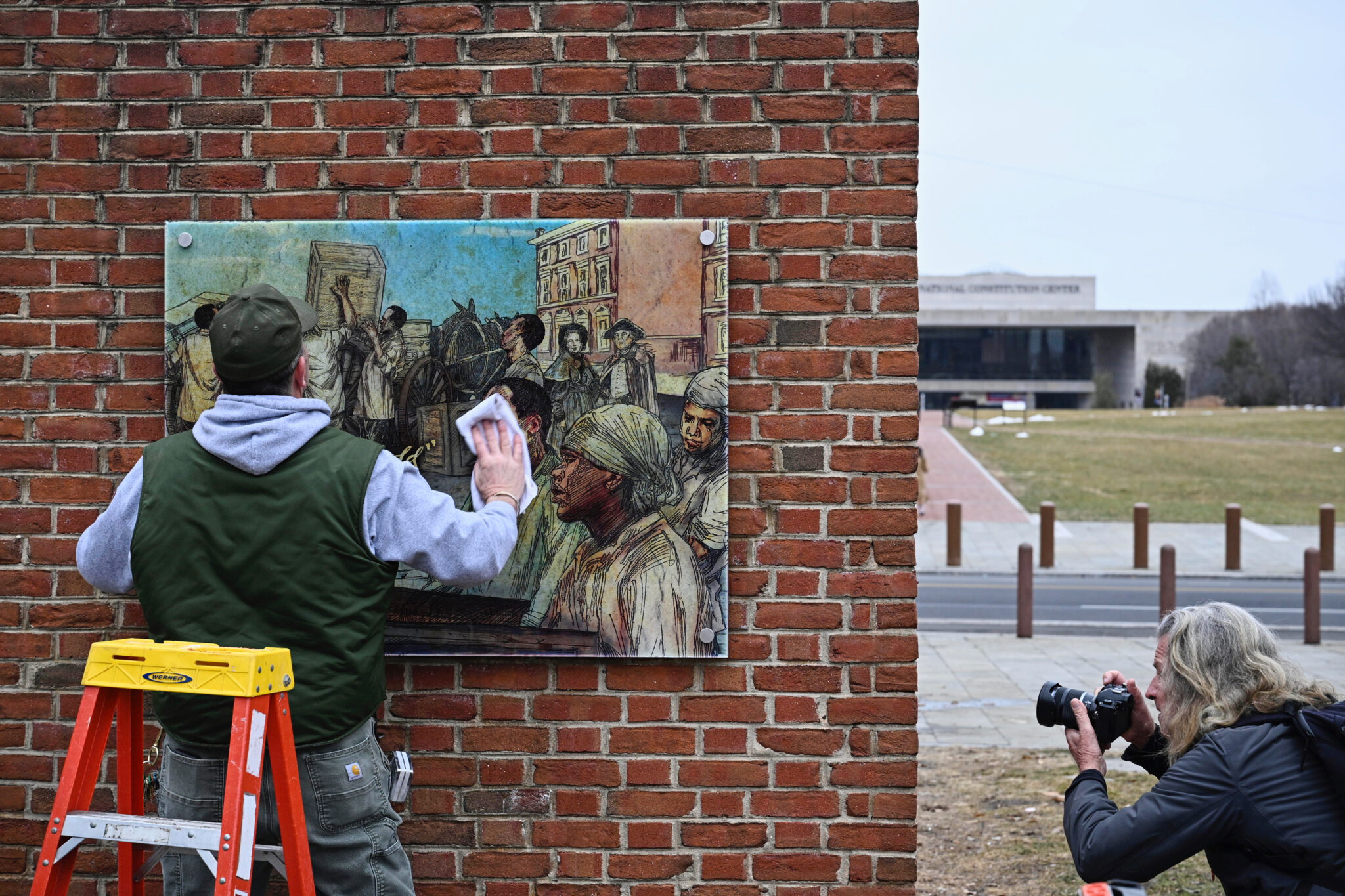
Appeals Court Lets Trump Administration Replace Washington Slavery Exhibit in Philadelphia/ Newslooks/ WASHINGTON/ J. Mansour/ Morning Edition/ A federal appeals court ruled that the Trump administration can replace a slavery exhibit at George Washington’s former Philadelphia residence. The decision overturned a lower court order that required the National Park Service to reinstall removed interpretive panels. Philadelphia officials and historians argue the replacement exhibit minimizes the role of slavery in Washington’s household.
Washington Slavery Exhibit Ruling Quick Looks
- Federal appeals court sided with the Trump administration.
- Decision allows replacement of slavery exhibit panels in Philadelphia.
- Ruling overturns a lower court injunction.
- Exhibit is located at the President’s House Site near Independence Hall.
- National Park Service removed panels following a Trump executive order.
- Philadelphia sued over changes made to the site.
- City argued it should be consulted before alterations occur.
- Appeals court rejected the city’s contract claims.
- Historians have criticized the replacement content as whitewashed.
- Case adds to broader legal battles over historical interpretation at federal sites.
Deep Look
Appeals Court Hands Trump Administration Victory
A federal appeals court has cleared the way for the Trump administration to replace a controversial slavery exhibit at George Washington’s former home in Philadelphia, overturning a lower court order that had required the National Park Service to reinstall interpretive panels removed earlier this year.
The unanimous ruling from a three-judge panel of the 3rd U.S. Circuit Court of Appeals marks a significant legal victory for the administration as it continues efforts to reshape how American history is presented at federally managed museums, parks and historical landmarks.
The court concluded that Philadelphia’s legal arguments lacked merit and determined that the city’s cooperative relationship with the federal government did not give it authority to block changes at the historic site.
Dispute Centers on Washington’s Philadelphia Residence
The case involves the President’s House Site, an outdoor exhibit located within Independence National Historical Park in Philadelphia.
The site commemorates the residence where George and Martha Washington lived during the 1790s when Philadelphia briefly served as the nation’s capital. Historical records show the Washington family also kept nine enslaved people at the property.
Created through a partnership involving the federal government, historians, community organizations and the city of Philadelphia, the exhibit was designed to highlight both the nation’s founding and the reality of slavery during the early years of the republic.
Philadelphia contributed approximately $1.5 million toward developing the exhibit as part of a broader agreement involving the historic park.
Executive Order Triggered Changes
The controversy began after President Donald Trump signed an executive order directing federal agencies to review exhibits, monuments and historical displays that officials believed portrayed Americans in an overly negative manner.
The order instructed agencies to avoid content that “inappropriately disparages Americans past or living.”
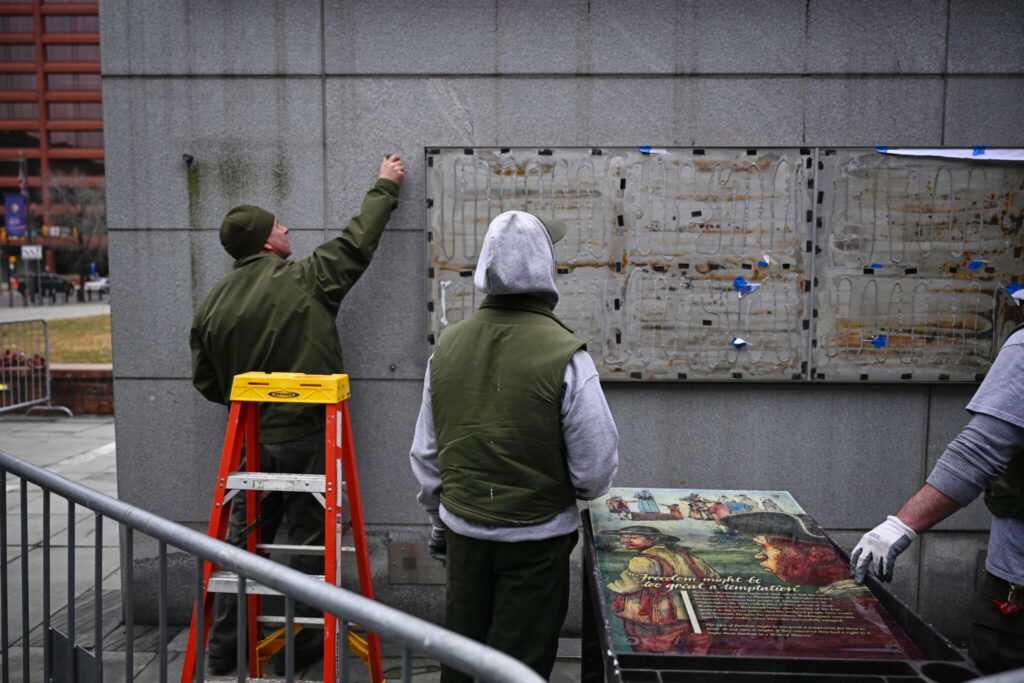
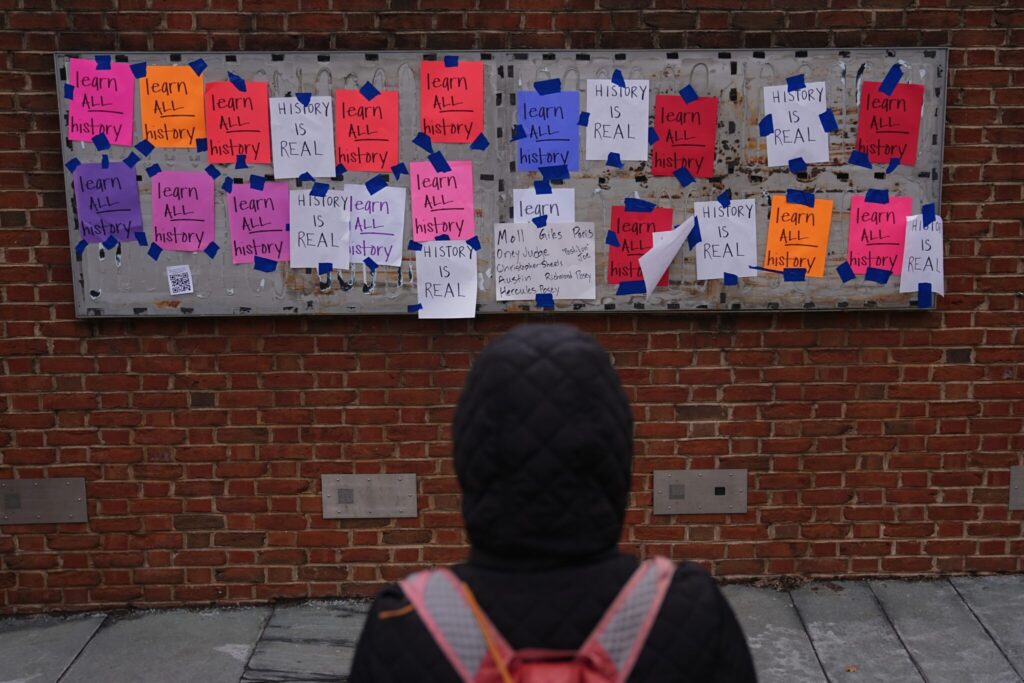
Following the directive, the National Park Service removed several interpretive panels at the President’s House Site in January.
The administration proposed replacing the displays with new content that officials argue provides broader historical context.
Critics, including historians and city leaders, contend the revised exhibit reduces emphasis on slavery and softens the historical realities faced by enslaved people who lived and worked at the site.
Court Rejects Philadelphia’s Arguments
Philadelphia filed suit shortly after the panels were removed, arguing that existing agreements required the federal government to consult city officials before making substantial changes to the exhibit.
The city maintained that its financial contribution and long-standing partnership in developing the site gave it a continuing role in decisions affecting the exhibit.
Justice Department attorneys disagreed, arguing that the National Park Service has sole authority to determine how history is presented on federal property.
The appeals court sided with the federal government.
Judges ruled that the city’s interpretation of its agreements with the National Park Service stretched beyond what the contracts actually required.
According to the opinion, obligations to maintain the site did not mean exhibits had to remain permanently unchanged.
“The duty to maintain is better understood as a general management obligation that accompanies ownership,” the court wrote, rejecting the argument that the displays must remain in place indefinitely.
Judges Defend Replacement Plans
The appellate panel also pushed back against criticism that the proposed replacement exhibit distorts history.
While historians and local officials have argued that the new displays downplay slavery, the judges described the planned installation as providing substantial historical context.
That assessment differs sharply from concerns raised by scholars who have spent years documenting the experiences of enslaved individuals connected to Washington’s Philadelphia household.
Critics fear that revisions could weaken public understanding of the contradictions between America’s founding ideals and the institution of slavery.
Part of a Larger National Debate
The Philadelphia case is one piece of a broader national debate over how American history should be interpreted and presented at public institutions.
The ruling comes just days after a separate federal judge in Massachusetts ordered the Trump administration to restore historical exhibits and materials altered under the same executive order.
That case remains under appeal, creating uncertainty about how federal agencies ultimately will implement historical revisions nationwide.
Legal experts say the conflicting rulings could eventually require further review by higher courts.
Future of the Site Remains Unclear
Although the appeals court cleared the way for changes, questions remain about how quickly the National Park Service will proceed.
Approximately half of the original panels had already been restored before work was paused in February.
The interaction between the Philadelphia decision and the separate Massachusetts ruling could affect the timeline for any replacement installation.
For now, however, the Trump administration has secured a significant court victory in its effort to reshape the interpretation of American history at one of the nation’s most prominent historic sites.



You must Register or Login to post a comment.