

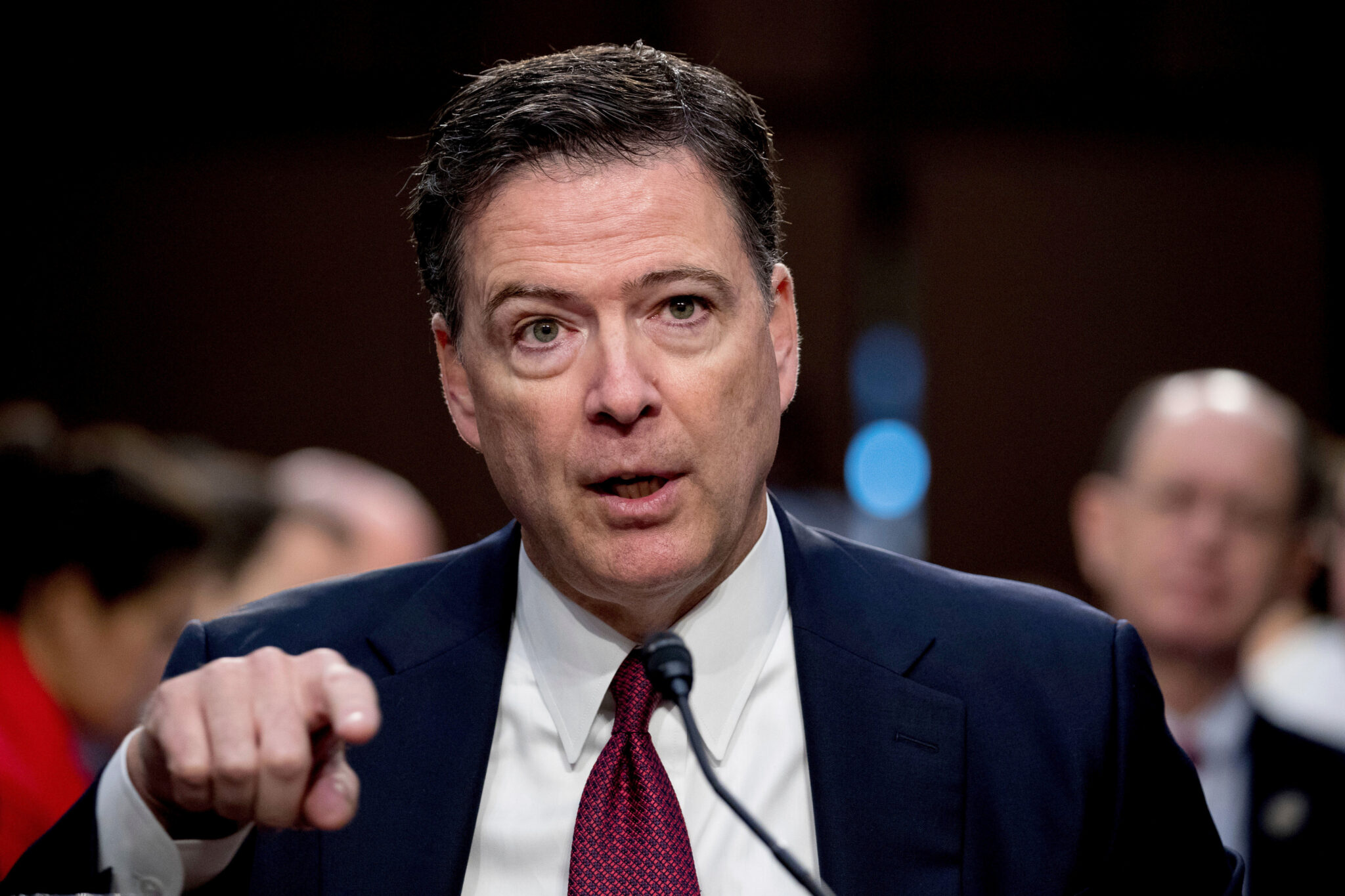
James Comey Says ’86 47′ Seashells Photo Was Political Speech, Not a Trump Threat/ Newslooks/ WASHINGTON/ J. Mansour/ Former FBI Director James Comey asked a judge to dismiss federal charges alleging that his “86 47” seashells post threatened President Donald Trump. Comey’s lawyers argue that the image represented protected political opposition rather than a “true threat” of violence. Prosecutors say they can prove intent, while Trump has asserted that the numbers clearly referred to assassination.
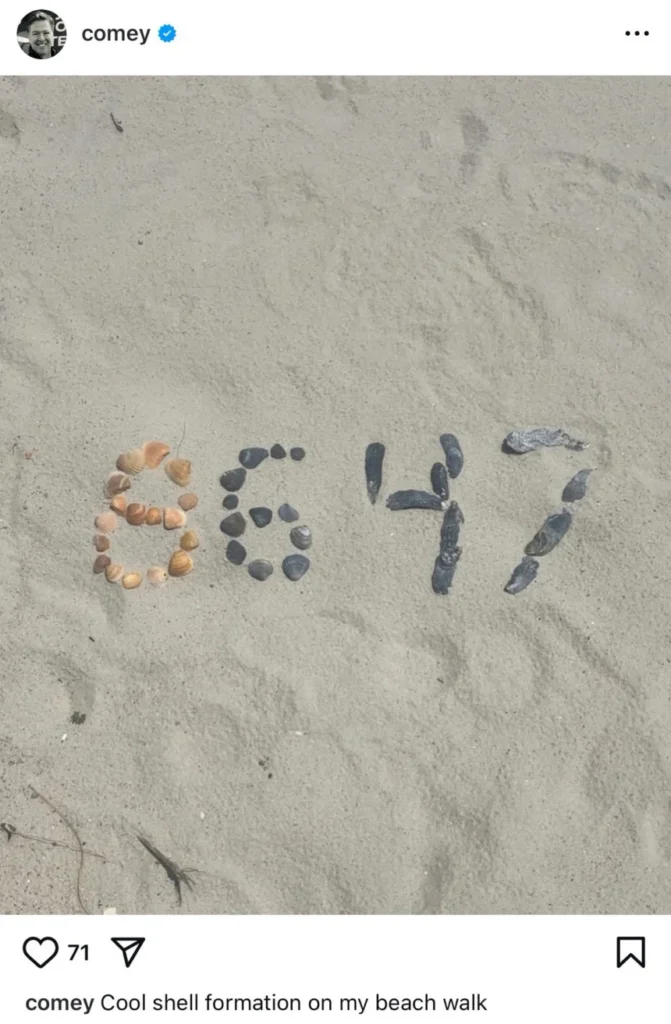
(James Comey/Instagram)
Quick Look
- Comey faces a two-count federal indictment.
- The case concerns an Instagram image of seashells arranged as “86 47.”
- Prosecutors allege the post threatened Trump, the 47th president.
- Comey says he did not know some people interpreted the numbers as violent.
- He deleted the post and stated that he opposed violence.
- His lawyers argue the prosecution violates the First Amendment.
- The Justice Department has not publicly detailed its evidence of intent.
- Comey was interviewed by the Secret Service about the post.
- An earlier case accusing Comey of lying to Congress was dismissed.
- Trump has publicly called for Comey’s prosecution.
Deep Look
Comey Asks Judge to Dismiss Threat Case
WASHINGTON — Former FBI Director James Comey asked a federal judge Monday to dismiss criminal charges arising from a social media image showing seashells arranged to display “86 47.”
Federal prosecutors allege that the post constituted a threat against President Donald Trump, who is the 47th president.
Comey’s attorneys argue that the image was political expression protected by the First Amendment and did not meet the legal definition of a “true threat.”
The defense said the government cannot prove that Comey intended to threaten Trump or knew the image would be interpreted as advocating violence.
Defense Says Phrase Means “Get Rid Of”
Comey’s lawyers said “86” has long been used to mean “get rid of” or “eject.”
They noted that “86 47” has appeared on thousands of commercial products and has been displayed at political demonstrations.
In that context, the attorneys argue, a reasonable person would interpret Comey’s post as opposition to Trump rather than a call for physical harm.
“But the government now singles out Mr. Comey to prosecute one of the President’s most prominent critics for publishing another person’s statement of political opposition,” his attorneys wrote.
“That attempt to suppress core political speech contravenes both the statutes at issue and the First Amendment.”
Indictment Contains Two Federal Counts
The two-count indictment accuses Comey of “knowingly and willfully” threatening to “take the life of, and to inflict bodily harm upon” Trump.
It also charges him with transmitting a threat through interstate commerce.
The indictment argues that a “reasonable recipient who is familiar with the circumstances would interpret” the post as a threat.
Comey disputes that interpretation and denies intending to promote violence.
A court has not determined his guilt, and the motion to dismiss remains pending.
Comey Deleted the Instagram Post
The former FBI director removed the image shortly after publishing it.
“I didn’t realize some folks associate those numbers with violence,” Comey wrote afterward.
“I oppose violence of any kind so I took the post down,” he added.
The Secret Service interviewed Comey after Trump administration officials asserted that the image advocated the president’s assassination.
No details from that interview were disclosed in the supplied report.
Lawyers Characterize Post as Political Hyperbole
Comey’s attorneys argued that even an interpretation connecting “86 47” with violence would not be sufficient to support the charges.
“Even if ‘86 47’ could implausibly be read to suggest violence, a reasonable observer would still understand Mr. Comey’s post as mere political hyperbole, not a true threat,” they wrote.
“The Supreme Court has rejected threats prosecutions based on speech far more directly threatening than Mr. Comey’s seashells post here.”
The legal dispute centers on the distinction between constitutionally protected rhetoric and a serious expression of intent to commit violence.
Justice Department Says It Can Prove Intent
The Justice Department has not publicly explained what evidence it possesses to establish Comey’s alleged intent.
Acting Attorney General Todd Blanche said earlier in 2026 that prosecutors prove intent through evidence gathered during an investigation.
In every case, he said, the government establishes intent with “witnesses, with documents, with the defendant himself to the extent it’s appropriate.”
“And that’s how we’ll prove intent in this case,” Blanche said in April.
He made the remarks shortly after becoming acting attorney general following Pam Bondi’s dismissal.
Trump Says Meaning Was Obvious
Trump has argued that Comey knew the numbers could be interpreted as a call for assassination.
In a Fox News Channel interview in 2025, Trump said Comey understood “exactly what that meant.”
“A child knows what that meant,” Trump said. “If you’re the FBI director and you don’t know what that meant, that meant assassination. And it says it loud and clear.”
Trump fired Comey as FBI director in 2017 and has repeatedly attacked him publicly, describing him as a “corrupt piece of garbage” and calling for his prosecution.
Comey Has Long Been a Trump Adversary
Trump’s anger toward Comey dates partly to the former FBI director’s role overseeing the opening months of the investigation into whether members of Trump’s 2016 campaign coordinated with Russia’s efforts to influence the presidential election.
An earlier indictment in Virginia accused him of making false statements to Congress.
A judge dismissed that case in November 2025 after finding that the prosecutor who charged Comey had been appointed unlawfully.
The same prosecutor had also brought a case against New York Attorney General Letitia James, another prominent Trump adversary.
Case Raises Political-Prosecution Questions
Comey’s lawyers portray the latest charges as an effort to punish a prominent critic of the president and suppress political expression.
The Trump administration maintains that the Justice Department is enforcing criminal law and that Comey’s post constituted a prosecutable threat.
The judge must determine whether the indictment sufficiently alleges criminal conduct and whether the post can legally support a threats prosecution.
If the dismissal motion fails, the case could proceed toward trial, where prosecutors would have to prove each element of the charges beyond a reasonable doubt.





You must Register or Login to post a comment.