

The ‘Rockets and Feathers’ Effect Keeping Grocery Prices Elevated/ Newslooks/ WASHINGTON/ J. Mansour/ US grocery inflation has slowed significantly from its 2022 peak, but food prices remain elevated because slower inflation does not mean prices are falling. Economists call this pattern the “rockets and feathers” effect: Prices rise rapidly but decline slowly, if they fall at all. Consumers are responding by buying fewer items, choosing store brands and shifting their spending toward Walmart, Costco, Aldi and other discount retailers.
Quick Look
- US grocery prices increased 11.4% in 2022, the sharpest rise in 50 years.
- The USDA expects food-at-home prices to rise another 2.7% in 2026.
- Grocery inflation is slowing, but broad price declines would require deflation.
- Consumers have reduced the number of products they buy at grocery stores.
- Discount retailers are gaining market share from traditional supermarkets.
- Store-brand sales reached a record $282.8 billion in 2025.
- Coffee prices in US cities have increased 54% since 2019.
- Fresh tomato prices were 19.5% higher in June than a year earlier.
- Walmart and Target have begun cutting prices on selected food products.
Deep Look
Grocery Inflation Slows Without Reversing Prices
Economists have a phrase for the behavior of US grocery prices in recent years: “rockets and feathers.”
Food prices rose like rockets after the COVID-19 pandemic, propelled by supply disruptions, labor shortages, geopolitical conflict, disease outbreaks and higher production costs. But like feathers, prices have been slow to descend.
The pattern has frustrated Americans who experienced the steepest increase in grocery prices in five decades. Inflation for food consumed at home peaked in 2022, when prices rose 11.4%, but the subsequent slowdown has not returned grocery bills to their previous levels.
Higher inflation after the United States and Israel attacked Iran has prolonged the financial pressure.
“I think the public is coming to grips with, ‘Well, I’m hearing inflation has slowed, but things aren’t getting any cheaper.’ It has to be deflation for prices to go down, and that’s very rare,” said Matt Hamory, head of the global grocery practice at consulting firm AlixPartners.
USDA Forecasts Another Increase in 2026
The US Department of Agriculture said Friday that food-at-home prices are expected to rise 2.7% nationwide in 2026.
That would be higher than the grocery inflation recorded in 2024 and 2025, although it remains close to the historical annual average of 2.6%.
A lower inflation rate means prices are increasing more slowly. It does not mean that the cost of groceries is declining.
Consumers are therefore paying the cumulative cost of several consecutive years of increases. Even modest inflation compounds on top of the sharp price gains that followed the pandemic.
Consumers Buy Fewer Grocery Items
The continued pressure is changing how Americans shop, with possible consequences for the wider economy.
A study by Bain & Co. and NielsenIQ found that the number of products purchased at US grocery stores declined during the second half of 2025. The decrease became sharper beginning in February 2026.
The researchers identified several factors influencing grocery spending, including high gasoline prices, increased use of GLP-1 medications and reductions in the number of people receiving government food assistance.
Higher fuel costs can reduce the amount households have available for groceries, while GLP-1 medications may change food consumption patterns.
Discount Retailers Gain Market Share
Shoppers are increasingly comparing prices and visiting multiple stores to find better deals.
Costco, Walmart and Aldi gained market share during the second quarter of 2026 at the expense of traditional grocery chains including Kroger and Albertsons, according to market research company Numerator.
The shift indicates that consumers remain highly sensitive to prices even as the overall inflation rate moderates.
Retailers offering lower prices, bulk packages or more extensive private-label selections have benefited from that sensitivity.
Store Brands Reach Record Sales
Many shoppers are replacing national brands with private-label products sold under retailers’ own names.
US sales of store brands across supermarkets, drugstores and other retail outlets reached a record $282.8 billion in 2025, according to the Private Label Manufacturers Association.
The change could prove durable if consumers decide that lower-priced store products provide quality comparable to national brands.
“Now that this option becomes available, why would I go back? You have the convenience, it’s the same, but my cost is 40% less and it’s a brand that I know and trust,” said Sean Hooper, a senior solution principal at retail consulting firm Relex Solutions.
Pandemic Disruptions Sent Prices Higher
Multiple forces drove grocery prices sharply upward following the pandemic.
Russia’s war in Ukraine disrupted global supplies of grains, fertilizer and energy. A highly contagious outbreak of bird flu reduced poultry populations and pushed US egg prices to record levels in 2025.
Packaging, transportation, ingredients and labor also became more expensive.
Once prices rise, however, consumers generally cannot expect them to fall at the same speed.
Retailers Resist Immediate Price Cuts
Stores can be reluctant to discount products purchased when wholesale costs were higher, according to Jared Bernstein, a senior policy fellow at the Stanford Institute for Economic Policy. Bernstein previously chaired President Joe Biden’s Council of Economic Advisers.
Retailers and food manufacturers also seek to protect profit margins and may resist surrendering revenue gains achieved after the pandemic.
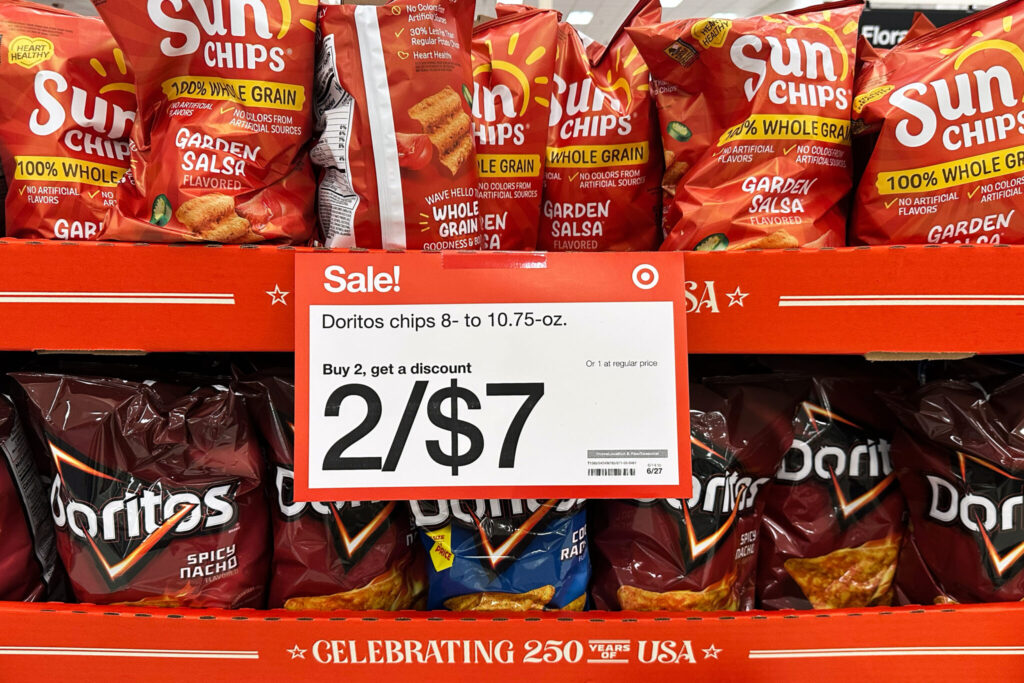
PepsiCo, for example, raised prices by double-digit percentages for eight consecutive quarters during 2022 and 2023, citing higher costs for ingredients and packaging. The company began lowering prices on some snacks in 2025 after customer demand weakened.
Shopping Behavior Can Keep Prices Elevated
Consumers themselves can influence how quickly prices decline.
When prices rise rapidly, shoppers usually search more aggressively for discounts and alternatives. But when prices begin falling, consumers may reduce their efforts to compare stores and products.
That behavior weakens competitive pressure on retailers to continue lowering prices.
“There’s less competitive force on the feather side of the mountain,” Bernstein said.
Climate Pressures Raise Coffee Prices
Some food costs are driven by long-term problems that have no immediate solution.
The average price of coffee in US cities has climbed 54% since 2019, according to government data.
Poor growing conditions in several major coffee-producing countries have reduced yields and contributed to higher global prices. Those conditions include drought in Vietnam, heavy rainfall in Indonesia and hot, dry weather in Brazil.
Coffee also faced a US tariff during much of 2025, although the duty was eventually removed.
Tomato Tariff Raises Consumer Costs
Other price increases have more identifiable policy causes.
US shoppers paid 19.5% more for fresh tomatoes in June 2026 than they did one year earlier. The increase followed the Trump administration’s imposition of a 17% import tax on fresh tomatoes from Mexico.
Importers generally pass at least part of tariff costs to retailers, which can then charge consumers higher prices.
Removing or reducing those tariffs could ease some price pressure, although other expenses throughout the supply chain would remain.
Major Retailers Begin Cutting Selected Prices
Hamory said the “feather” may finally be starting to descend as major retailers invest in targeted price reductions.
Walmart announced in early July that it was rolling back prices on products including ground beef, corn, red cherries, ice cream, potato chips, Coca-Cola and Pepsi. Target reduced prices on selected foods in March.
“If the big guys are really investing, saying, ‘That’s what I need to do to get right with my customer,’ that will force others in the market to act,” Hamory said. “It’s just in the process of starting, but that’s a thing we could be seeing.”
Broader competition among large retailers could eventually slow grocery inflation further or produce price reductions in specific categories. But a widespread return to pre-pandemic prices remains unlikely without sustained deflation.






You must Register or Login to post a comment.