

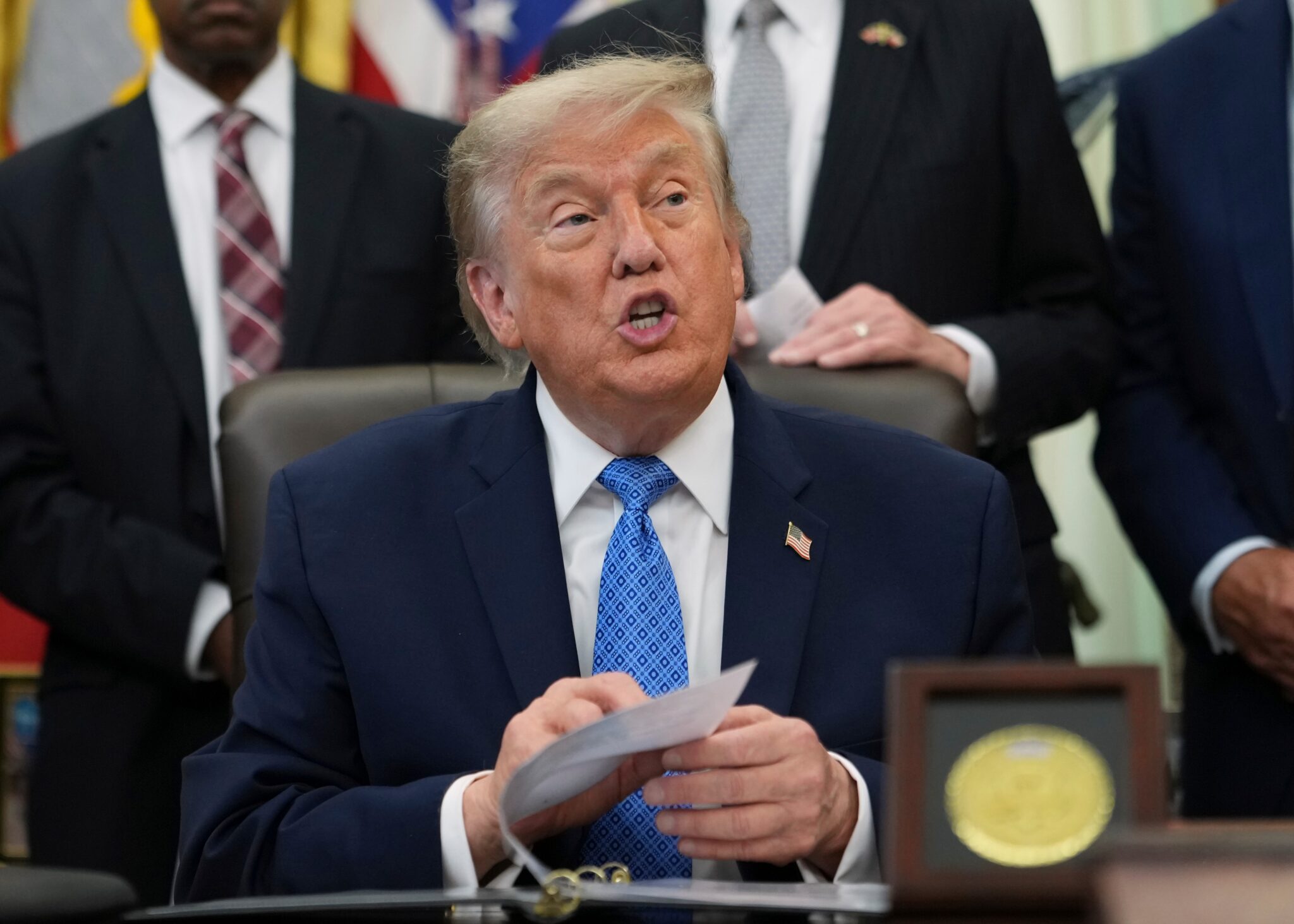
PTrump Abandons Strait of Hormuz Toll Plan Amid Iran Attacks/ Newslooks/ WASHINGTON/ J. Mansour/ Morning Edition/ resident Donald Trump has scrapped plans to impose a 20% fee on cargo moving through the Strait of Hormuz, opting instead for expanded investment agreements with Gulf nations. The announcement comes as fresh U.S. and Iranian military strikes threaten to collapse a fragile interim ceasefire and reignite broader regional conflict.
Trump Strait of Hormuz Quick Looks
- Trump canceled plans for a 20% cargo fee in the Strait of Hormuz.
- Gulf nations are expected to pursue new investment and trade agreements with the U.S.
- Fresh U.S. and Iranian military strikes escalated tensions across the region.
- Iran targeted Bahrain, Jordan and multiple commercial tankers.
- The U.S. continued strikes against Iranian military infrastructure.
- Oil prices climbed as shipping disruptions persisted.
- Regional mediators continue efforts to revive stalled negotiations.
Deep Look
Trump Reverses Strait of Hormuz Fee Proposal
President Donald Trump announced Tuesday that the United States will no longer pursue plans to impose a 20% reimbursement fee on cargo traveling through the Strait of Hormuz, replacing the proposal with expanded economic partnerships involving Gulf nations.
The reversal follows discussions with regional leaders as military tensions between the United States and Iran continue to intensify.
Trump announced the decision on social media.
“Based on highly productive conversations with Middle East leadership, I have decided to replace the 20% United States Reimbursement Fee with Trade and Investment Deals that the various Gulf States will be making into the United States,” Trump said.
The president added that the expected investments “will be MASSIVE,” although he did not specify whether the commitments represent new agreements beyond those announced during his Middle East visit last year.
Military Escalation Threatens Interim Agreement
The policy shift comes as fighting between Washington and Tehran continues despite an interim agreement intended to reduce hostilities and reopen one of the world’s most important maritime trade routes.
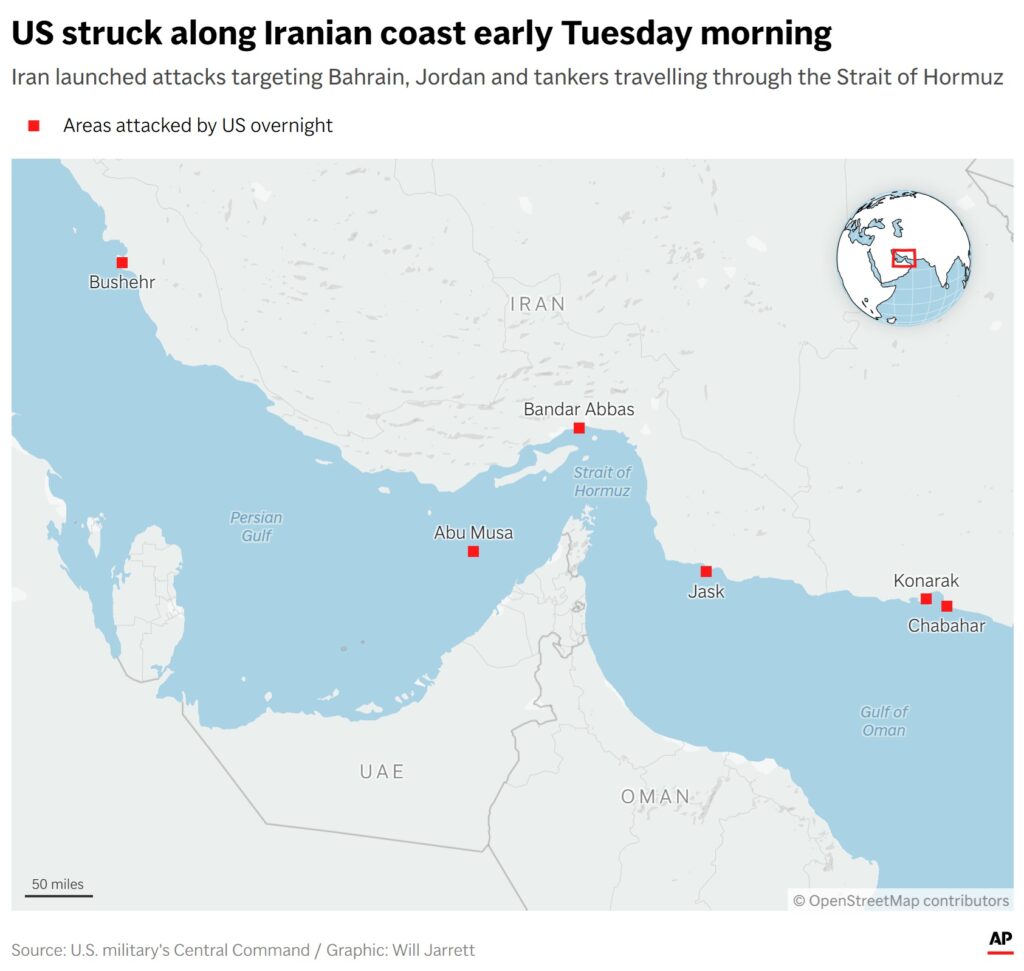
Earlier Tuesday, U.S. forces launched new strikes inside Iran.
According to U.S. Central Command, American forces targeted “coastal defense systems, missile and drone sites and maritime capabilities.”
The military added:
“These strikes will continue imposing a heavy cost on Iranian forces and degrade their ability to attack innocent civilians and commercial shipping in the Strait of Hormuz.”
Iran acknowledged the strikes but did not immediately release casualty figures or damage assessments.
Iran Launches Regional Retaliation
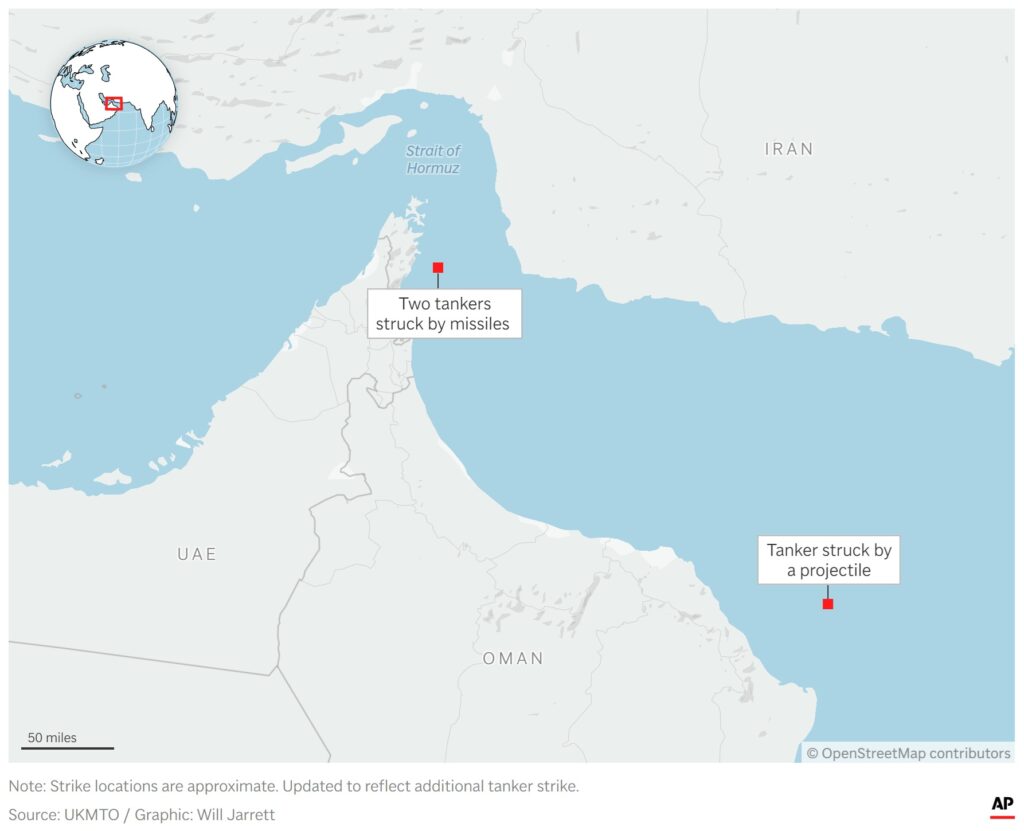
Iran responded with attacks targeting Bahrain, Jordan and several commercial vessels operating in the Persian Gulf.
Among the ships struck were two tankers associated with the United Arab Emirates.
The Emirati Defense Ministry said attacks on the Mombasa and Al Bahiyah killed one mariner and injured eight others.
The UAE warned it would retaliate.
Dutch shipping company Stolt Tankers also confirmed one of its vessels, Stolt Magnesium, was attacked off the coast of Oman.
The strike ignited a fire in the engine room, although the company reported that all crew members survived safely.
Iran’s Revolutionary Guard claimed the targeted vessels “ignored repeated warnings.”
Meanwhile, Bahrain activated missile warning sirens multiple times, Jordan reported intercepting four Iranian missiles, and Kuwait said it was responding to an aerial attack.
Commercial Aviation Faces New Risks
As military operations expanded across the Gulf, European aviation authorities warned airlines to avoid much of the region.
The European Union Aviation Safety Agency advised carriers against operating over Bahrain, Kuwait, Qatar, the United Arab Emirates and the Gulf of Oman.
“unpredictable military developments, combined with the possible use of missiles, drones, combat aircraft and air-defense systems, create a high risk to civil flights.”
Interim Peace Deal Near Collapse
The latest exchange of attacks places enormous pressure on the temporary agreement reached earlier this year between Washington and Tehran.
The 60-day framework was designed to halt military operations while negotiators worked toward a broader agreement addressing maritime security, sanctions and Iran’s nuclear program.
Instead, repeated attacks near the Strait of Hormuz have undermined confidence in the negotiations.
On Monday, Trump announced that the United States would reinstate its blockade targeting Iran.
“We are reinstating the THE IRANIAN BLOCKADE,” Trump wrote.
The blockade is expected to resume Wednesday.
Trump had also proposed charging commercial vessels fees equal to 20% of the value of their cargo to offset American security costs before abandoning that plan Tuesday.
The proposal would have marked a significant departure from long-standing U.S. policy supporting unrestricted navigation through international waterways.
Shipping Crisis Pushes Oil Higher
The Strait of Hormuz remains one of the world’s most strategically important shipping corridors, handling roughly one-fifth of globally traded oil and natural gas during normal conditions.
Iran’s repeated attacks on commercial shipping have disrupted traffic, increased insurance costs and fueled concerns over global energy supplies.
Brent crude oil climbed above $87 per barrel Tuesday, reaching its highest level in a month.
Although prices remain well below peaks seen during the height of the conflict, rising energy costs continue to threaten inflation and economic stability worldwide.
Diplomatic Efforts Continue
Despite the renewed fighting, regional mediators continue working to prevent the conflict from expanding further.
Officials familiar with ongoing negotiations said Pakistan-led diplomatic efforts remain active as mediators attempt to restore the ceasefire and return both governments to formal negotiations.
Separately, Israeli and Lebanese delegations are scheduled to meet in Rome under U.S. mediation to continue discussions surrounding Hezbollah and the implementation of an earlier framework agreement covering southern Lebanon.
That agreement has stalled amid broader regional instability.
Whether diplomatic channels can overcome the rapidly escalating military confrontation remains uncertain as both Washington and Tehran continue exchanging attacks while insisting negotiations remain possible.






You must Register or Login to post a comment.