

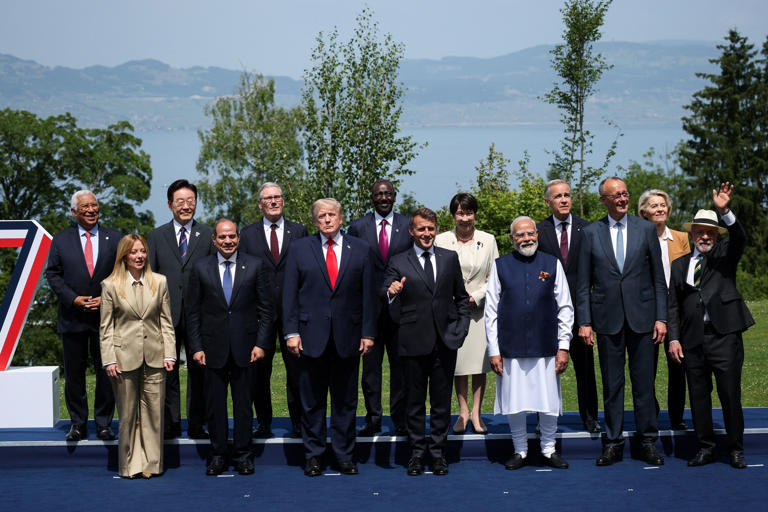
Trump Faces G7 Pressure as Iran Deal and Lebanon Tensions Escalate/ Newslooks/ WASHINGTON/ J. Mansour/ Morning Edition/ World leaders gathered at the G7 summit in France with the U.S.-Iran agreement dominating discussions.Iran insists Israel must withdraw from Lebanon as part of a broader peace framework.President Trump pledged to release the agreement’s text while balancing tensions involving Israel, Ukraine and Gulf allies. Trump says he will publicly release and read the Iran deal “word by word.” Conflicting accounts from Washington and Tehran have fueled questions about the agreement. Lawmakers from both parties are demanding greater transparency before supporting the pact.
Trump Iran Agreement G7 Summit Quick Looks
- G7 leaders met in Évian-les-Bains, France.
- The U.S.-Iran agreement remained the summit’s central topic.
- Trump promised to publicly release the deal text soon.
- The president said Israeli Prime Minister Benjamin Netanyahu should be “more responsible” regarding Lebanon.
- Iran insists Lebanon must be included in any final agreement.
- Trump signaled the agreement could be sent to Congress for review.
- Shipping restrictions in the Strait of Hormuz have begun easing.
- Ukrainian President Volodymyr Zelensky sought additional air defenses.
- Discussions included regional security, energy markets and reconstruction.
- Questions remain over enforcement and the future of Iran’s nuclear program.
Trump Iran Deal Transparency Quick Looks
- Trump pledged to reveal the full Iran deal text soon.
- A formal signing ceremony is expected in Switzerland on Friday.
- U.S. and Iranian officials have offered differing descriptions of the agreement.
- The pact would reopen the Strait of Hormuz to global shipping.
- Republicans in Congress are demanding more details.
- Questions remain over sanctions relief and Iran’s nuclear program.
- The agreement reportedly includes a 60-day negotiation framework.
- Oil prices have fallen following news of the deal.
- Enforcement and verification remain major concerns.
- Capitol Hill scrutiny is intensifying.
Deep Look
Iran Agreement Takes Center Stage at G7 Summit
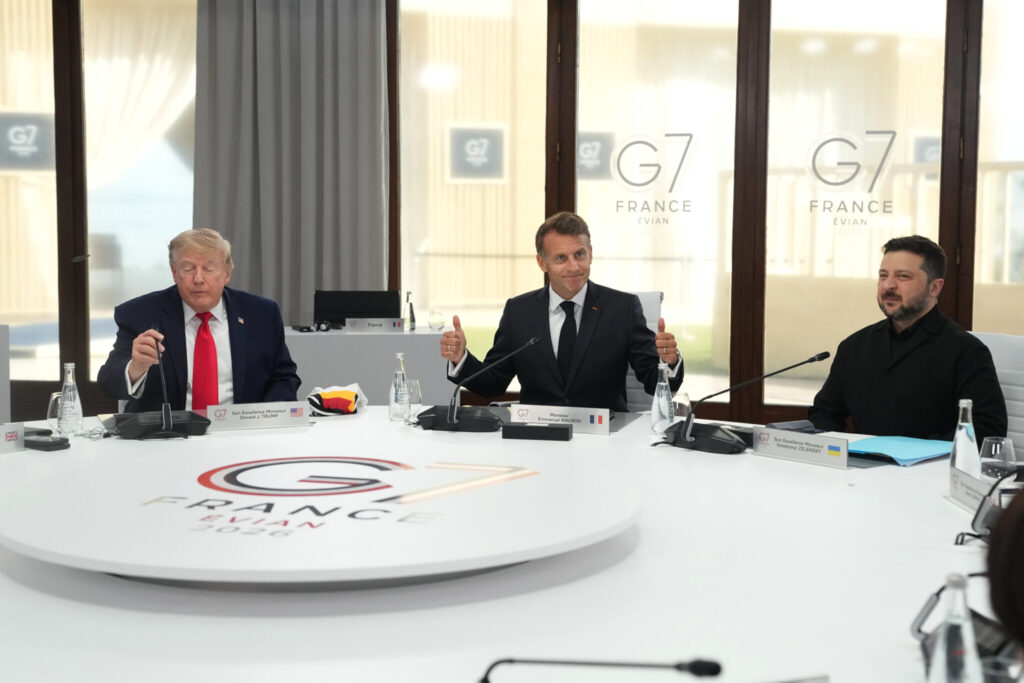
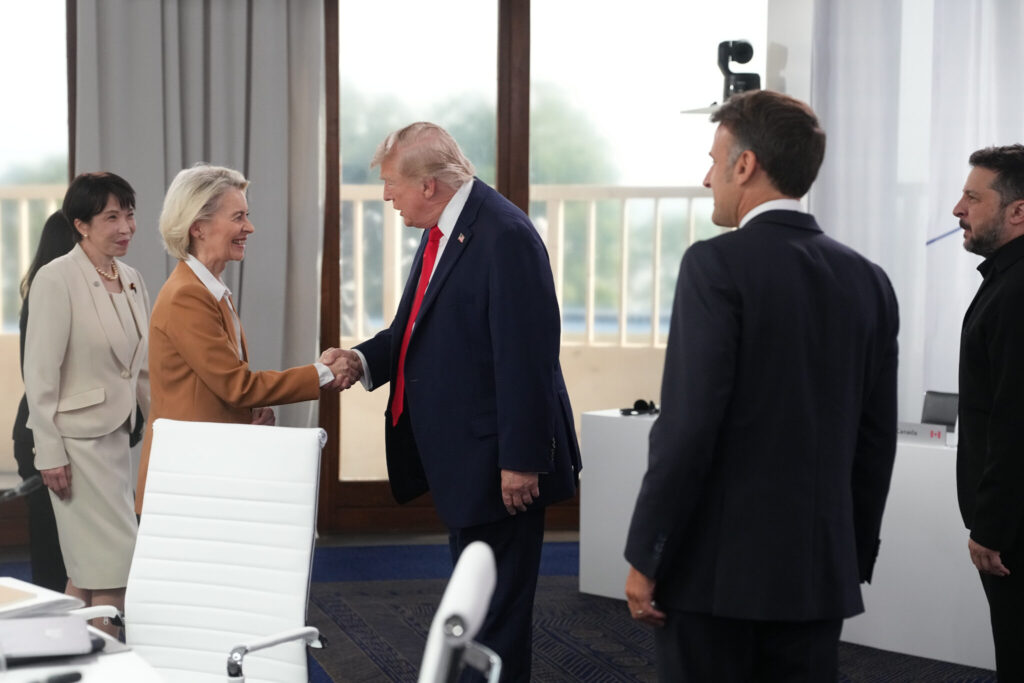
World leaders gathering in Évian-les-Bains, France, for the Group of Seven summit found themselves focused heavily on one issue: the emerging agreement between the United States and Iran aimed at ending months of conflict in the Middle East.
President Donald Trump arrived at the summit with what his administration describes as a diplomatic breakthrough, but many of the agreement’s details remain unresolved. Leaders from Europe, the Middle East and North America are seeking clarity on how the framework will be implemented and whether it can deliver lasting regional stability.
According to officials familiar with the discussions, conversations among leaders have been candid as governments evaluate the potential geopolitical consequences of the deal.
Trump Promises Public Release of Agreement
Amid growing scrutiny from lawmakers and allies, Trump pledged to make the agreement public.
Speaking on the sidelines of the summit, the president said he intends to release the text within days and even suggested he might read it aloud to journalists to avoid misinterpretation.
Trump also signaled openness to sending the agreement to Congress for review — a move that could help ease concerns among skeptical lawmakers seeking oversight.
The administration argues that transparency will demonstrate there are no hidden provisions and that the agreement protects American interests while reducing the risk of broader conflict.
Lebanon Emerges as a Major Sticking Point
One of the most difficult issues remains Lebanon.
Iranian officials have repeatedly stated that any comprehensive agreement must address Israeli military operations in Lebanon, describing the conflicts as interconnected.
Iranian Foreign Minister Abbas Araghchi said the situation in Lebanon is “linked and interdependent” with broader U.S.-Iran negotiations, making it impossible to separate the issues.
President Trump has also publicly expressed frustration with Israel’s military campaign, saying Prime Minister Benjamin Netanyahu must be “more responsible with respect to Lebanon.”
Despite those remarks, Israel has made clear that it does not intend to withdraw from areas it controls in southern Lebanon, Gaza or Syria. Continued fighting between Israel and Hezbollah underscores how fragile the diplomatic process remains.
Strait of Hormuz Reopening Offers Economic Relief
The agreement’s most immediate impact could be on global energy markets.
Restrictions on shipping through the Strait of Hormuz have already begun easing, according to Iranian officials, with limited maritime traffic resuming ahead of a formal signing ceremony expected later this week.
The reopening of one of the world’s most important oil transit routes has already contributed to lower energy prices and improved market sentiment.
However, uncertainties remain over future navigation rules, security arrangements and whether Iran will impose maritime service fees on vessels passing through the strait.
Nuclear Questions Remain Unresolved
Although the agreement is designed to halt hostilities, many of the most contentious issues remain unsettled.
Future negotiations are expected to address:
- Iran’s nuclear enrichment program
- Verification and inspection mechanisms
- Sanctions relief
- Regional proxy groups
- Long-term security guarantees
Mediators, including Qatar, have reportedly been discussing nonaggression agreements and broader regional security frameworks.
Trump has argued that the most difficult phase of diplomacy is over and that resolving remaining issues will be easier. Critics, however, contend that the unresolved nuclear file may prove the most challenging part of the process.
Ukraine Returns to the Global Agenda
While the Iran agreement dominated attention, Ukraine also remained a central topic at the summit.
President Volodymyr Zelensky met with G7 leaders seeking additional air defense systems as Russia’s war continues.
Zelensky said summit participants supported efforts to strengthen Ukraine’s defenses, particularly against missile and drone attacks.
Trump has also indicated he plans to meet with Zelensky during the summit while continuing to encourage negotiations aimed at ending the war between Russia and Ukraine.
A Diplomatic Balancing Act
The G7 summit illustrates the increasingly complex diplomatic environment facing world leaders.
Trump must simultaneously manage negotiations with Iran, maintain relations with Israel, reassure Gulf partners, address concerns from Congress and coordinate support for Ukraine.
Whether the Iran agreement becomes a lasting peace framework or merely a temporary pause in regional tensions may depend on how these competing interests are reconciled in the coming weeks.
Trump Promises Full Disclosure of Iran Agreement
President Donald Trump has vowed to publicly unveil the text of his administration’s agreement with Iran, promising to read it “word by word” to reporters as questions mount over the details of the deal.
Speaking during a bilateral meeting with United Arab Emirates President Mohamed bin Zayed at the G7 summit in France, Trump indicated that a formal release would come only after an official signing ceremony expected later this week.
“I’ll not only release it — I’ll probably have a press conference and read it to you word by word, so that the press covers it accurately,” Trump said.
The pledge comes amid growing demands for transparency from lawmakers and international observers eager to understand the exact terms of an agreement that aims to end months of conflict in the Middle East.
Conflicting Narratives Raise Questions
Despite administration assurances that the deal text will be publicly released, significant differences have emerged between U.S. and Iranian descriptions of the agreement.
Trump and senior U.S. officials have repeatedly stated that the accord includes strict conditions designed to prevent Iran from obtaining nuclear weapons. According to Washington, sanctions relief and access to frozen assets would occur only after Tehran fulfills its obligations.
Iranian officials, however, have presented a different interpretation. Tehran has suggested the agreement would include the immediate release of billions in frozen funds, limits on U.S. military activity near Iran, and negotiations focused solely on nuclear issues without addressing Iran’s missile program or regional proxy groups.
These conflicting accounts have fueled uncertainty over what was actually agreed upon.
Strait of Hormuz Reopening Seen as Key Achievement
One area where both sides appear aligned is the reopening of the Strait of Hormuz, one of the world’s most important energy chokepoints.
The months-long standoff in the region disrupted maritime traffic and contributed to sharp increases in global oil prices.
U.S. officials have said ships will once again pass freely through the waterway without paying tolls to Iran. Iranian officials, however, contend that maritime service fees may still apply.
Regardless of the final details, financial markets have reacted positively to the prospect of restored energy flows. Oil prices have retreated from recent highs as investors anticipate greater stability in global supply chains.
Congress Demands Transparency
The agreement has generated skepticism even among many Republicans who typically support Trump’s foreign policy initiatives.
Senate Majority Leader John Thune acknowledged that lawmakers have not yet received enough information to evaluate the accord.
“I think the issues are going to be compliance, and how are you going to enforce that,” Thune told reporters.
North Carolina Republican Senator Thom Tillis expressed even stronger reservations.
“If it’s a secret deal then how can I take it seriously?” Tillis said.
Lawmakers from both parties have emphasized that any lasting agreement with Iran must include clear enforcement mechanisms, verification standards, and congressional oversight.
Nuclear Verification Remains a Major Challenge
One of the biggest unanswered questions involves Iran’s nuclear program.
Observers continue to seek clarification on several key issues:
- Who will verify Iranian compliance?
- How will enriched uranium stockpiles be handled?
- What conditions will trigger sanctions relief?
- Will Congress vote on the agreement?
Administration officials have suggested that additional negotiations will occur over the next 60 days to address unresolved concerns.
The agreement’s success may ultimately depend not only on diplomacy but also on whether both sides interpret and implement the terms in the same way.
A Defining Foreign Policy Test
Supporters view it as an opportunity to end a costly conflict while stabilizing global energy markets. Critics warn that without strong verification measures and transparency, the deal could face the same criticisms that surrounded previous nuclear agreements with Tehran.
With the text still unpublished and a formal signing ceremony approaching, attention now turns to whether the agreement can withstand scrutiny from Congress, allies, and the public.





You must Register or Login to post a comment.