Trump Says Xi Agrees Iran Must Reopen Strait of Hormuz/ Newslooks/ WASHINGTON/ J. Mansour/ Morning Edition/ President Donald Trump said he and Chinese President Xi Jinping agreed Iran must reopen the Strait of Hormuz and move toward ending the war. China called for renewed diplomacy and reopening critical shipping routes while avoiding direct commitments to pressure Tehran. The Iran conflict remains central to US-China discussions as global oil prices continue climbing.
Trump Xi Iran Talks Quick Looks
- Trump says US and China share similar goals on Iran
- Both sides want the Strait of Hormuz reopened
- China called for renewed diplomatic negotiations
- Trump warned Iran to “make a deal” soon
- Oil prices climbed near $109 per barrel
- Beijing avoided direct promises to pressure Tehran
- Iran says it is open to negotiations and conflict if necessary
- US sanctions on Chinese firms buying Iranian oil remain under review
Deep Look
Trump Says US and China Aligned on Iran Crisis
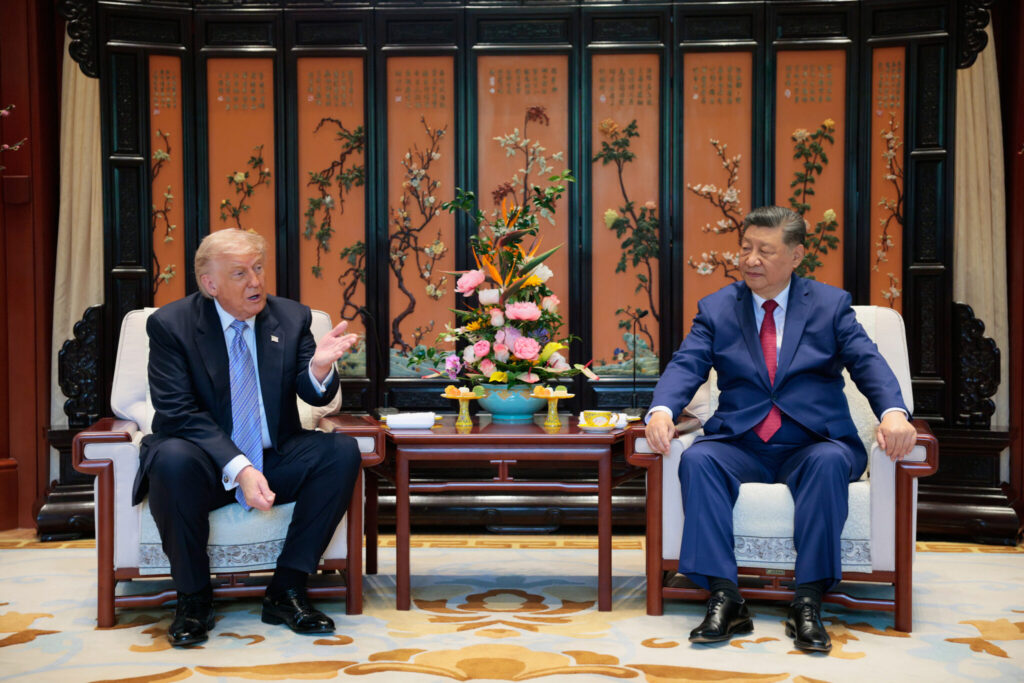
President Donald Trump said Friday that he and Chinese President Xi Jinping are largely aligned on ending the Iran conflict and reopening the strategically vital Strait of Hormuz.
Speaking after high-level talks in Beijing, Trump emphasized that both Washington and Beijing oppose Iran obtaining a nuclear weapon and support restoring global shipping access through the Persian Gulf.
“We feel very similar about (how) we want it to end,” Trump said while discussing the war involving Iran, the United States and Israel. “We don’t want them to have a nuclear weapon.”
Trump also stressed the importance of reopening the Strait of Hormuz.
“We want the straits open,” he said.
Strait of Hormuz Remains Global Economic Flashpoint
The Strait of Hormuz has become the central economic issue surrounding the Iran conflict.
Before fighting erupted in late February, roughly one-fifth of the world’s oil and liquefied natural gas passed through the narrow waterway.
Iran effectively shut down most shipping traffic after US and Israeli military strikes triggered broader regional escalation.
The disruption has caused severe strain on global energy markets, pushing oil prices close to $109 per barrel and increasing inflation pressures worldwide.
Trump acknowledged growing frustration with the conflict.
“We want them to get it ended because it’s a crazy thing there. A little bit crazy. And it’s no good, it can’t happen,” he said.
China Pushes Diplomacy and Reopening of Shipping Routes
Following the summit, China’s Foreign Ministry publicly called for restoring maritime traffic and restarting diplomatic negotiations involving Iran’s nuclear program.
“Shipping routes should be reopened as soon as possible,” the ministry said in a statement Friday.
The ministry also stressed that diplomatic dialogue should continue.
“Now that the door for dialogue has been opened, then it shouldn’t be shut again,” the statement added.
China promoted a four-point peace proposal from Xi Jinping that emphasized sovereignty, diplomacy and international law, though the framework offered few operational specifics.
Trump Says Patience With Iran Is Running Out
Trump delivered some of his strongest language yet regarding Tehran during interviews following the Beijing meetings.
“I am not going to be much more patient. They should make a deal,” Trump said during a Fox News interview.
The president has repeatedly demanded major restrictions on Iran’s nuclear program as a condition for ending the war and lifting US pressure campaigns.
Trump also claimed US military strikes had significantly weakened Iranian forces.
“We’ve wiped out their armed forces, essentially,” Trump said aboard Air Force One. “We may have to do a little cleanup work.”
China Stops Short of Direct Pressure on Tehran
Despite Trump’s optimistic comments, Beijing avoided publicly committing to directly pressure Iran into reopening the Strait or accepting a US-backed deal.
When asked whether Xi had made concrete commitments involving Tehran, Trump said:
“I’m not asking for any favors because, when you ask for favors, you have to do favors in return.”
Analysts note China maintains important strategic and economic ties with Iran and is unlikely to fully align with Washington’s regional approach.
China remains Iran’s largest oil customer and has consistently opposed many US sanctions targeting Tehran.
US Considering Sanctions Relief for Chinese Oil Firms
Trump also revealed he is considering whether to ease sanctions on Chinese companies accused of purchasing Iranian oil.
“We talked about that and I’m going to make a decision over the next few days,” Trump told reporters.
The sanctions issue has become increasingly important as China continues importing Iranian crude despite Western restrictions.
US officials recently sanctioned Chinese refineries and shipping operators accused of facilitating Iranian energy exports.
Iran Says It Is Open to Diplomacy and Conflict
Iranian Foreign Minister Abbas Araqchi said Tehran remains open to negotiations while also preparing for continued military escalation if necessary.
“We hope that, with the advancement of negotiations, we will reach a good conclusion so that the Strait of Hormuz can be completely secured,” Araqchi said during remarks in New Delhi.
Iran insists its nuclear program is peaceful and denies pursuing nuclear weapons development.
However, Tehran has rejected demands to fully dismantle enrichment activities or surrender stockpiles of enriched uranium.
Iranian officials also continue expressing deep distrust toward the United States despite ongoing diplomatic contacts.
Oil Markets React to Lack of Breakthrough
Energy markets reacted cautiously to the Trump-Xi discussions.
Oil prices rose approximately 3% after investors concluded no immediate breakthrough had been reached regarding the conflict or reopening the Strait of Hormuz.
Global shipping remains severely disrupted, though limited tanker traffic has resumed under heavy security risks.
The United Arab Emirates also announced plans to accelerate construction of a new pipeline route bypassing the Strait following recent attacks on vessels in the region.
Iran Conflict Overshadows Trump-Xi Summit
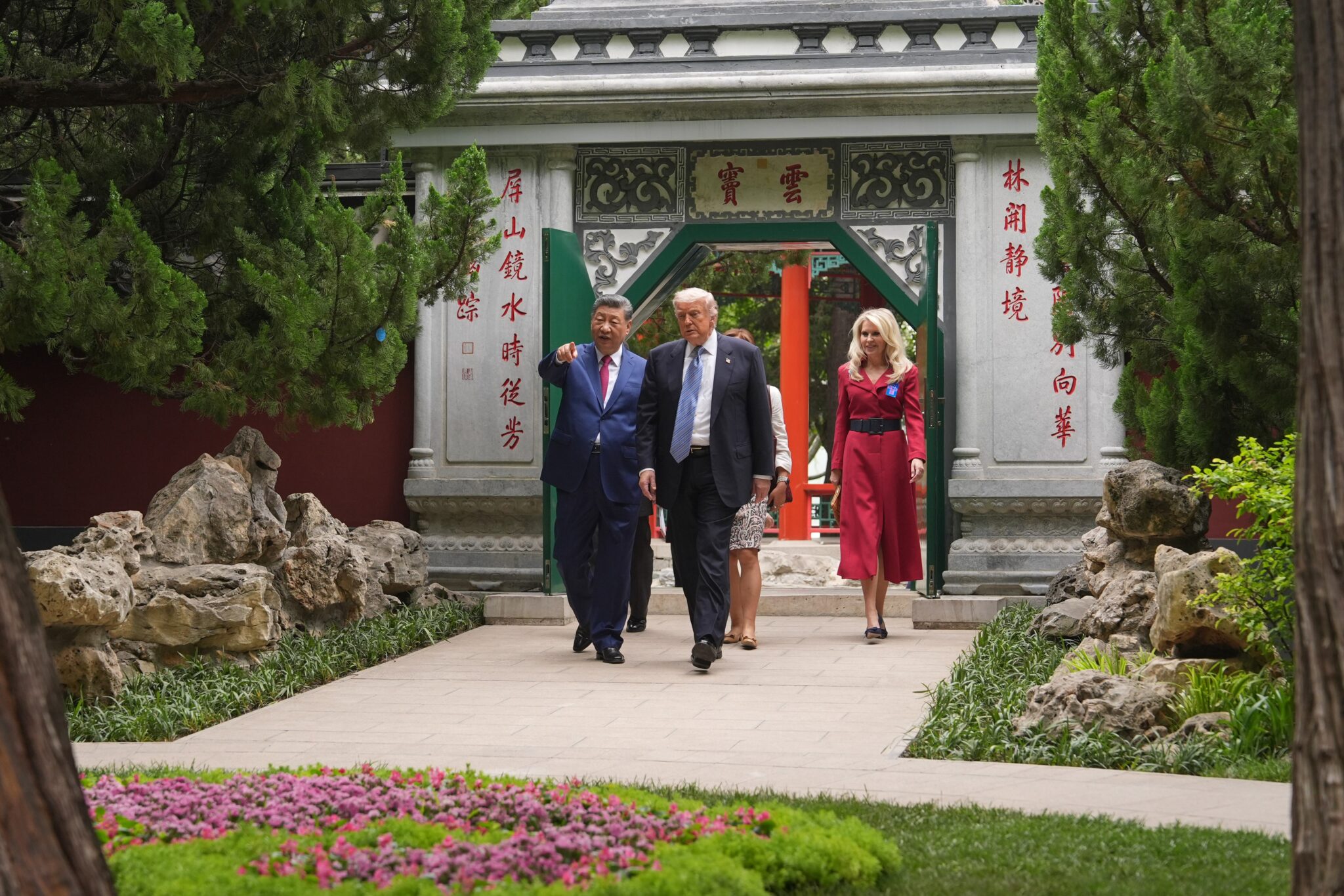
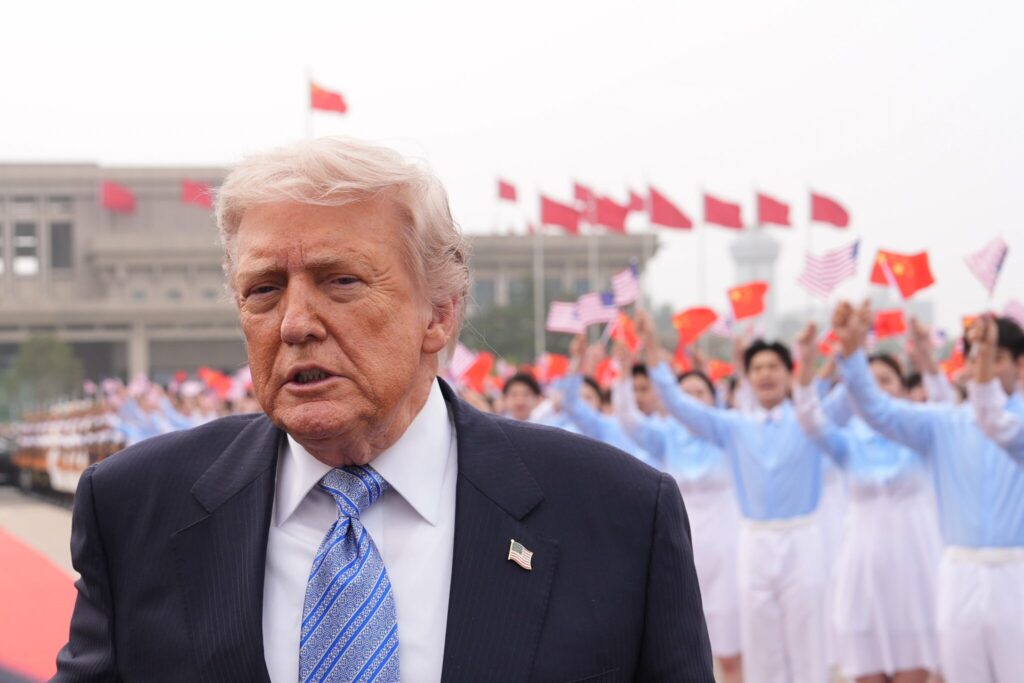
The Iran war emerged as one of the dominant themes throughout Trump’s multi-day summit with Xi in Beijing.
The leaders also discussed:
- Taiwan tensions
- Trade negotiations
- Energy cooperation
- Nuclear weapons policy
- Chinese oil imports
- Global supply chains
While both governments publicly emphasized cooperation and stability, deep disagreements remain unresolved.
Still, the discussions underscored how the Iran conflict is reshaping global diplomacy and forcing closer coordination between major world powers.