Trump Weighing Taiwan Weapon Sales Decision After Xi Talks/ Newslooks/ WASHINGTON/ J. Mansour/ Morning Edition/ President Donald Trump confirmed he discussed Taiwan arms sales with Chinese President Xi Jinping during high-stakes talks in Beijing. Trump said Xi directly questioned whether the United States would defend Taiwan if China attacked the island. The issue remains one of the biggest flashpoints in US-China relations as Trump says a final decision on arms sales is still pending.
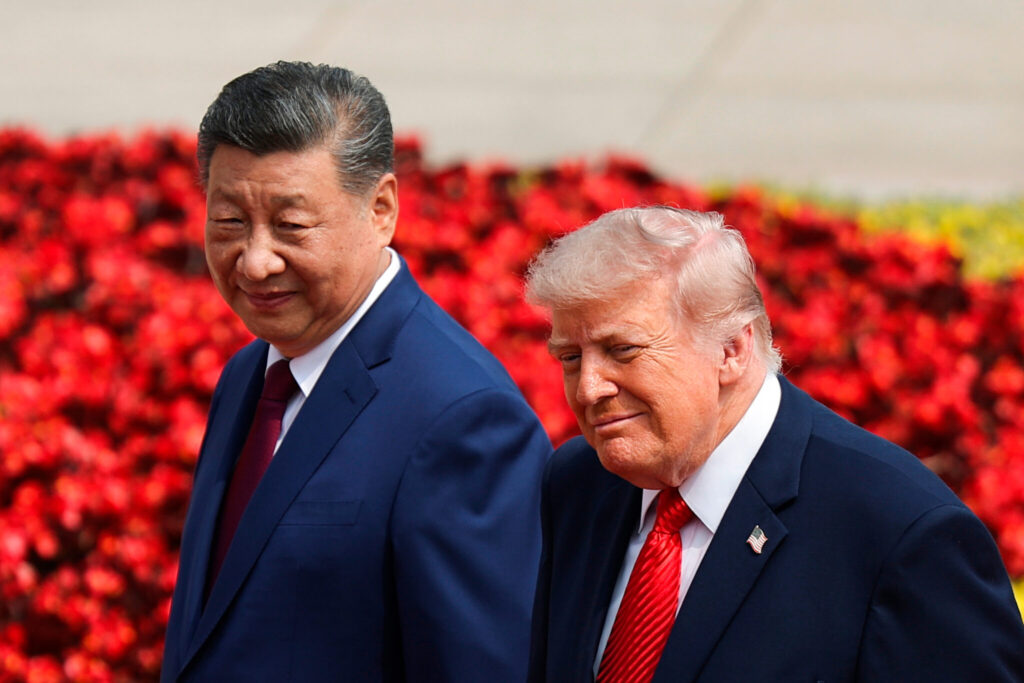
Trump Xi Taiwan Talks Quick Looks
- Trump says Taiwan discussions were extensive during Beijing summit
- Xi questioned whether the US would defend Taiwan militarily
- Trump declined to reveal US military intentions
- No commitments were made to China regarding Taiwan
- Taiwan arms sales decision still pending
- Beijing continues opposing US weapons sales to Taipei
- Analysts say Taiwan remains China’s top geopolitical red line
- Summit highlighted fragile balance in US-China relations
Deep Look
Trump Confirms Taiwan Arms Discussions With Xi Jinping
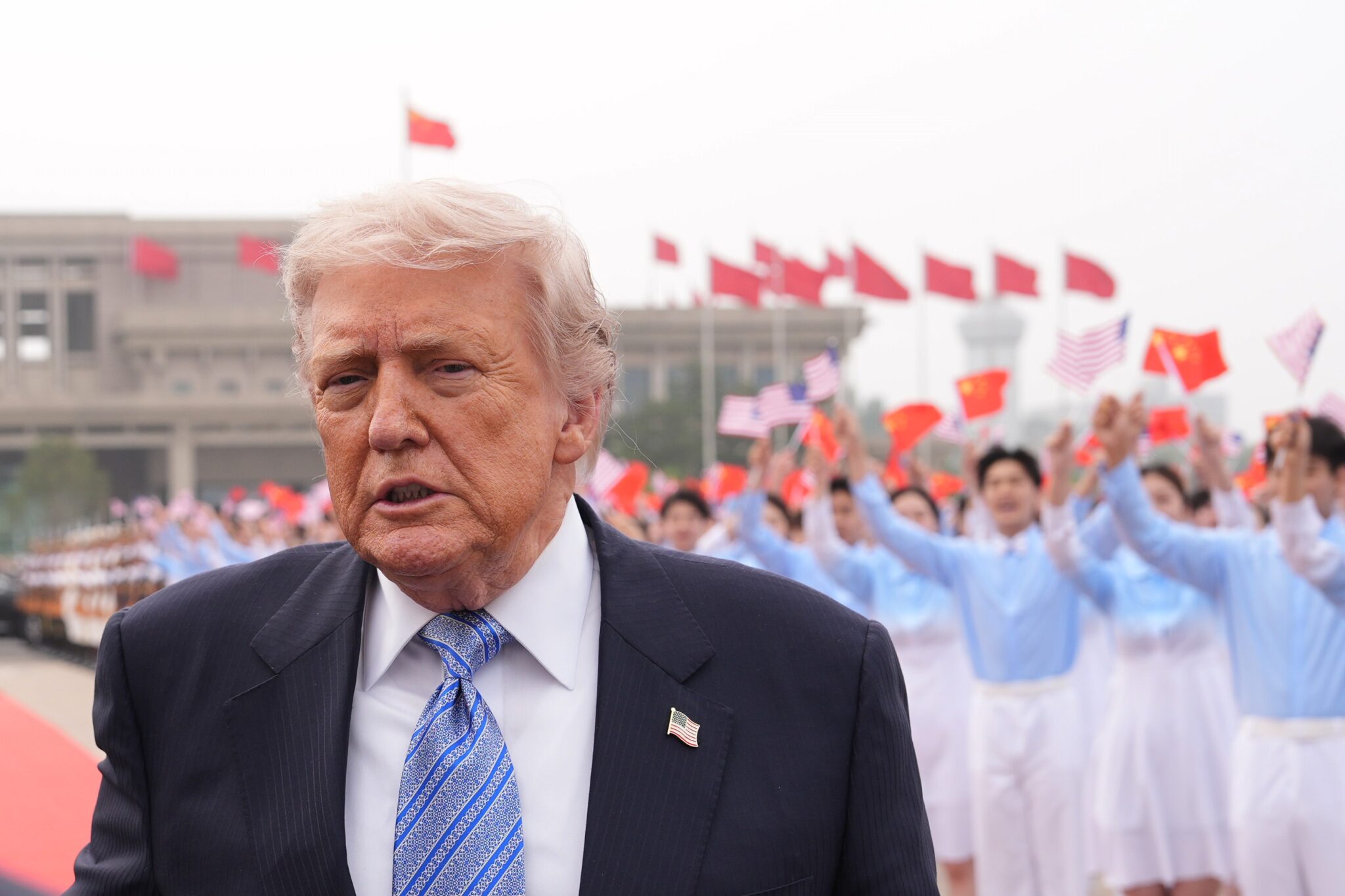
President Donald Trump said Friday that Taiwan was a major topic during his meetings with Chinese President Xi Jinping in Beijing, confirming the leaders discussed possible US arms sales to the self-governing island.
Speaking to reporters aboard Air Force One while returning from China, Trump said the issue was addressed extensively during the summit but stressed that no final decisions had yet been made.
“We talked a lot about Taiwan,” Trump said. “I will make a determination.”
Trump added that he did not make any commitments to Xi regarding future American policy toward Taiwan.
Xi Pressed Trump on US Military Defense of Taiwan
Trump revealed that Xi directly asked whether the United States would militarily defend Taiwan if China launched an attack on the island.
The president refused to provide a public answer.
“There’s only one person that knows that, and it is me. I’m the only person,” Trump said. “That question was asked to me today by President Xi. I said, I don’t talk about that.”
The remarks reinforced the longstanding US strategy of strategic ambiguity surrounding Taiwan’s defense.
Washington officially recognizes Beijing under the “One China” policy while simultaneously maintaining close unofficial relations with Taiwan and continuing weapons sales to the island.
Taiwan Remains Central Flashpoint in US-China Relations
Taiwan continues to be the most sensitive issue in the relationship between Washington and Beijing.
China claims Taiwan as part of its territory and views American military support and arms sales as interference in its internal affairs.
The United States, meanwhile, remains Taiwan’s largest international arms supplier and one of its most important political backers despite lacking formal diplomatic recognition.
Chinese officials repeatedly warned during the summit that mishandling Taiwan could seriously damage bilateral ties.
Beijing has intensified military pressure around Taiwan in recent years through naval patrols, military exercises and air incursions near the island.
Trump Still Weighing Major Arms Package
Trump said a major US arms package for Taiwan remains under review following the three-day summit in Beijing.
The administration has already authorized the sale, but implementation has not yet moved forward.
China has strongly opposed the deal and continues pressuring Washington to halt military cooperation with Taipei.
The president’s comments suggest the White House may still be balancing broader diplomatic negotiations with China against longstanding American commitments to Taiwan’s defense capabilities.
Analysts Say Summit Produced Symbolism More Than Breakthroughs
Analysts described the Trump-Xi summit as highly choreographed and heavy on symbolism, even as deep disagreements persisted beneath the public warmth.
George Chen, a partner at The Asia Group consultancy, said the summit at times resembled “a political reality show” but still produced important diplomatic signals.
“The readouts from Beijing and the White House differ in tone and emphasis, but neither side contradicted the other’s account. That alone reflects a rare moment of mutual respect,” Chen said.
He noted that each side emphasized its top priority:
- For Xi: Taiwan
- For Trump: economic and trade deals
Taiwan Watching Trump Carefully
Observers say Taiwan’s government will closely monitor Trump’s next moves following Xi’s warnings.
Beijing has consistently framed Taiwan as a non-negotiable issue and a potential trigger for military confrontation if foreign governments cross Chinese red lines.
Trump’s refusal to clarify whether the US would intervene militarily may create uncertainty in Taipei while preserving diplomatic flexibility with Beijing.
Still, analysts say continued US weapons support remains one of the strongest indicators of Washington’s unofficial commitment to Taiwan’s security.
Trump was impressed by Chinese presidential residence
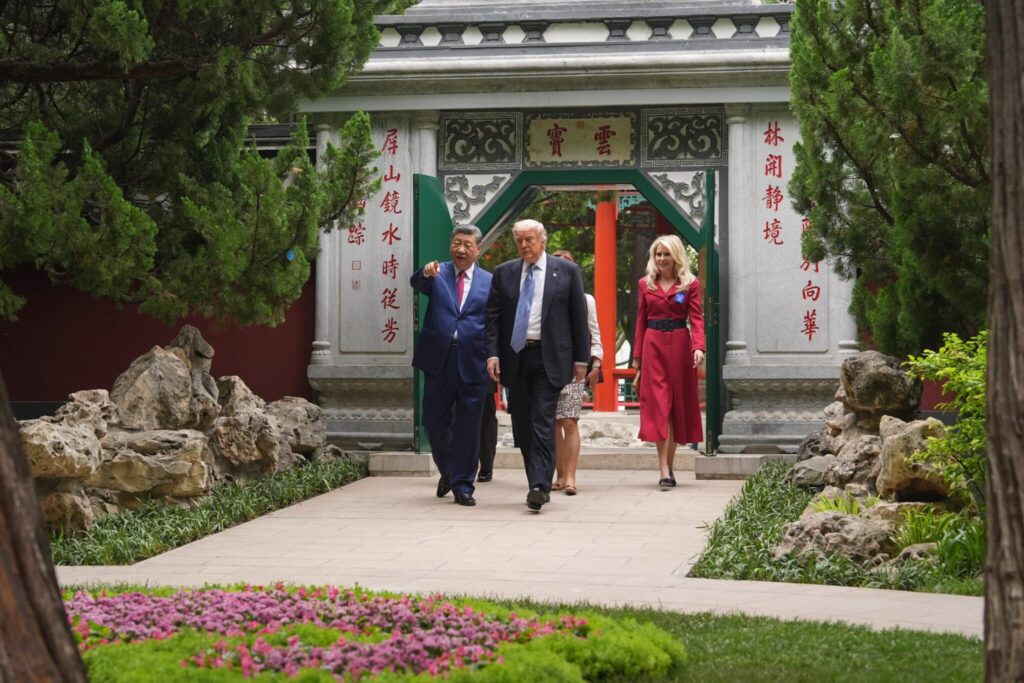
Xi welcomed Trump at his official residence, Zhongnanhai, on Friday for their final engagement of the summit before the U.S. leader’s return to Washington. The leaders took a short walk through the grounds that feature ancient trees and Chinese roses, and they strolled through a covered passageway with green columns and archways painted with birds and traditional Chinese mountain scenes.
Over tea and lunch, Trump and Xi — with top aides and translators in tow — huddled for nearly three hours of talks before the U.S. leader completed his three-day visit to China.
Trump appeared impressed by the bucolic grounds, remarking that the roses were the most beautiful he had ever seen. Xi promised to send him some rose seeds.
The compound is wrapped around two artificial lakes built for the pleasure of emperors. Zhongnanhai is often compared to the White House, the Kremlin or South Korea’s Blue House. But unlike the other presidential residences, Zhongnanhai does not serve as the main venue for diplomatic visits. The invitation appeared to be an attempt by Xi to extend a personal touch to a U.S. leader who appreciates big gestures.
“It’s been really a great couple of days,” Trump told reporters.
Xi, for his part, called it a “milestone” visit. “We have established a new bilateral relationship, or rather a constructive, strategic, stable relationship,” he said.
But the optimistic outlook collides with some difficult truths about the thorniest issues between the two superpowers.
Beijing has shown little public interest in U.S. entreaties to get more involved in solving the conflict in Iran, even though Trump said in an interview with Fox News’ Sean Hannity that Xi had in their conversations offered to help.
In recent weeks, the U.S. State Department has accused Chinese firms of providing satellite imagery to the Iranian government, and the Treasury Department has moved to target Chinese oil refineries accused of buying oil from Tehran, as well as shippers of the oil.
Xi on Thursday warned Trump during private talks that their differences on Taiwan, if handled poorly, could hurtle the world’s dominant powers toward “clashes and even conflicts,” according to Chinese government officials.
But Trump, as he made his way home, said he was not concerned that the U.S.-China relationship was in danger. “I think we will be fine,” he said.
Summit Highlights Broader Strategic Competition
The Taiwan discussions occurred amid a wider agenda involving:
- Trade negotiations
- Energy cooperation
- Iran conflict diplomacy
- Global supply chains
- Technology competition
- Military tensions in Asia
While both governments publicly promoted stability and cooperation during the summit, Taiwan once again emerged as the most dangerous unresolved issue between the world’s two largest powers.