

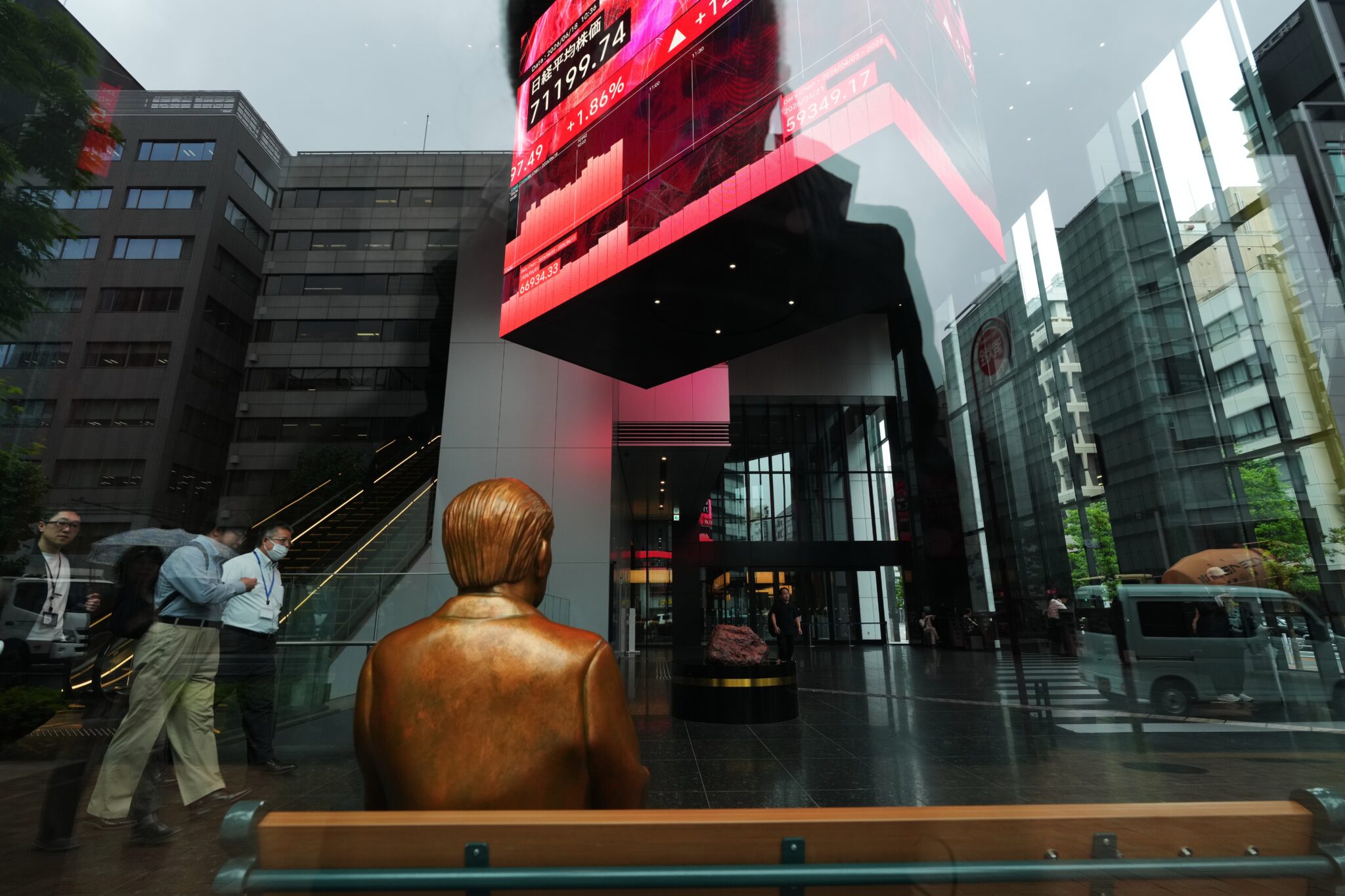
Global Markets Mixed as Iran-US Talks Delay Dampens Investor Optimism/ Newslooks/ WASHINGTON/ J. Mansour/ Morning Edition/ Global markets traded mixed Friday as investors weighed delays in U.S.-Iran negotiations against recent optimism over a ceasefire agreement. U.S. stock futures slipped while European markets showed mixed performance and Japan’s Nikkei reached a record high. Concerns remain over the fragile Middle East agreement, inflation pressures, and the possibility of higher U.S. interest rates later this year.

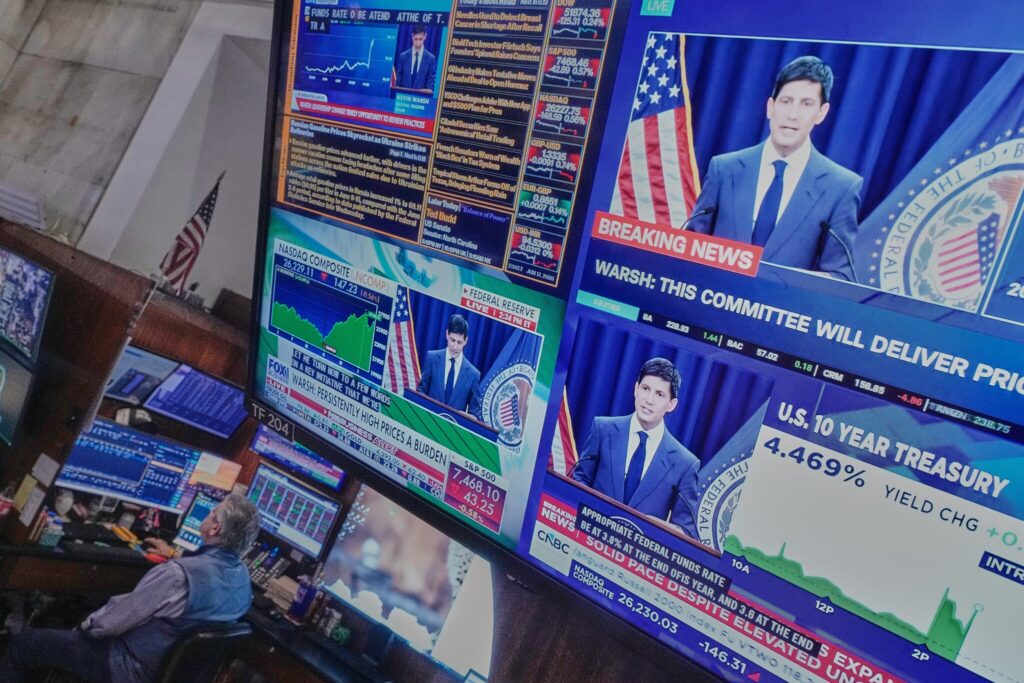
Global Markets and Iran Talks Quick Looks
- World markets were mixed on Friday.
- U.S. futures edged lower ahead of the Juneteenth holiday closure.
- Iran-U.S. nuclear talks in Switzerland were postponed.
- Fighting between Israel and Hezbollah renewed concerns over regional stability.
- Japan’s Nikkei 225 reached a record high.
- European indexes showed limited movement.
- Oil prices remained volatile despite the Iran agreement.
- Technology stocks fueled Wall Street gains on Thursday.
- Investors remain focused on inflation and Federal Reserve policy.
- Expectations for a potential Fed rate hike later this year continue to weigh on sentiment.
Deep Look
Global Markets Lose Momentum as Iran-US Talks Are Delayed
Global stock markets delivered a mixed performance Friday as investor optimism surrounding the recent U.S.-Iran agreement faded amid delays to crucial negotiations aimed at securing a lasting settlement.
The postponement of planned talks in Switzerland raised concerns that the fragile diplomatic breakthrough could face significant obstacles before evolving into a permanent accord. Investors had initially welcomed the agreement signed earlier this week, which reopened the Strait of Hormuz and eased fears of a prolonged conflict that had rattled energy markets and fueled inflation concerns worldwide.
However, renewed fighting in southern Lebanon and uncertainty surrounding the next phase of negotiations prompted traders to adopt a more cautious approach.
European Markets Show Limited Movement
Trading across Europe remained subdued as investors digested developments in the Middle East.
Germany’s DAX index rose 0.2% to 25,079.30, while France’s CAC 40 was essentially unchanged at 8,467.75. Britain’s FTSE 100 slipped 0.2% to 10,376.64.
The muted moves reflected a market searching for direction after a volatile week dominated by geopolitical developments and shifting central bank expectations.
Analysts said investors remain encouraged by the reduction in direct military conflict but remain wary of the risks posed by stalled diplomacy.
Bas van Geffen of RaboResearch summarized the market mood by noting that while conditions appear calmer on the surface, significant risks remain underneath.
“Both sides are trying to show some good faith,” he said. “But even if the water appears calmer, there is still a strong undertow.”
US Futures Edge Lower
Although U.S. markets were closed Friday in observance of Juneteenth, futures trading suggested a softer start when investors return.
Futures tied to both the S&P 500 and the Dow Jones Industrial Average fell 0.2%.
The decline follows a strong performance on Thursday, when Wall Street recovered most of the losses incurred after the Federal Reserve signaled that interest rates could rise later this year.
Investors continue to balance improving geopolitical conditions against concerns that inflation remains stubbornly elevated.
Japan Hits New Record Despite Inflation Concerns
One of the standout performances came from Japan.
The Nikkei 225 fluctuated throughout the trading session but ultimately closed 0.3% higher at a record 71,250.06.
Japan’s latest inflation report showed relatively stable consumer prices excluding fresh food, but economists expect inflationary pressures to increase in coming months.
The Bank of Japan recently raised its benchmark interest rate to 1%, marking the highest level in three decades and continuing its gradual departure from years of ultra-loose monetary policy.
Investors appear increasingly confident that Japan’s economic recovery can withstand higher borrowing costs.
Other Asian Markets Struggle
Elsewhere in Asia, markets were less optimistic.
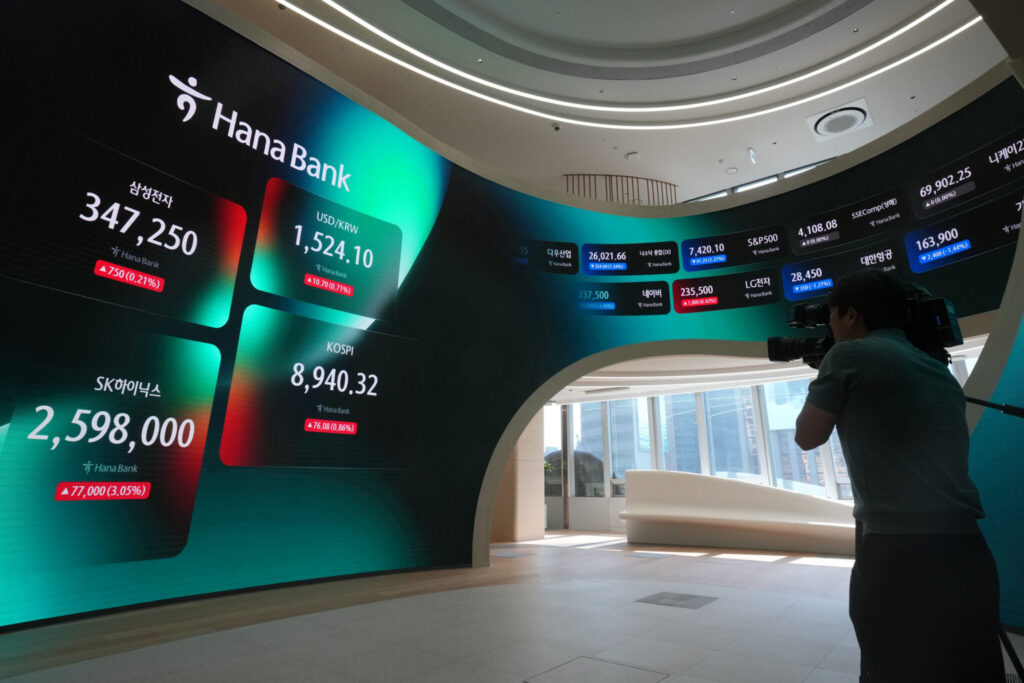
South Korea’s Kospi dipped 0.1% to 9,052.42, narrowly missing another record high.
Australia’s S&P/ASX 200 declined 0.9%, while India’s Sensex lost 0.8%.
Markets in Hong Kong, Shanghai and Taiwan remained closed for the Dragon Boat Festival holiday, limiting regional trading activity.
Analysts noted that uncertainty surrounding Middle East diplomacy contributed to investor caution throughout the region.
Technology Stocks Lead Wall Street Recovery
Thursday’s gains on Wall Street were driven largely by technology and semiconductor companies.
The S&P 500 rose 1.1%, while the Nasdaq Composite surged 1.9%. The Dow Jones Industrial Average also finished higher.
A major catalyst was President Donald Trump’s announcement that Intel would manufacture chips for Apple within the United States.
Intel shares jumped 10.6% following the news.
Other semiconductor leaders participated in the rally as Nvidia gained 3% and Micron Technology climbed 8.7%.
The technology sector continues to benefit from strong demand tied to artificial intelligence infrastructure and domestic manufacturing initiatives.
SpaceX Pulls Back After Market Debut
Not all major stocks participated in the rally.
SpaceX declined another 3.6%, extending losses following its highly anticipated public market debut.
The Elon Musk-led aerospace and artificial intelligence company had already fallen nearly 5% during the previous session.
Despite the pullback, investor interest remains elevated as traders assess the company’s long-term growth prospects.
Oil Markets Remain Uncertain
Oil prices continued to fluctuate as traders evaluated the implications of the U.S.-Iran agreement and the delayed negotiations.
Brent crude settled Thursday at $79.85 per barrel before slipping slightly Friday to around $79.50.
U.S. benchmark crude remained near $75.85 per barrel.
While prices remain substantially below the triple-digit levels reached during the conflict, they are still elevated compared with pre-war levels near $70 per barrel.
The reopening of the Strait of Hormuz has eased immediate concerns about global supply disruptions, but analysts caution that restoring normal shipping patterns could take weeks or months.
Inflation Still a Major Concern
Energy prices continue to influence inflation worldwide.
In the United States, average gasoline prices recently fell below $4 per gallon for the first time since March, but remain roughly 25% higher than a year ago.
Higher transportation and shipping costs have also contributed to broader price increases across numerous sectors.
Those inflation pressures are influencing central bank decisions.
The Federal Reserve left interest rates unchanged this week but indicated that a rate increase later this year is increasingly possible if inflation remains elevated.
Investors are closely monitoring economic data for signs that price pressures are either easing or becoming more entrenched.
Markets Face Multiple Uncertainties Ahead
Looking ahead, investors face a complex mix of economic and geopolitical factors.
The fate of U.S.-Iran negotiations remains uncertain, while renewed violence involving Israel and Hezbollah highlights the fragility of the broader regional ceasefire.
At the same time, central banks around the world are grappling with persistent inflation, rising borrowing costs and shifting growth expectations.
For now, markets appear to be moving cautiously, balancing optimism over reduced conflict with concern that significant challenges remain unresolved.






You must Register or Login to post a comment.