

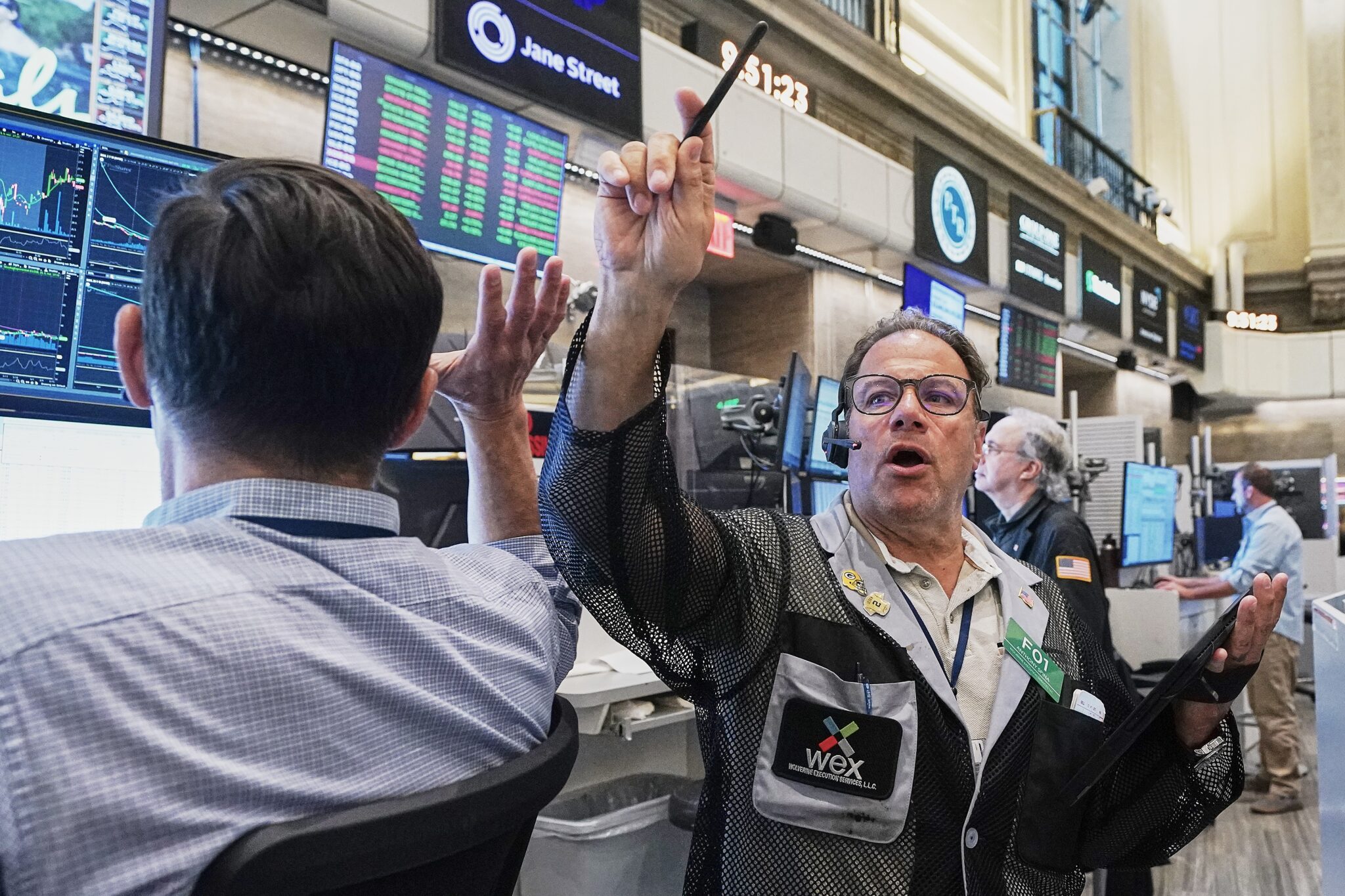
Big Tech Sell-Off Drags Wall Street Lower as Rate Hike Fears Grow/ Newslooks/ WASHINGTON/ J. Mansour/ Morning Edition/ Wall Street stocks fell Tuesday as investors sold major technology shares amid concerns about higher interest rates. AI-related stocks including Nvidia and Micron led the decline, while Asian markets also posted sharp losses. Traders are increasingly expecting the Federal Reserve to raise rates later this year as inflation pressures persist.

Big Tech Sell-Off Quick Looks
- S&P 500 fell 1% during Tuesday trading.
- Nasdaq dropped 1.5% as technology stocks sold off.
- Dow Jones Industrial Average gained 91 points.
- Nvidia declined 3.2% while Micron Technology plunged 11.2%.
- South Korea’s Kospi index dropped 10%.
- Investors worry higher interest rates could slow economic growth.
- Technology stocks have surged throughout 2026 due to AI enthusiasm.
- Markets now see an 85% chance of a Federal Reserve rate hike this year.
- Oil prices declined amid ongoing U.S.-Iran peace negotiations.
- Inflation concerns continue to pressure markets.
Deep Look
Big Tech Leads Wall Street Lower Amid Interest Rate Concerns
U.S. stocks moved lower Tuesday as a broad sell-off in technology companies spread from Asian markets to Wall Street, raising concerns that one of the market’s strongest rallies of the year could be losing momentum.
The decline was fueled by growing expectations that the Federal Reserve may increase interest rates before the end of 2026, a move that could slow economic growth and pressure some of the market’s highest-valued technology companies.
The benchmark S&P 500 fell 1%, while the tech-heavy Nasdaq Composite dropped 1.5%. In contrast, the Dow Jones Industrial Average managed to gain 91 points, or 0.2%, highlighting how concentrated the losses were among technology stocks.
Despite more stocks rising than falling within the S&P 500, the significant weight of large technology companies was enough to drag the broader market lower.
AI-Fueled Stocks Face Sharp Pullback
The biggest losses came from companies that have benefited most from investor enthusiasm surrounding artificial intelligence.
The technology sector has been one of the strongest performers of 2026. Within the S&P 500, tech stocks have gained nearly 27% over the past three months and approximately 18% year-to-date.
Many investors have poured money into AI-related companies, betting that artificial intelligence will drive a new wave of innovation and corporate earnings growth. However, rising interest rate expectations are causing traders to reassess those valuations.
Analysts have increasingly warned that many technology stocks may have risen too quickly.
“Viewed through this lens, a period of consolidation is reasonable, in our view, after such a sharp move higher,” wrote Brock Weimer, investment strategy analyst at Edward Jones, in a research note.
Asian Markets Trigger Global Selling Pressure
The weakness was not limited to Wall Street.
Markets across Asia suffered substantial losses, led by South Korea’s Kospi Index, which plunged 10% in one of its sharpest declines of the year.
The index had been among the biggest beneficiaries of the global AI investment boom, nearly doubling in value during 2026 before Tuesday’s sharp correction.
European markets also traded lower as investors reacted to the technology sell-off and growing concerns about global monetary policy.
The synchronized decline across regions reflected broader uncertainty over whether technology valuations can continue to climb if borrowing costs increase.
Rising Rate Expectations Shake Investor Confidence
At the heart of the market’s concerns is the Federal Reserve’s ongoing battle against inflation.
Recent economic data has shown inflation pressures continuing to build throughout the year. Rising tariffs have contributed to higher consumer prices, while disruptions linked to the U.S.-Iran conflict pushed energy costs upward.
Those higher energy costs have increased transportation and shipping expenses, placing additional pressure on businesses and consumers.
As a result, traders are increasingly convinced the Federal Reserve may need to tighten monetary policy again.
Wall Street now assigns an 85% probability that the Fed will raise interest rates at least once before year-end. Just one week ago, those odds stood at approximately 60%.
Higher interest rates generally make borrowing more expensive, potentially reducing consumer spending and corporate investment. Growth-oriented technology companies are often especially sensitive to such shifts because their valuations depend heavily on future earnings projections.
Bond Market Reflects Mixed Signals
Treasury yields edged lower Tuesday despite ongoing inflation concerns.
The yield on the benchmark 10-year Treasury note slipped to 4.48% from 4.51% late Monday.
Meanwhile, the two-year Treasury yield, which is particularly sensitive to Federal Reserve policy expectations, eased to 4.19% from 4.24%.
While yields declined modestly, they remain elevated compared with earlier periods, reflecting persistent concerns about inflation and future interest rate increases.
Investors are closely watching upcoming economic data for additional clues about the Fed’s next move.
Particular attention is focused on Thursday’s release of the Personal Consumption Expenditures (PCE) Price Index, the inflation measure most closely monitored by Federal Reserve policymakers.
Economists expect the report to show annual inflation rising to 4.1% in May.
Oil Prices Fall as Iran Talks Continue
One bright spot for investors came from the energy market.
Oil prices declined amid ongoing negotiations between the United States and Iran aimed at ending their conflict and stabilizing the region.
Although prices have eased recently, they remain above levels seen before the conflict began, when crude traded near $70 per barrel.
Lower energy prices could help ease inflation pressures if the downward trend continues, though investors remain cautious until a lasting agreement is reached.
Market Rally Faces a Key Test
The latest sell-off comes after an impressive run for U.S. stocks.
The S&P 500 had posted gains in 11 of the previous 12 weeks, driven largely by technology shares and continued enthusiasm surrounding artificial intelligence investments.
Tuesday’s pullback does not necessarily signal the end of the rally, but it highlights growing investor sensitivity to inflation, interest rates and valuations.
With major economic reports due later this week and the Federal Reserve’s next policy decisions approaching, markets appear poised for increased volatility.
For now, investors are weighing whether the AI boom can continue powering stocks higher or whether rising rates will force a broader market recalibration.






You must Register or Login to post a comment.