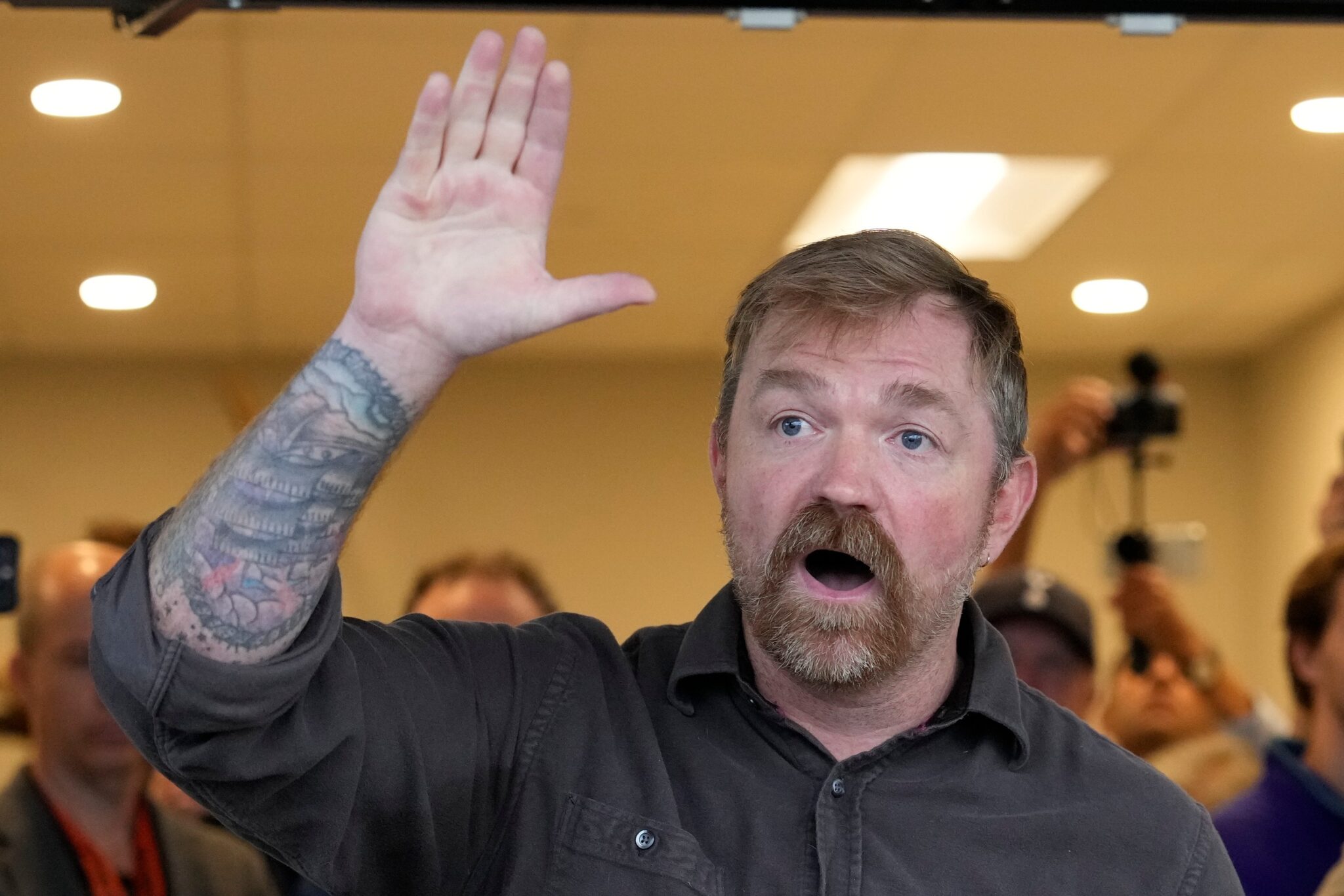
Maine Senate Primary Tuesday Puts Graham Platner Under Spotlight/ Newslooks/ WASHINGTON/ J. Mansour/ Morning Edition/ Voters head to the polls Tuesday in Maine, Nevada, South Carolina, and North Dakota, with national attention focused on Maine’s Senate race. Democratic Senate candidate Graham Platner faces renewed scrutiny over personal controversies even as he is expected to secure his party’s nomination. The primaries will also test President Trump’s influence in Republican contests and showcase key governor and congressional races across several states.

Maine Senate Primary and Tuesday Elections Quick Looks
- Maine Senate race draws national political attention.
- Democrat Graham Platner expected to win nomination.
- Sen. Susan Collins faces no serious primary challenge.
- Platner continues addressing personal misconduct allegations.
- Democratic leaders remain largely supportive of his campaign.
- Trump-backed candidates face tests in South Carolina and Nevada.
- South Carolina governor’s race features several high-profile Republicans.
- Nevada Democrats choose nominee for governor.
- Political family dynasties feature prominently in Maine races.
- Rep. James Clyburn remains favored in South Carolina.
- Democrats seek momentum ahead of November elections.
- Primary results could shape national political narratives.


Deep Look
Maine Senate Race Takes Center Stage
Primary elections across four states on Tuesday may determine several key nominees, but the political spotlight is firmly fixed on Maine, where Democratic Senate candidate Graham Platner is attempting to move beyond a series of damaging controversies and refocus attention on the general election.
While the outcome of the Democratic primary is not seriously in doubt, the broader implications of Platner’s nomination extend far beyond Maine. Democrats view the race as one of their best opportunities to challenge Republican Sen. Susan Collins and potentially gain ground in the battle for control of the U.S. Senate.
The nomination contest itself has become secondary to questions surrounding Platner’s personal conduct and how Democratic voters and party leaders respond.
Platner Faces Scrutiny Despite Strong Position
Platner, a military veteran and oyster farmer, entered the race as a rising Democratic figure with strong grassroots support. However, his campaign has been overshadowed by reports detailing sexually explicit communications with multiple women while married, along with additional allegations concerning past relationships.
Despite the controversy, Platner maintains overwhelming support within the Democratic primary electorate. His strongest rival, Maine Governor Janet Mills, suspended her campaign months ago after recognizing the difficulty of overcoming his substantial lead.
Nevertheless, Mills remains on the ballot, and some Democrats have encouraged protest votes as a signal of dissatisfaction with Platner’s conduct.
Political observers will be closely watching his election-night remarks, looking for signs that he can reassure voters, address lingering concerns, and pivot toward the fall campaign against Collins.
Democrats Face Questions About Party Standards
The Platner controversy has also triggered a broader conversation about how Democrats handle allegations involving their own candidates.
During the height of the #MeToo movement, Democratic leaders frequently emphasized accountability and often demanded swift consequences for elected officials accused of misconduct. The resignation of former Senator Al Franken became one of the most visible examples of that approach.
The response to Platner has been notably different.
Several influential Democrats have continued backing his campaign despite the allegations. High-profile supporters argue that the election remains critically important and that voters should ultimately decide his political future.
The situation has exposed tensions within the party as leaders balance electoral considerations against past commitments to accountability and personal conduct standards.
Tuesday’s primary results are likely to renew questions about how Democratic leaders apply those standards in a highly competitive political environment.
Trump’s Influence Faces New Tests
Republican contests in South Carolina and Nevada will offer another measure of President Donald Trump’s continued influence within the GOP.
In South Carolina, Trump has endorsed Lt. Gov. Pamela Evette in a crowded gubernatorial primary featuring several prominent Republican candidates. The race includes U.S. Representatives Nancy Mace and Ralph Norman, Attorney General Alan Wilson, and businessman Rom Reddy.
The contest will reveal whether Trump’s endorsement remains as powerful as it has been throughout much of his political career.
Another closely watched race involves Senator Lindsey Graham, who faces a primary challenge from businessman Mark Lynch. Trump has strongly backed Graham and warned Republican voters against supporting his challenger.
Because South Carolina requires candidates to receive a majority of votes to avoid a runoff election, observers will be watching to see whether Graham can secure an outright victory.
Nevada Governor’s Race Carries National Significance
Nevada presents one of the most competitive gubernatorial opportunities for Democrats this year.
Republican Governor Joe Lombardo is viewed by many strategists as vulnerable heading into the general election, creating a potentially important pickup opportunity.
Democrats are choosing between Attorney General Aaron Ford and county commissioner Alexis Hill.
Ford enters the race with support from prominent Democratic leaders and could become Nevada’s first Black governor if elected. Hill has positioned herself as an outsider willing to challenge traditional political structures.
The outcome will provide insight into Democratic priorities and strategy heading into the fall election season.
Political Family Names Return To The Ballot
Several races also highlight the enduring influence of political family connections.
In Maine’s Democratic gubernatorial primary, Angus King III and Hannah Pingree are competing for the nomination. King is the son of independent U.S. Senator Angus King, while Pingree is the daughter of longtime Representative Chellie Pingree.
Republicans also feature a familiar surname. Jonathan Bush, nephew of former President George H.W. Bush and cousin of former President George W. Bush, is seeking the GOP gubernatorial nomination while presenting himself as a business-focused outsider.
South Carolina Attorney General Alan Wilson also carries a notable political pedigree as the son of longtime Congressman Joe Wilson.
These races will help determine whether established political family brands continue to resonate with voters in an era increasingly shaped by outsider candidates and anti-establishment messaging.
James Clyburn’s Political Standing Remains Strong
South Carolina Congressman James Clyburn enters Tuesday’s primary in a far more secure position than many expected just weeks ago.
Republican lawmakers had considered congressional redistricting changes that could have significantly altered his majority-Black district and complicated his reelection prospects. Those efforts ultimately failed in the state Senate.
As a result, Clyburn remains heavily favored to win another term.
The veteran lawmaker continues to hold significant influence within national Democratic politics and is expected to remain a major voice as the party begins looking toward the 2028 presidential cycle.
What Tuesday’s Results Could Mean
Although many of Tuesday’s races lack suspense regarding who will win nominations, the broader political implications are substantial.
Democrats will be watching whether Platner can stabilize his campaign and maintain support despite ongoing controversies. Republicans will assess the strength of Trump’s endorsements and influence across multiple contests.
Meanwhile, gubernatorial and congressional races in key states will provide fresh clues about voter sentiment heading into a consequential general election season.
The results may not dramatically reshape the political landscape overnight, but they will offer important signals about party unity, candidate strength, and the issues likely to dominate the months ahead.