US and Iran Exchange New Strikes for Second Day as Peace Talks Stall/ Newslooks/ WASHINGTON/ J. Mansour/ Morning Edition/ The United States and Iran exchanged a second consecutive day of strikes, raising fears that the fragile ceasefire could collapse into a wider regional war. Iran responded to fresh American attacks by targeting Bahrain, Kuwait and Jordan, while negotiations over Iran’s nuclear program and the Strait of Hormuz remain deadlocked. President Donald Trump continues pushing for a deal but has warned Tehran it will “pay the price” if negotiations continue to stall.

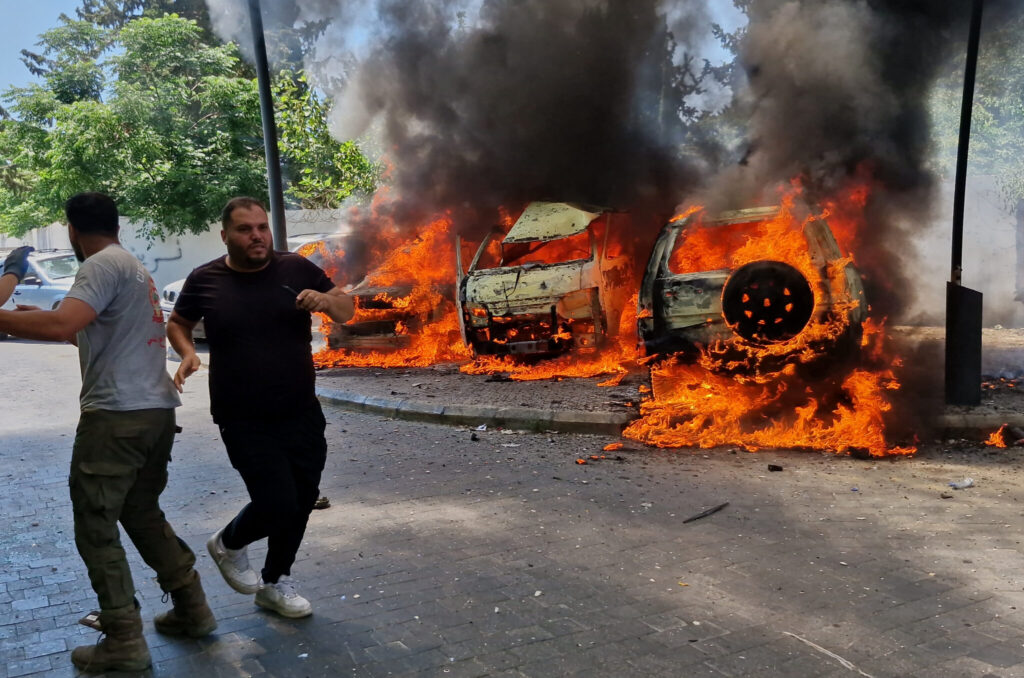
US Iran Strikes Quick Looks
- U.S. launched a second round of strikes against Iran.
- Iran retaliated with attacks targeting Bahrain, Kuwait and Jordan.
- Explosions were reported in Tehran and southern Iran.
- Kuwait temporarily closed its airspace.
- Jordan intercepted incoming missiles.
- Oil prices climbed above $93 per barrel.
- Iran insists it will maintain leverage over the Strait of Hormuz.
- Trump claims U.S. efforts are helping move oil through the strait.
- Qatar continues mediation efforts between Washington and Tehran.
- Major disagreements remain over Iran’s nuclear program.
Deep Look
New Round of Strikes Escalates Regional Tensions
The conflict between the United States and Iran intensified dramatically as both sides exchanged another round of military strikes, raising concerns that efforts to preserve a fragile ceasefire may be unraveling.
American airstrikes continued into Thursday morning across multiple Iranian locations, while Tehran responded by targeting Gulf nations that host U.S. military facilities.
The latest exchange marked the third major escalation this week and underscored how difficult it has become to convert temporary pauses in fighting into a lasting peace agreement.
Despite diplomatic efforts continuing behind the scenes, military action once again dominated developments across the region.
US Expands Military Operations Across Iran
According to U.S. Central Command, American forces completed a broad series of strikes targeting Iranian military infrastructure.
The military said the attacks were conducted:
“in response to Iran’s unwarranted and continued aggression”
According to the statement, targets included:
“Iranian military surveillance capabilities, communication systems and air defense sites.”
The strikes involved assets from the U.S. Air Force, Navy and Marine Corps and reportedly hit locations around Tehran, Bandar Abbas and several areas near the Strait of Hormuz.
Iranian authorities provided limited information about the damage but acknowledged that several military-related facilities had been impacted.
Iran’s Revolutionary Guard later indicated that a manufacturing complex, military barracks and Guard installations outside Tehran were among the locations struck.
Iran Responds With Regional Attacks
Iran quickly retaliated by launching attacks aimed at countries hosting American military personnel.
Bahrain, Kuwait and Jordan all reported incoming missile or drone threats.
Kuwait temporarily shut down its airspace as defense systems responded to the attack.
Officials described the action as necessary due to:
“sinful Iranian aggressions”
and concerns regarding regional aviation safety.
Jordan said it intercepted numerous incoming missiles aimed toward an area housing U.S. military facilities.
Bahrain reported property damage and injuries caused by debris from interception operations.
The retaliatory strikes expanded the conflict beyond direct U.S.-Iran engagement and heightened fears of a broader regional confrontation.
Strait of Hormuz Remains Central Battleground
At the heart of both the military conflict and diplomatic negotiations is the Strait of Hormuz.
The narrow waterway remains one of the world’s most important energy corridors, handling a significant share of global oil and natural gas shipments.
Iran has used its ability to restrict access to the strait as a major bargaining tool throughout the conflict.
The disruption has driven up fuel prices worldwide and contributed to inflation pressures in multiple economies.
Oil prices have surged more than 25% since the war began in late February.
The international benchmark for crude oil traded above $93 per barrel as investors monitored developments.
Trump Claims Secret Oil Mission Is Working
President Donald Trump said the United States has been quietly helping oil shipments navigate the region despite Iranian efforts to control access.
Trump claimed the military has conducted a covert operation since last month.
According to the president, ships have been moving through the strait under cover of darkness while avoiding Iranian monitoring systems.
Trump said more than 100 million barrels of oil have successfully passed through the waterway as a result of those efforts.
There has been no independent confirmation of that figure.
Military officials acknowledged that U.S. forces coordinate with commercial shipping but declined to provide operational details.
Dangerous Conditions Continue for Global Shipping
Commercial shipping remains one of the biggest casualties of the conflict.
The dangers facing international vessels were highlighted by the attack on the tanker Settebello.
The U.S. military accused the vessel of attempting to violate the American blockade on Iranian oil exports.
American forces fired into the ship’s engine room to disable it.
The incident resulted in international criticism after India confirmed that three Indian sailors were killed.
India lodged a formal protest and demanded answers regarding the attack.
Meanwhile, another tanker near Oman experienced an engine room fire under circumstances that remain unclear.
These incidents illustrate the growing risks faced by commercial shipping throughout the region.
Negotiations Continue Despite Escalation
Even as missiles and airstrikes dominate headlines, diplomatic efforts have not stopped.
Qatar continues playing a key mediating role between Washington and Tehran.
A Qatari delegation traveled to Iran for discussions with government officials before departing Thursday.
Pakistan has also called for restraint and urged both sides to honor ceasefire commitments.
However, the latest military exchanges have complicated those efforts.
Iran’s Foreign Ministry said American attacks had:
“effectively rendered the ceasefire … meaningless”
though Tehran stopped short of formally abandoning the agreement.
Nuclear Dispute Remains Major Obstacle
Beyond military clashes, the two sides remain deeply divided over Iran’s nuclear program.
The United States continues demanding that Iran surrender its stockpile of highly enriched uranium.
American and Israeli officials argue that the material places Tehran only a short technical step away from developing nuclear weapons.
Iran continues rejecting that demand.
Officials insist the country’s nuclear program is peaceful and argue they have the right to maintain enrichment activities.
Tehran is also demanding sanctions relief and access to frozen assets before agreeing to a final settlement.
Those conditions remain unacceptable to Washington.
Hezbollah and Israel Complicate Diplomacy
Another major obstacle involves Iran’s alliance with Hezbollah.
Iran insists that any final agreement must include an end to Israeli military operations against the Lebanese militant group.
Israeli Prime Minister Benjamin Netanyahu appears unwilling to make such concessions.
Israel continues conducting military operations against Hezbollah and has warned of additional action if attacks continue from Lebanon.
The situation has created another layer of complexity for negotiators trying to craft a broader regional agreement.
Can a Deal Still Be Reached?
President Trump has repeatedly argued that a peace deal remains achievable and at times suggested an agreement could arrive within days.
Yet the latest exchanges of fire reveal how far apart the two sides remain.
Iran continues leveraging the Strait of Hormuz and refusing major nuclear concessions.
The United States continues military pressure while demanding substantial changes to Iran’s nuclear activities.
Meanwhile, regional actors including Israel, Hezbollah and Gulf states remain directly involved in a conflict that increasingly stretches beyond bilateral negotiations.
As diplomacy struggles to keep pace with military escalation, the Middle East faces one of its most volatile moments since the war began.