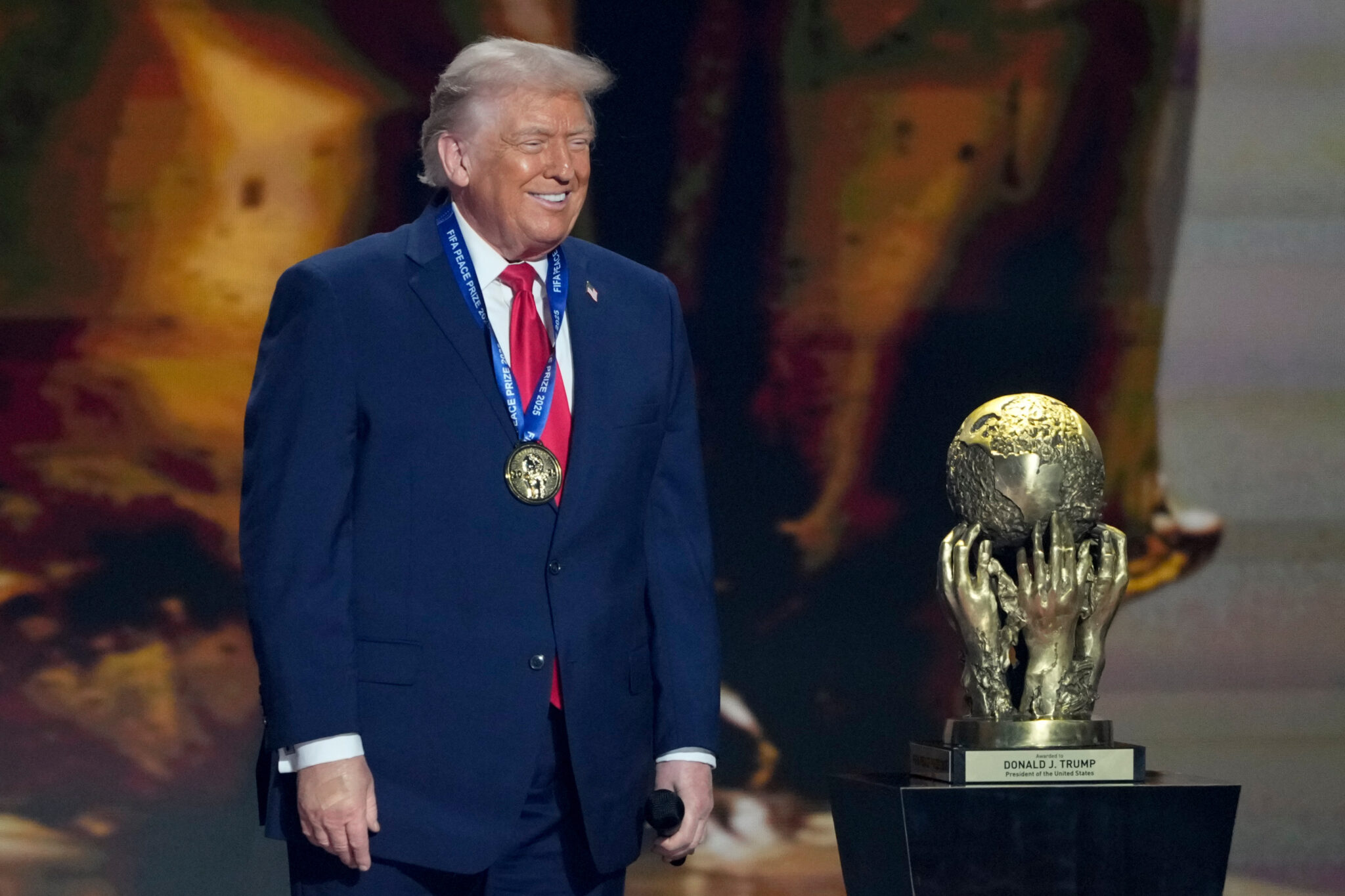
World Cup 2026 Collides With Trump’s ‘America First’ Immigration Policies/ Newslooks/ WASHINGTON/ J. Mansour/ Morning Edition/ The 2026 FIFA World Cup is underway, but immigration policies and visa restrictions have created challenges for fans, athletes and officials. Critics argue that President Donald Trump’s America First agenda has complicated travel to the tournament. The administration maintains that security remains the top priority while organizers hope attention shifts to the action on the field.
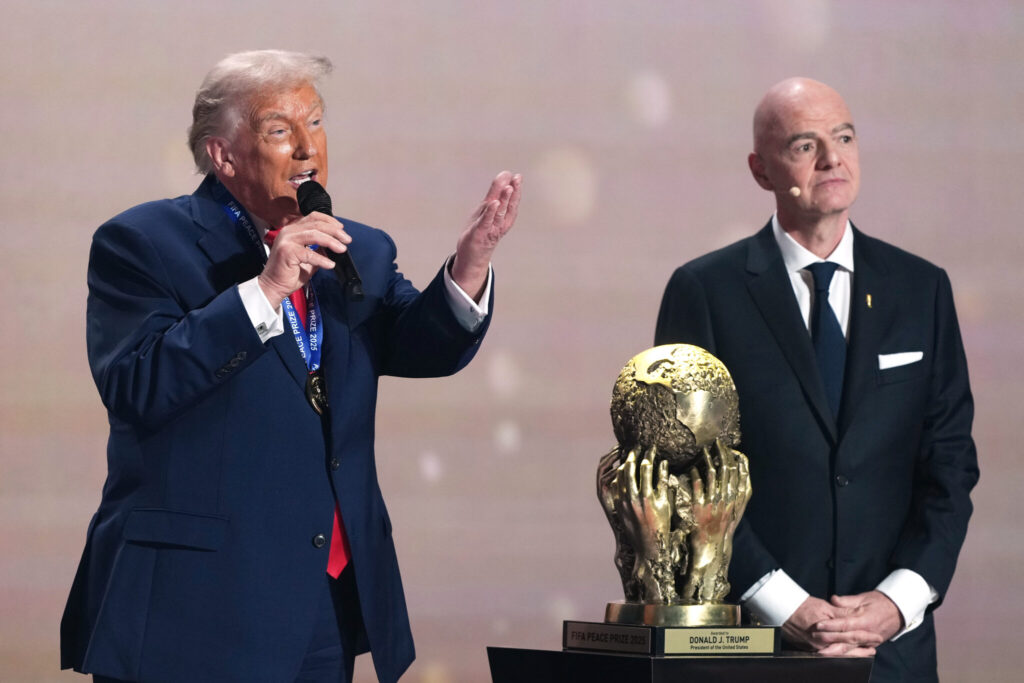
World Cup and Trump Agenda Quick Looks
- World Cup 2026 is testing U.S. ability to host a global event.
- Immigration policies have become a major storyline.
- Some fans, athletes and officials faced visa complications.
- Hotel operators report bookings below expectations.
- Travel concerns have affected international demand.
- FIFA and U.S. agencies are coordinating tournament security.
- Iranian participation created diplomatic challenges.
- Labor concerns emerged over potential immigration enforcement near venues.
- The White House says safety remains its top priority.
- Organizers hope soccer will eventually dominate headlines.

Deep Look
The 2026 FIFA World Cup was envisioned as a showcase for American leadership, hospitality and global engagement. Instead, in the days leading up to kickoff, the tournament has found itself intertwined with debates over immigration, border security and President Donald Trump’s America First agenda.
As millions of fans around the world turn their attention to matches taking place across North America, questions surrounding visa access, travel restrictions and immigration enforcement have emerged as some of the biggest off-field storylines of the competition.
For the Trump administration, the tournament represents one of the largest international events hosted by the United States in decades and serves as an early test ahead of the 2028 Summer Olympics.
Global Event Meets Domestic Policy
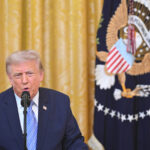
President Trump has repeatedly promoted the World Cup as an opportunity to highlight American strength and exceptionalism on the world stage.
At the same time, his administration has continued implementing stricter immigration and security measures that critics argue have complicated participation in the tournament.
The contrast between hosting a global sporting celebration and maintaining aggressive border enforcement policies has created tensions that extend beyond soccer.
Industry groups have warned that concerns about travel restrictions may already be affecting attendance expectations.
According to the American Hotel & Lodging Association, many hotel operators in host cities reported booking levels below original forecasts. Industry leaders pointed to concerns about visa processing, travel uncertainty and increased transportation costs as contributing factors.
Visa Issues Draw International Attention
Several high-profile incidents involving tournament participants have intensified scrutiny of U.S. entry policies.
Somali referee Omar Artan was denied entry into the United States after arriving at Miami International Airport. Federal authorities cited vetting concerns, while Artan suggested his nationality played a role in the decision.
Iraqi national team striker Aymen Hussein was reportedly subjected to extensive questioning upon arrival in Chicago. According to officials, one member of Iraq’s traveling delegation was ultimately denied entry following additional screening procedures.
Iran’s participation created another challenge for organizers. While players received visas to compete, reports indicated that some staff members experienced difficulties obtaining authorization to enter the country.
International sports journalists have also reported visa-related obstacles, prompting concerns among media organizations responsible for covering the tournament.
Security Remains Central Focus
The Department of Homeland Security has emphasized that extensive security planning is underway to ensure the tournament proceeds safely.
Multiple federal agencies, including Immigration and Customs Enforcement and Homeland Security Investigations, are participating in security operations designed to protect players, fans and venues.
Homeland Security Secretary Markwayne Mullin has attempted to reassure the public that immigration enforcement activities are not intended to target ordinary fans attending matches.
“ICE’s mission was not ‘to go round up mass individuals,’” Mullin said during a recent interview, adding that enforcement efforts remain focused on individuals considered significant threats.
The administration has also adjusted certain travel policies ahead of the tournament, including waiving substantial visa bond requirements that had previously raised concerns among international travelers.
Labor and Community Concerns Emerge
Immigration enforcement has also become a labor issue in several host cities.
Near Los Angeles, workers at a major World Cup venue authorized strike action over concerns related to potential immigration operations around matches.
Although venue operators reached an agreement with labor representatives, union leaders retained the option of future work stoppages if they believe worker safety is threatened by federal enforcement actions.
Immigrant advocacy groups have similarly advised fans to remain aware of immigration-related developments while traveling to tournament events.
These concerns have added another layer of complexity to preparations for what is expected to be one of the most heavily attended sporting events in history.
FIFA Faces a Massive Logistical Challenge
FIFA President Gianni Infantino acknowledged the difficulties associated with organizing an event of this scale.
With hundreds of thousands of accredited participants arriving from around the world, organizers face enormous logistical and security challenges.
“It’s not easy when you have 300,000 accredited people, the majority of which are from outside of the U.S., to process them, to vet them,” Infantino said.
Tournament officials continue working closely with federal agencies to facilitate travel and ensure smooth operations throughout the competition.
Attention May Shift to Soccer
Despite the controversies, many observers believe the focus will gradually move away from politics and toward the matches themselves.
Historically, major sporting events often experience intense scrutiny before kickoff, only for public attention to shift once competition begins.
As teams take the field and memorable moments emerge, organizers hope fans will concentrate on the excitement, drama and global unity that have long defined the FIFA World Cup.
Still, the tournament offers an important glimpse into how the United States balances its domestic priorities with the expectations of hosting international events.
Looking Ahead to 2028
The World Cup serves as a preview of even larger challenges ahead.
In just two years, the United States will host the Summer Olympics in Los Angeles, another event expected to bring millions of visitors, athletes, officials and media representatives from around the globe.
How the Trump administration manages the World Cup experience may influence perceptions of America’s readiness to host future international spectacles.
For now, the world is watching not only the matches on the field, but also how the United States navigates the intersection of security, immigration policy and global sport.