
Graham Platner Wins Maine Democratic Senate Primary, Setting Up Showdown With Susan Collins/ Newslooks/ WASHINGTON/ J. Mansour/ Morning Edition/ Democrat Graham Platner won Maine’s Senate primary despite controversies surrounding his past conduct. The victory sets up one of the nation’s most closely watched Senate races against Republican Sen. Susan Collins. Democrats view the contest as a key opportunity to flip a Republican-held seat and strengthen their chances of reclaiming Senate control.

Graham Platner Senate Victory Quick Looks
- Graham Platner won the Maine Democratic Senate primary.
- He will face Republican Sen. Susan Collins in November.
- Democrats consider the race a top Senate pickup opportunity.
- Platner campaigned on housing, healthcare, and cost-of-living issues.
- His campaign faced scrutiny over personal conduct allegations.
- Collins advanced unopposed in the Republican primary.
- Maine remains one of the most competitive Senate battlegrounds.
- Collins is the only Republican senator from New England.
- Platner framed his campaign around redemption and economic reform.
- Ranked-choice voting will determine winners in other major Maine races.

Deep Look
Platner Secures Democratic Nomination
Graham Platner won Maine’s Democratic primary for U.S. Senate on Tuesday, overcoming weeks of controversy and positioning himself for a high-profile general election battle against longtime Republican Sen. Susan Collins.
The victory marks a major milestone for Democrats, who see Maine as one of their best opportunities to flip a Republican-held Senate seat in November.
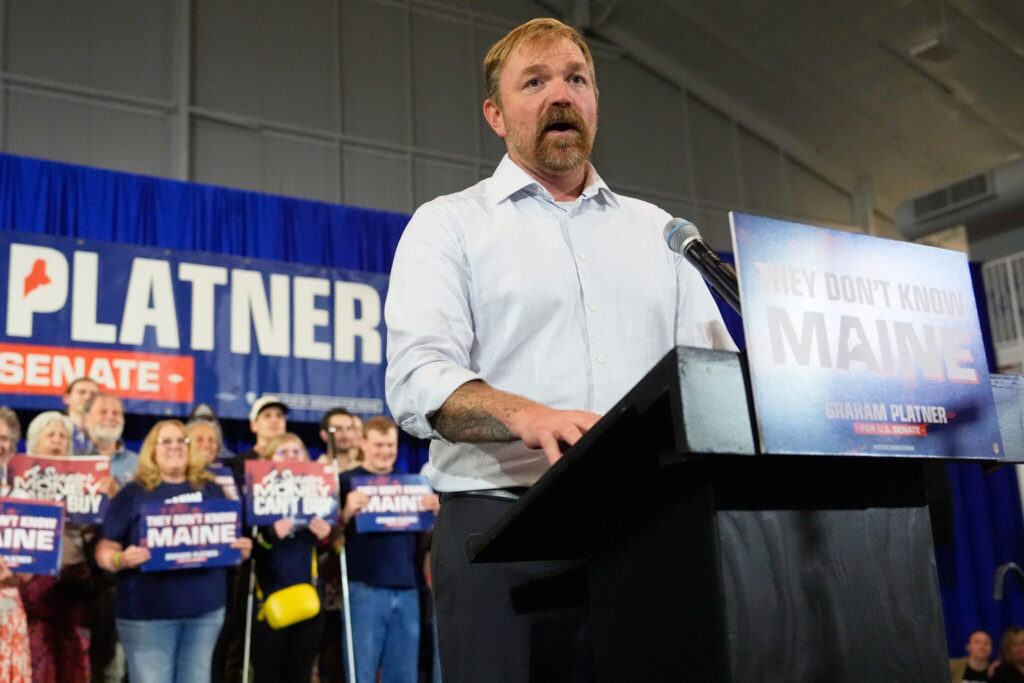
Speaking to supporters in his hometown of Blue Hill, Platner embraced a message of personal growth and redemption while looking ahead to the general election campaign.
“If you believe, as I do, that we can change our politics and change our country, then you must also believe that people can change,” Platner said during his acceptance speech in Blue Hill, a rural town where he was born, as the crowd cheered on. “And the reason I believe that is because I have lived it.”
The former Marine, Army veteran, and oyster farmer now moves into what is expected to be one of the most closely watched Senate contests in the country.
Democrats View Maine as Key Senate Battleground
The Maine race holds special significance for national Democrats.
Maine is the only state with a competitive Senate contest where voters backed Kamala Harris over Donald Trump in the 2024 presidential election. Collins also remains the lone Republican senator representing New England.
Party leaders view the race as critical to their broader effort to regain control of the U.S. Senate.
Platner built much of his campaign around economic issues, arguing that rising housing costs, healthcare expenses, and income inequality have placed increasing pressure on working families.
“Any of those who feel let down, or disappointed, or disillusioned, it is my job to earn your trust, faith and support, and I will spend every day of this campaign, and if I have the privilege, every day in the United States Senate doing exactly that,” Platner said.
Platner Quickly Turns Focus Toward Collins
Following his primary victory, Platner immediately shifted his attention to Collins, launching a series of attacks against the veteran senator’s record.
The progressive Democrat criticized Collins’ support for military interventions and accused her of helping advance conservative judicial appointments during the Trump era.
“Susan Collins has never met a war she didn’t like, she’s been supporting endless wars since I was a teenager, and I know, I had to fight in two of them,” Platner, a Marine and U.S. Army veteran, said. “You and your friends profited, and my friends died.”
He also argued that Collins has become too closely aligned with Washington’s political establishment.
“She has become just as spineless and corrupt as the establishment she now serves,” Platner said, noting that Collins once promised to only serve two terms.
The sharp rhetoric signals that the general election campaign could become one of the most contentious Senate races of 2026.
Collins Campaign Highlights Experience and Influence
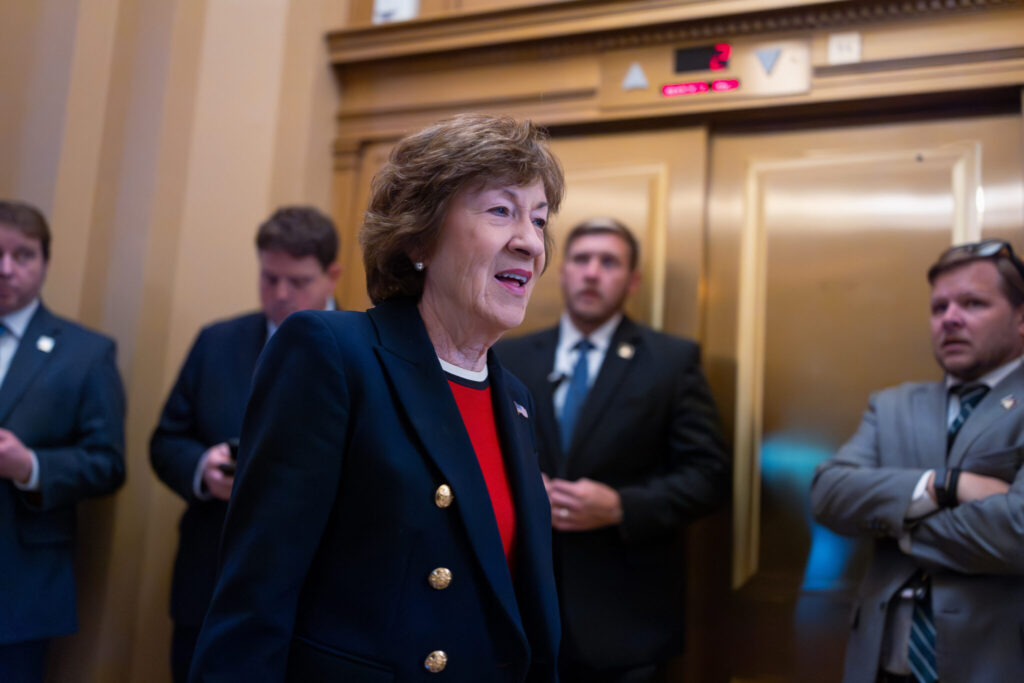
Collins enters the race with significant advantages as a long-serving incumbent and one of the Senate’s most influential lawmakers.
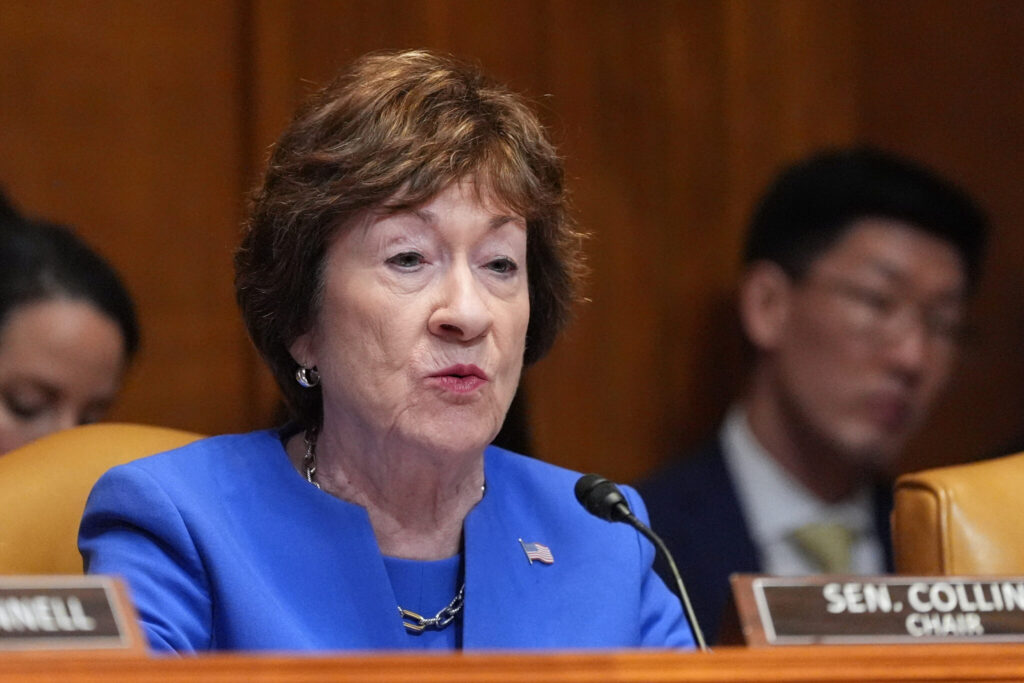
First elected in 1996, Collins currently chairs the powerful Senate Appropriations Committee and has emphasized her ability to deliver federal resources to Maine communities.
Her campaign quickly responded to Platner’s attacks by highlighting her legislative record.
“While others talk about revolution and division, Susan Collins is delivering for Maine communities by funding rural hospitals, supporting our shipbuilders and fishermen, improving infrastructure, expanding broadband, and strengthening public safety,” said Collins’ spokesperson, Shawn Roderick. “Maine people are practical. They care about whether their communities are stronger and their families are better off. That’s exactly what Susan Collins is focused on every single day.”
Collins has consistently presented herself as a pragmatic Republican willing to work across party lines, a message that has helped her remain competitive in a state that frequently supports Democratic presidential candidates.
Controversies Shadow Platner’s Campaign
Despite his victory, Platner enters the general election carrying political baggage that Republicans are expected to highlight extensively.
His campaign has faced scrutiny over past online comments, personal relationships, and allegations involving former partners.
Among the controversies were previously resurfaced online posts in which Platner appeared to endorse political violence, dismiss concerns about sexual assault within the military, and criticize law enforcement and rural communities.
Platner apologized for those comments and said they were written while he struggled with post-traumatic stress disorder and depression.
Questions have also been raised regarding a skull-and-crossbones tattoo linked by some critics to Nazi symbolism. Platner has repeatedly denied knowledge of any such association and has since covered the tattoo with a different design.
More recently, reports surfaced involving sexually explicit text exchanges with multiple women while he was married. Additional allegations regarding his behavior in previous relationships also generated headlines during the final days of the primary campaign.
Platner’s campaign has disputed several of those allegations and accused critics of focusing on personal matters rather than policy issues.
Supporters Remain Focused on Economic Issues
Despite the controversies, many Democratic voters remained supportive of Platner’s candidacy.
Supporters have argued that voters are more concerned about economic challenges and political change than personal controversies.
Voter Annette Babcock of Sullivan said Platner’s outsider status appealed to her.
“The Republicans don’t have much moral high ground to stand on when they’re criticizing him for what he’s done when Trump is a convicted felon,” she said.
That sentiment reflects a broader political environment where voters increasingly evaluate candidates through partisan lenses rather than focusing exclusively on personal conduct issues.
Other Maine Races Remain Undecided
While the Senate primary produced a clear result, several other major Maine races remain unresolved.
No candidate secured a majority in either party’s gubernatorial primary or in the Democratic primary for the state’s 2nd Congressional District.
Under Maine’s ranked-choice voting system, additional rounds of counting will determine those winners.
Democrats competing for governor include Shenna Bellows, Troy Jackson, Hannah Pingree, Angus King III, and Nirav Shah.
On the Republican side, candidates include Bobby Charles, Jonathan Bush, Garrett Mason, Owen McCarthy, Robert Wessels, David Jones, and Ben Midgley.
In Maine’s 2nd Congressional District Democratic primary, Matt Dunlap, Joe Baldacci, Jordan Wood, and Paige Loud remain in contention.
November Battle Could Help Shape Senate Control
The upcoming Collins-Platner matchup is expected to attract national attention, substantial fundraising, and heavy outside spending.
For Democrats, defeating Collins would represent one of the party’s most important pickup opportunities in the battle for Senate control.
For Republicans, protecting Collins’ seat remains essential to maintaining their Senate majority.
As the general election campaign begins, both candidates will seek to define the race around sharply different visions for Maine and the country while voters weigh experience, economic concerns, and the controversies that have already become part of the campaign narrative.