
House Republicans Push Trump’s $70 Billion Immigration Enforcement Funding Bill/ Newslooks/ WASHINGTON/ J. Mansour/ Morning Edition/ House Republicans are moving to approve nearly $70 billion in additional funding for immigration enforcement agencies, extending support for President Donald Trump’s immigration agenda through the remainder of his term. The legislation focuses on funding ICE and Border Patrol operations after controversial provisions tied to White House security and a compensation fund for Trump allies were removed. Democrats strongly oppose the measure, arguing it provides massive funding with few accountability requirements, while Republicans say it is necessary to protect public safety and strengthen border security.
Immigration Enforcement Funding Bill Quick Looks
- House Republicans seek nearly $70 billion in new immigration funding.
- ICE would receive approximately $38 billion.
- Border Patrol would receive about $26 billion.
- Another $5 billion is earmarked for emergency expenses.
- The bill would fund operations through 2029.
- Earlier controversial provisions were removed.
- Democrats argue the package lacks oversight measures.
- Republicans say the funding is critical for public safety.
- The Senate approved the legislation last week.
- President Trump is expected to sign the measure if it clears the House.


Deep Look
House Republicans Push Major Immigration Funding Package
House Republicans are preparing for a critical vote on legislation that would provide nearly $70 billion in additional funding for immigration enforcement agencies, ensuring resources remain available for the remainder of President Donald Trump’s time in office.
The measure would provide substantial new funding for the Department of Homeland Security’s immigration enforcement operations and represents one of the largest immigration-focused spending efforts in recent years.
Speaker Mike Johnson and Republican leaders are working to maintain near-unanimous support within their caucus as they attempt to secure final approval.
The vote comes after weeks of negotiations, revisions and political setbacks that forced lawmakers to narrow the bill’s focus exclusively to immigration enforcement.
Earlier Controversial Proposals Were Removed
The legislation initially included provisions that generated significant opposition and complicated its path through Congress.
Among the most controversial proposals was roughly $1 billion for enhanced security projects at the White House, including funding connected to President Trump’s planned ballroom project.
Another disputed proposal involved a nearly $1.8 billion compensation fund designed for individuals who claimed they had been unfairly investigated or prosecuted by the federal government.
Both measures became politically problematic and were ultimately removed from the legislation.
With those provisions stripped out, lawmakers refocused the package entirely on immigration enforcement operations.
Funding Targets ICE and Border Patrol
The revised bill directs the overwhelming majority of funding toward immigration enforcement agencies.
Under the proposal:
- Immigration and Customs Enforcement (ICE) would receive approximately $38 billion.
- Customs and Border Protection and Border Patrol operations would receive roughly $26 billion.
- An additional $5 billion would be reserved for unforeseen operational expenses.
The funding would strengthen staffing, detention capacity, transportation operations, technology investments and enforcement efforts tied to Trump’s deportation agenda.
Speaker Johnson argued that the funding is necessary to address immigration challenges and support federal law enforcement personnel.
“It’s long overdue,” said Johnson, R-La., of the bill. “We have to fund border security and immigration enforcement, and it’s sad that Republicans have to do it on our own.”
Additional Funding Builds on Previous Spending
The proposed package would supplement significant immigration funding already approved by Congress.
Last year, the Republican-controlled Congress provided nearly $140 billion to ICE and Customs and Border Protection through broader tax and spending legislation backed by the Trump administration.
Republicans argue the additional funding is necessary to sustain operations over multiple years and provide certainty for enforcement agencies.
The new proposal would effectively guarantee funding for immigration enforcement programs through 2029 if enacted.
Democrats Raise Accountability Concerns
Democratic lawmakers have strongly opposed the legislation, arguing that additional funding should be paired with reforms governing how immigration agencies conduct enforcement operations.
Several Democrats sought requirements that federal agents display identification during enforcement actions and obtain judicial warrants before entering private property.
Those proposals were not included in the final legislation.
House Democratic Leader Hakeem Jeffries criticized the measure and pledged unified Democratic opposition.
“We believe that taxpayer dollars should be used to make life more affordable for the American people – not give ICE another $70 billion blank check so that they can unleash brutality on American citizens and violently target law-abiding immigrant communities,” said Jeffries of New York.
Democrats have repeatedly argued that Congress should attach stronger oversight requirements before approving additional funding.
Funding Battle Followed Homeland Security Shutdown
The legislation emerged from a lengthy funding dispute that left the Department of Homeland Security facing an extended shutdown.
Democrats withheld support for agency funding following immigration enforcement actions conducted in Minneapolis and other cities, creating a prolonged standoff between the two parties.
Negotiations between congressional leaders and the White House attempted to find common ground on operational reforms and funding levels.
Those discussions ultimately failed.
Republicans then turned to procedural tactics that allowed them to advance the funding package without Democratic support.
Senate Already Approved the Measure
The Senate completed work on the legislation last week after a marathon overnight session.
The bill passed by a narrow 52-47 margin, largely along party lines.
Sen. Lisa Murkowski of Alaska was the lone Republican to oppose the measure.
The Senate vote cleared a major hurdle and shifted attention to the House, where Republican leaders are now working to secure final passage.
If approved, the legislation will move to President Trump for his signature.
Funding Arrives During Leadership Changes
The measure also arrives during a significant transition period at the Department of Homeland Security.
In March, Trump replaced former Homeland Security Secretary Kristi Noem with Markwayne Mullin.
Mullin has sought to lower the department’s public profile while maintaining the administration’s aggressive enforcement priorities.
At the same time, pressure remains intense from immigration restriction advocates who want the administration to accelerate deportation efforts.
Trump campaigned on carrying out what he described as the largest deportation operation in American history.
Administration Faces Pressure to Increase Deportations
Although enforcement efforts have expanded, the administration has not yet reached its stated goal of conducting 1 million deportations annually.
Border czar Tom Homan has repeatedly promised increased enforcement actions and suggested additional operations could target major cities, including New York.
The administration has also pursued broader immigration policy changes affecting legal immigration programs.
These efforts include moves to end Temporary Protected Status for certain groups, adjustments to green card processing procedures and delays affecting some Dreamers seeking status renewals.
Supporters view these actions as necessary immigration reforms, while critics argue they create uncertainty for immigrants already living and working legally in the United States.
House Vote Expected to Be Close
Republican leaders face a narrow path to final passage.
With slim margins in the House, Johnson can afford only a handful of defections if all lawmakers participate in the vote.
Leadership postponed consideration of the legislation last week to avoid procedural complications and ensure members would be available for the final vote.
The bill itself is relatively brief compared with traditional federal spending measures and does not contain the extensive policy directives often attached to agency appropriations.
Sharp Political Divide Remains
The debate over the legislation reflects broader disagreements over immigration policy heading into the midterm election season.
Democrats argue that DHS has misused resources and should face stronger congressional oversight before receiving additional funding.
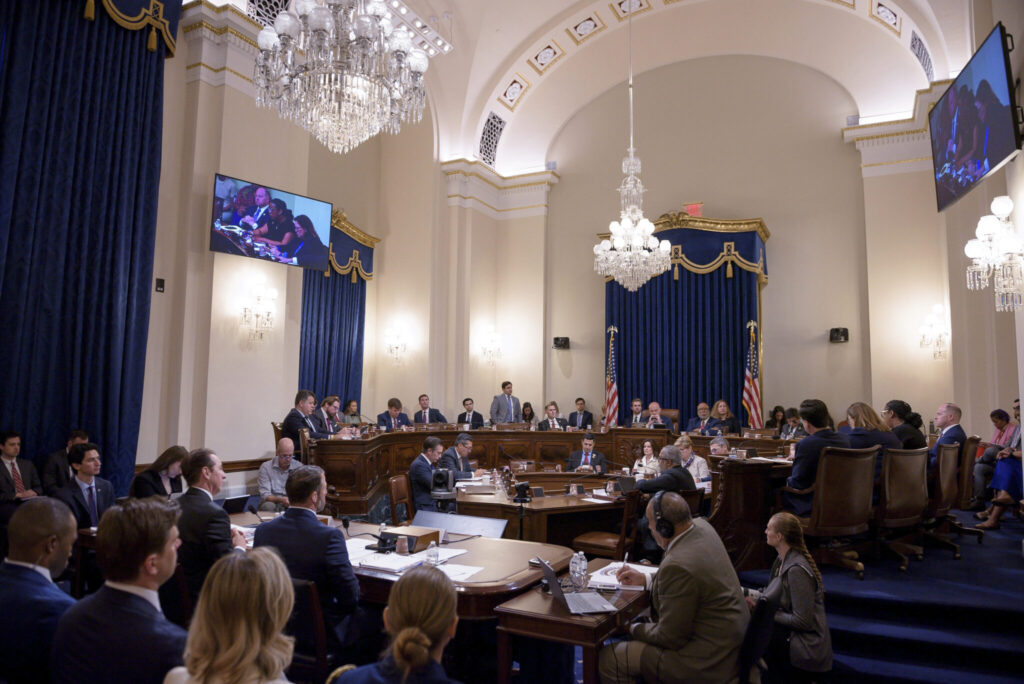
Rep. Jamie Raskin of Maryland voiced those concerns during debate.
“To give these rogue agencies another $70 billion now when they still have $100 billion in the bank from last year would implicate all of us in the escalating corruption and shameful actions of this department,” said Rep. Jamie Raskin of Maryland, the ranking Democratic member on the House Judiciary Committee.
Republicans counter that the funding is necessary to support law enforcement and protect communities.
“Democrats can say whatever they want, but what it’s about is public safety. What’s it about is keeping Americans safe,” said Rep. Michelle Fischbach, R-Minn.
What Happens Next
If House Republicans maintain enough support to pass the measure, the bill will head directly to President Trump for final approval.
Its enactment would provide immigration enforcement agencies with billions of dollars in additional resources and help secure funding for deportation, detention and border enforcement operations through the end of Trump’s current term.
The vote is expected to serve as another major test of Congress’ deep divide over immigration policy as both parties look ahead to the 2026 midterm elections.