


Mediators Report Progress Toward Renewed US-Iran Ceasefire Talks/ Newslooks/ WASHINGTON/ J. Mansour/ Regional officials reported significant progress in efforts to return the United States and Iran to negotiations after both sides paused attacks for three days. Qatar, Pakistan and Oman are working to revive an interim ceasefire and develop a mechanism for shipping through the Strait of Hormuz. Drone attacks involving Saudi Arabia, Jordan and armed groups in Iraq and Yemen showed that the broader region remains volatile.


Quick Look
- Neither the United States nor Iran reported attacks for three days.
- The pause followed nearly two weeks of sustained bombardments.
- Qatar and Pakistan are leading efforts to restore negotiations.
- Iran and Oman are discussing management of Strait of Hormuz shipping.
- Iran says the waterway remains closed.
- The US naval blockade has redirected 17 commercial ships.
- US forces have also disabled two vessels and boarded two others.
- Saudi Arabia said it intercepted drones targeting petroleum facilities.
- Jordan reported shooting down two unidentified drones.
- Commercial traffic through Hormuz fell to a three-week low.
- Netanyahu is scheduled to meet Trump in Washington on Tuesday.

Deep Look
Mediators Report Progress After Three-Day Pause
CAIRO — Mediators have made progress toward returning the United States and Iran to negotiations following a three-day pause in attacks, two regional officials said Monday.
The respite followed nearly two weeks of escalating American and Iranian bombardments that raised fears of a return to full-scale war.
The officials spoke anonymously because the diplomatic discussions were taking place behind closed doors. They said Qatar and Pakistan were leading efforts to narrow the differences between Washington and Tehran and restore an interim ceasefire that collapsed following renewed exchanges of fire.
One official described the progress as “significant.”
Neither the United States nor Iran reported conducting attacks during the three-day period.
Trump Gives Diplomacy More Time
The United States paused its campaign after nearly two weeks of strikes against Iranian coastal locations and infrastructure.
The escalation began after Iran fired at vessels attempting to pass through the Strait of Hormuz, a critical route for global energy shipments.
President Donald Trump is “giving talks some space. He’s giving it a little bit of room,” US Ambassador to the United Nations Mike Waltz told Fox News.
Waltz dismissed concerns that the United States was running short of interceptor missiles used to defend against Iranian attacks. Military experts have nevertheless questioned how long either side can financially and operationally sustain repeated strikes.
Iran Says It Stopped Attacks After US Pause
An Iranian army spokesperson told state television Sunday that Tehran stopped its attacks after Washington paused its operations.
Iran had recently retaliated against countries hosting American military forces.
Those attacks killed at least three US service members at a base in Jordan and one in Iraq, according to the supplied report.
The temporary halt did not amount to a new ceasefire, and both governments remained militarily prepared.
No Direct US-Iran Negotiations Underway
Iranian Foreign Ministry spokesperson Esmail Baghaei said Monday that mediators were carrying communications between Washington and Tehran.
“Mediators may convey messages to us from the American side,” Baghaei said at a news conference in Tehran.
He stressed that the United States and Iran were not holding direct negotiations.
The diplomatic process therefore continued through regional intermediaries while officials explored terms for restoring the earlier interim agreement.
Iran and Oman Discuss Hormuz Shipping
A major focus of the mediation is the Strait of Hormuz, the flashpoint for the latest round of attacks and counterattacks.
The regional official said mediators were working with Iran and Oman to create a system for managing commercial vessels traveling through the passage.
Iran and Oman, which sit on opposite sides of the strait, held discussions Friday and Saturday about maritime traffic, Baghaei said.
“The objective is for Iran and Oman, as the two coastal states, to develop mechanisms to ensure safe navigation through the Strait of Hormuz while respecting the sovereign rights and sovereignty of both coastal states, as well as Iran’s security and national interests,” Baghaei said.
He emphasized that the strait remained closed.
Disagreement Persists Over Control of Waterway
Iran argues that its interim agreement with the United States gives Tehran authority to manage maritime traffic through the Strait of Hormuz and potentially collect fees from vessels.
Tehran also objects to US support for an alternative route that passes closer to Oman.
Before the war, the strait was open to international shipping without fees.
Resolving the competing claims will be essential to restoring normal traffic through a waterway crucial to global oil and gas supplies.
US Blockade Redirects 17 Commercial Ships
The American military said Monday that its renewed naval blockade against Iran remained in force.
US forces have redirected 17 commercial vessels, disabled two and boarded two others since the blockade was reimposed.
The enforcement measures demonstrate that the pause in airstrikes has not ended American military pressure on Tehran.
Commercial shipping through the Strait of Hormuz fell to a three-week low, according to a maritime organization overseen by the US Navy.
The organization said Sunday that no new attacks had been confirmed in the previous 72 hours.
Nuclear Dispute Temporarily Set Aside
The interim agreement reached in mid-June established a 60-day period for negotiations.
That period has entered its second half, but the most difficult issues remain unresolved.
Iran’s nuclear program—originally at the center of the talks—has temporarily received less attention as mediators focus on preventing renewed fighting and restoring maritime traffic.
The immediate priority is maintaining communication between the two governments and developing arrangements for the Strait of Hormuz.
Drone Attacks Keep Region on Edge
Despite the pause between Washington and Tehran, several drone incidents were reported elsewhere in the region.
Saudi Arabia said it intercepted drones launched by Iran-backed militias in Iraq toward petroleum facilities.
Iran-backed Houthi rebels in Yemen separately claimed to have attacked Saudi oil installations. It was unclear whether the Saudi and Houthi accounts referred to the same operation.
Two drone attacks were also reported against a Kurdish Iranian dissident organization in Iraq.
Jordan said it shot down two drones but did not identify their origin.
No casualties or damage were reported from those incidents.
Iran and Ukraine Trade Accusations
Iran and Ukraine also became involved in a public dispute after Ukraine fired at least one Iranian vessel in the Caspian Sea over the weekend.
Iran said one sailor was killed.
Tehran is a significant ally of Russia in its war against Ukraine and has helped Moscow develop its drone capabilities.
The incident added another dimension to the broader tensions surrounding Iran and its military relationships.
Bab el-Mandeb Threatens Additional Disruption
Concern also remains high around the Bab el-Mandeb Strait, which connects the Red Sea to the Gulf of Aden.
The Houthis threatened to blockade Saudi shipping through the passage and fired on at least one Saudi tanker, setting it on fire.
The threat creates risks for a second critical shipping route at a time when traffic through the Strait of Hormuz is already severely restricted.
The US-overseen maritime organization said traffic through Bab el-Mandeb remained steady as of Sunday.
Energy Prices Remain Vulnerable
The conflict has renewed pressure on global energy supplies and pushed gasoline prices higher.
The Strait of Hormuz is an essential corridor for internationally traded oil and gas, while Bab el-Mandeb carries commercial traffic between the Red Sea and the Indian Ocean.
Continued disruptions at either location could increase shipping expenses, energy prices and inflation far beyond the Middle East.
The diplomatic progress has created cautious hope, but the waterways have not returned to normal operations.
Netanyahu Plans Washington Meeting
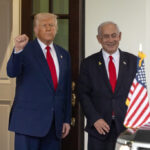
Israeli Prime Minister Benjamin Netanyahu is scheduled to meet Trump in Washington on Tuesday.
The two leaders last met in February, shortly before the United States and Israel launched the war against Iran. The campaign killed senior Iranian officials, including Supreme Leader Ayatollah Ali Khamenei.
Hezbollah began firing from Lebanon toward Israel two days after the war started. Israel responded with airstrikes and a ground invasion.
The United States has since supported direct negotiations between Lebanon and Israel aimed at reducing violence on that front and establishing a process to disarm Hezbollah.
Netanyahu’s meeting with Trump will occur as mediators attempt to preserve the pause and determine whether the United States and Iran can return to a formal ceasefire.



You must Register or Login to post a comment.