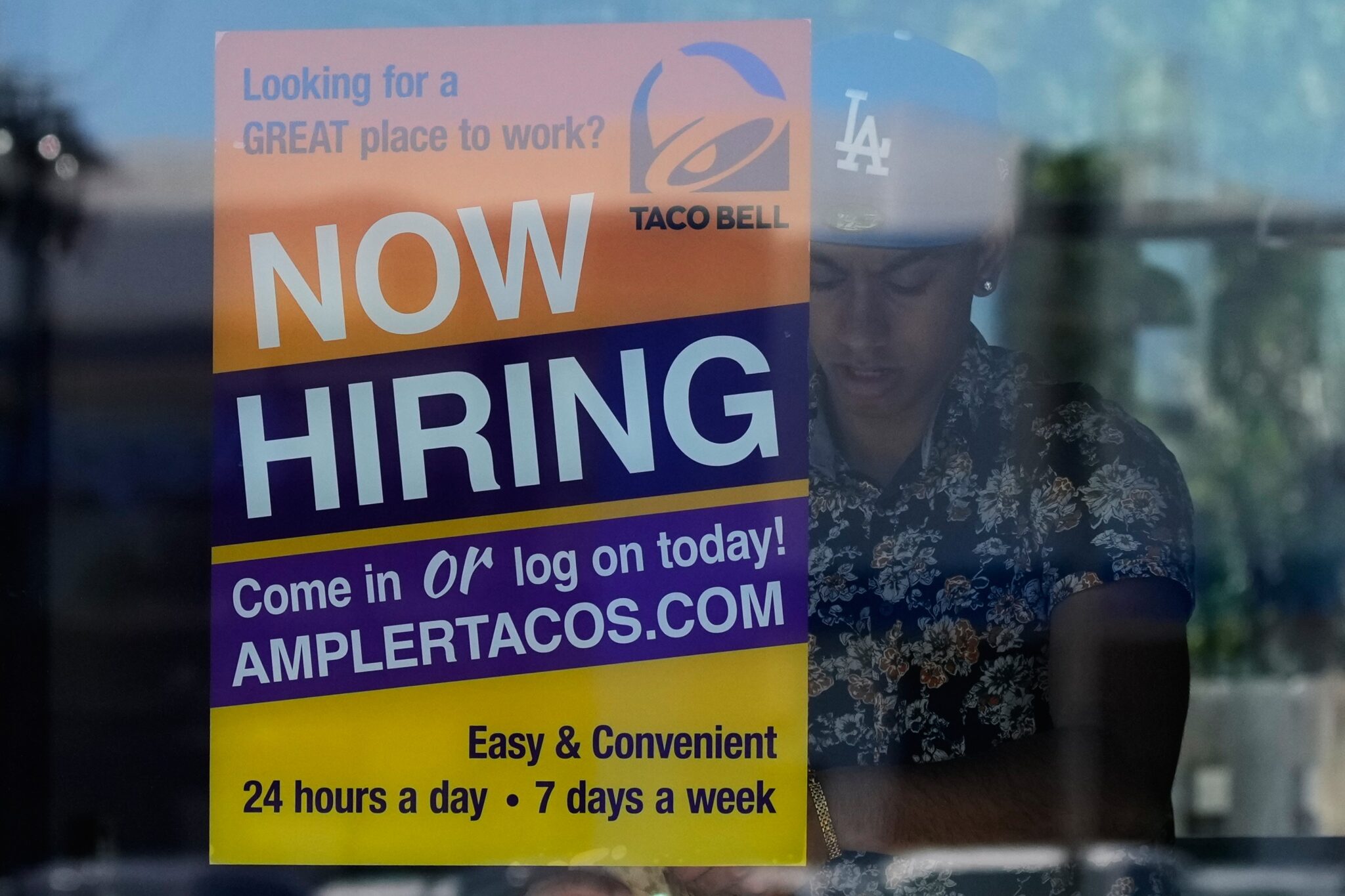
US Jobless Claims Rise to 229,000 but Labor Market Remains Strong/ Newslooks/ WASHINGTON/ J. Mansaour/ Morning Edition/ Applications for U.S. unemployment benefits rose slightly last week but remained at historically healthy levels. The labor market continues to show resilience despite inflation pressures and economic uncertainty linked to the Iran war. Strong hiring, low unemployment, and rising job openings suggest employers are still actively seeking workers.
US Jobless Claims Quick Looks
- Initial unemployment claims rose by 4,000 to 229,000.
- Claims reached the highest level since early February.
- Weekly filings remain historically low.
- Economists had expected 216,000 new claims.
- The unemployment rate remains at 4.3%.
- Employers added 172,000 jobs in May.
- Job openings increased to 7.6 million in April.
- Inflation climbed to 4.2% in May.
- Federal Reserve expected to hold rates steady next week.
- Businesses face higher costs from elevated energy prices.
Deep Look
The number of Americans filing for unemployment benefits increased modestly last week, but the broader labor market continues to demonstrate resilience despite mounting economic pressures tied to rising inflation and geopolitical tensions in the Middle East.
According to the Labor Department, initial applications for unemployment aid rose by 4,000 to a seasonally adjusted 229,000 for the week ending June 6. While that marks the highest level since early February, economists generally view the figure as consistent with a healthy labor market.
The latest reading came in above expectations. Analysts surveyed by FactSet had forecast approximately 216,000 new claims.
Weekly unemployment filings are closely watched because they provide one of the most timely indicators of layoffs and labor market conditions across the country.
Labor Market Remains Surprisingly Strong
Despite concerns that the ongoing Iran conflict could weaken economic activity, hiring has strengthened in recent months.
Employers added 172,000 jobs in May, a figure that exceeded many economists’ expectations and helped reinforce confidence in the labor market.
Since the Iran war began in late February, the economy has averaged roughly 188,000 new jobs per month. That represents the strongest three-month hiring pace since early 2024.
At the same time, the national unemployment rate remains historically low at 4.3%.
The combination of steady hiring and low unemployment suggests that employers remain confident enough to continue adding workers even as inflation and energy costs rise.
Job Openings Continue to Increase
Another encouraging sign for the labor market is the increase in available positions.
The government recently reported that employers posted 7.6 million job openings in April, up significantly from 6.9 million in March and the highest level since May 2024.
The rise in vacancies indicates that many businesses are still actively searching for workers despite economic uncertainty.
A strong level of job openings often serves as a positive indicator because it reflects employer confidence and continued demand for labor.
Inflation and Energy Prices Create New Challenges
While employment data remain encouraging, inflation continues to create challenges for both households and businesses.
Consumer inflation rose to 4.2% in May, reaching its highest level in three years.
Much of the increase has been linked to rising energy costs following disruptions in global oil markets caused by the closure of the Strait of Hormuz.
Although gasoline prices have retreated somewhat in recent weeks, fuel costs remain elevated compared with earlier this year.
Higher energy prices can impact hiring decisions because they increase transportation, manufacturing and operating expenses for businesses while reducing consumer purchasing power.
When households spend more on necessities such as gasoline and utilities, they often reduce discretionary spending elsewhere, creating additional pressure on employers.
Federal Reserve Faces Difficult Decisions
The inflation surge places the Federal Reserve in a challenging position as policymakers prepare for their next meeting.
Most economists expect the central bank to leave interest rates unchanged when officials gather next week.
The meeting will be the first under new Federal Reserve Chair Kevin Warsh, who recently succeeded Jerome Powell after Powell completed eight years leading the central bank.
However, many analysts believe the Fed may eventually be forced to raise interest rates later this year if inflation remains elevated.
Higher interest rates can help slow inflation by reducing borrowing and spending, but they also increase costs for businesses and consumers.
That can discourage hiring and investment, creating a delicate balancing act for policymakers.
Artificial Intelligence Adds Another Layer of Uncertainty
Beyond inflation and geopolitical risks, businesses continue to evaluate the impact of artificial intelligence on future workforce needs.
Rapid advancements in AI have generated optimism about productivity gains and economic growth. However, concerns persist that automation could replace certain types of jobs or reduce hiring in some industries.
Many companies are increasing investments in AI technologies while simultaneously reviewing staffing needs.
As a result, economists continue to monitor whether AI-related changes will significantly alter employment trends in coming years.
Major Employers Continue Workforce Reductions
Even though the broader labor market remains healthy, some large corporations have announced workforce reductions.
Among the companies that have recently cut jobs are:
- Verizon
- UPS
- Amazon
- Disney
- Starbucks
- Walmart
Many of these reductions are tied to restructuring efforts, cost controls, automation initiatives or shifting business priorities rather than broad economic weakness.
Still, ongoing layoffs among major employers highlight the uneven nature of the current labor market.
Claims Remain Within Normal Range
Historically, weekly unemployment claims between 200,000 and 250,000 are generally associated with a stable labor market.
Since the U.S. economy emerged from the pandemic recession, jobless claims have mostly remained within that range.
Although hiring slowed significantly during 2025 due to higher interest rates, federal workforce reductions and trade policy uncertainty, the labor market has shown signs of stabilization in recent months.
The Labor Department also reported that the four-week moving average of claims, which smooths out short-term fluctuations, rose by 4,250 to 219,000.
Meanwhile, continuing claims — representing Americans already receiving unemployment benefits — increased by 24,000 to 1.8 million for the week ending May 30.
That figure came in slightly above analyst forecasts and may indicate that some unemployed workers are taking longer to find new jobs.
Outlook Remains Cautiously Positive
While economic headwinds remain significant, current labor market data continue to point toward resilience rather than deterioration.
Strong hiring gains, rising job openings and relatively low unemployment claims suggest employers remain willing to hire despite inflation concerns and uncertainty surrounding global events.
However, rising energy prices, persistent inflation and potential future interest rate increases could test that resilience during the second half of the year.
For now, the U.S. labor market remains one of the strongest parts of the economy, providing an important buffer against broader economic pressures.