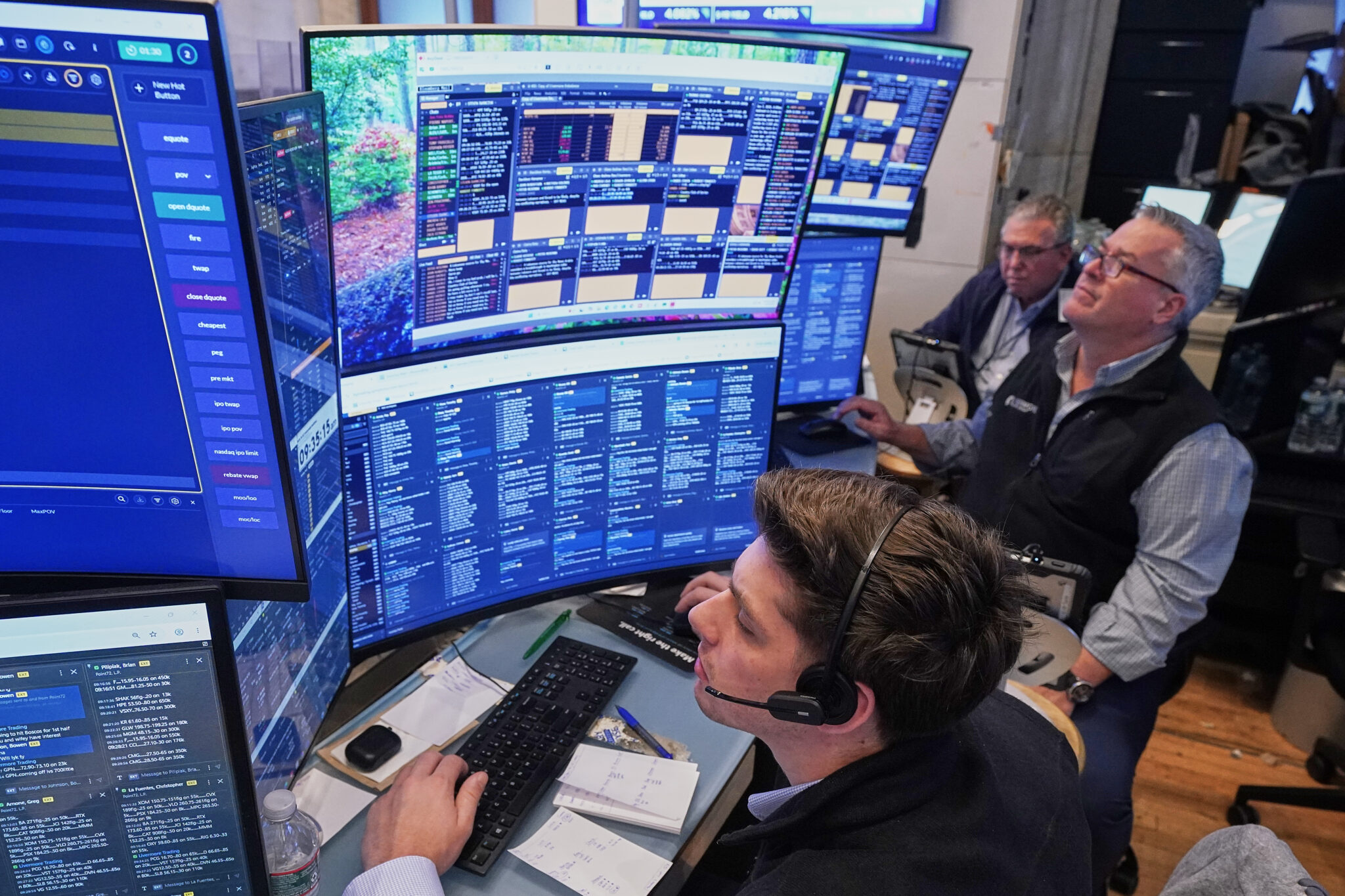
Wall Street Rallies as AI Stocks Rebound and Oil Prices Retreat/ Newslooks/ WASHINGTON/ J. Mansour/ Morning Edition/ U.S. stocks moved higher Thursday as artificial intelligence-related shares rebounded from recent volatility. Lower oil prices and easing Treasury yields helped support investor sentiment despite growing concerns about inflation and the Iran conflict. Technology and semiconductor stocks led gains, offsetting weakness in several major corporate names.
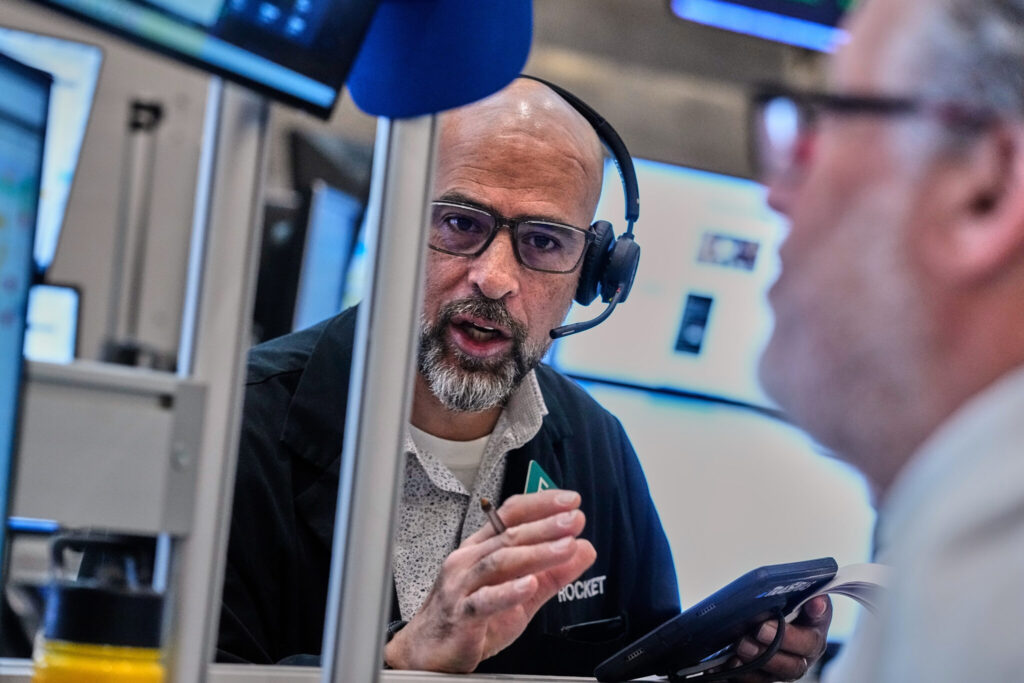
Wall Street Rally Quick Looks
- S&P 500 gained 0.6% in morning trading.
- Dow Jones Industrial Average rose 373 points.
- Nasdaq Composite advanced 0.8%.
- AI and semiconductor stocks led market gains.
- Intel surged 10.4%.
- Applied Materials climbed 8%.
- Marvell Technology rose 4.3%.
- Oracle dropped 10.3% despite strong earnings.
- Oil prices declined despite escalating tensions with Iran.
- Treasury yields eased as investors assessed inflation risks.
Deep Look
U.S. stocks rebounded Thursday as investors returned to artificial intelligence-related companies while lower oil prices and easing Treasury yields provided additional support to financial markets.
The gains followed a turbulent week that has seen major technology shares swing sharply between large advances and steep declines as investors reassess valuations tied to the ongoing artificial intelligence boom.
By mid-morning, the S&P 500 had gained 0.6%, while the Dow Jones Industrial Average rose 373 points, or 0.7%. The Nasdaq Composite added 0.8%, led by strength in technology and semiconductor stocks.
The rally helped recover part of the market’s recent losses after consecutive declines earlier in the week.
AI Stocks Resume Their Volatile Climb
Artificial intelligence companies once again became the primary driver of market activity.
Investors have spent the past several weeks debating whether the explosive gains in AI-related stocks have become excessive, leading to unusually sharp price swings across the technology sector.
Among Thursday’s notable movers was Marvell Technology, which rose 4.3%.
The stock has experienced dramatic volatility recently. After posting one of the strongest gains in its history, Marvell subsequently endured several sharp declines before bouncing back again.
Much of the enthusiasm surrounding the company intensified after Nvidia Chief Executive Jensen Huang suggested Marvell could become “the next trillion-dollar company.”
Even after recent volatility, Marvell’s market value remains above $220 billion.
The fluctuations illustrate how investor sentiment toward AI remains powerful but increasingly sensitive to valuation concerns.
Semiconductor Stocks Lead Market Gains
Chipmakers were among the strongest performers on Wall Street.
Intel surged 10.4%, making it one of the biggest gainers in the S&P 500.
Applied Materials climbed 8%, benefiting from continued optimism surrounding semiconductor manufacturing demand.
Investors continue to view chipmakers as central beneficiaries of growing AI infrastructure spending as companies race to build data centers and advanced computing systems capable of supporting artificial intelligence applications.
The sector remains one of the market’s most influential drivers despite concerns about elevated valuations.
Oracle Falls Despite Strong Results
Not all technology companies participated in the rally.
Oracle shares fell 10.3% after the company announced plans to raise an additional $40 billion through debt and stock offerings.
The move comes after Oracle raised $48 billion during the previous fiscal year to fund artificial intelligence investments and infrastructure projects.
While the company reported quarterly profits that exceeded analyst expectations, investors reacted negatively to the scale of planned spending.
Oracle’s decline highlights a growing theme in financial markets: investors increasingly want proof that massive AI expenditures will eventually generate significant returns.
Many companies have announced enormous investments in AI technology, but questions remain regarding the timeline for profitability.
Oil Prices Retreat Despite Escalating Tensions
Energy markets provided additional support for stocks.
Oil prices moved lower even as geopolitical tensions involving Iran continued to intensify.
President Donald Trump renewed threats of major military action against Iran and suggested the United States could seek greater control over Iranian energy infrastructure.
Nevertheless, investors appeared encouraged by ongoing diplomatic discussions aimed at extending the fragile ceasefire and preventing broader conflict.
Brent crude oil, the international benchmark, declined 1.1% to $92.08 per barrel.
U.S. benchmark crude fell 0.6% to $89.52 per barrel.
Although energy prices remain elevated compared with pre-war levels, the decline helped ease concerns about additional inflationary pressure.
Inflation Remains a Key Concern
Despite the market’s positive performance, inflation continues to weigh heavily on investor sentiment.
A report released Thursday showed that wholesale inflation accelerated in May as energy costs surged.
The Producer Price Index rose more than economists expected, reinforcing concerns that elevated oil prices are filtering through the broader economy.
The data followed Wednesday’s consumer inflation report, which showed annual inflation climbing to 4.2%, the highest level in three years.
Higher inflation complicates the outlook for central banks and raises the possibility of additional interest rate increases later this year.
Interest Rates Remain in Focus
The European Central Bank became the first major central bank to respond directly to rising inflation pressures by increasing interest rates.
Investors are now closely watching the Federal Reserve, which meets next week under newly appointed Chair Kevin Warsh.
Most analysts expect policymakers to leave interest rates unchanged for now.
However, market participants increasingly believe the next move from the Fed could be a rate increase rather than a rate cut.
According to CME Group data, traders continue to price in a meaningful possibility of at least one additional rate hike before the end of the year.
Higher interest rates generally help control inflation but can also slow economic growth and reduce corporate earnings.
Technology companies, particularly those with high valuations, are often among the most sensitive to rising borrowing costs.
Treasury Yields Ease
Bond markets offered some relief for investors Thursday.
The yield on the benchmark 10-year Treasury note slipped to 4.52% from 4.55% late Wednesday.
Lower Treasury yields reduce pressure on stocks because they make future corporate earnings more attractive relative to safer fixed-income investments.
The modest decline helped support growth-oriented sectors, including technology and artificial intelligence companies.
Global Markets Mixed
International markets delivered mixed performances.
European indexes posted modest gains, benefiting from the improving tone on Wall Street despite concerns about inflation and energy prices.
London’s FTSE 100 advanced 1%, one of the strongest gains among major global indexes.
In Asia, results were mixed.
Hong Kong’s Hang Seng Index fell 0.7%, while other regional markets fluctuated as investors continued monitoring developments in both the global economy and the Middle East.
Investors Balance Opportunity and Risk
Thursday’s market rebound demonstrates the delicate balance investors currently face.
On one hand, enthusiasm surrounding artificial intelligence continues to generate strong interest in technology and semiconductor stocks.
On the other hand, rising inflation, elevated energy prices and geopolitical uncertainty create significant risks.
For now, lower oil prices and easing bond yields have provided enough support to lift stocks higher.
However, with inflation remaining elevated and central banks potentially moving toward tighter monetary policy, market volatility is likely to remain a defining feature of the investment landscape in the months ahead.