

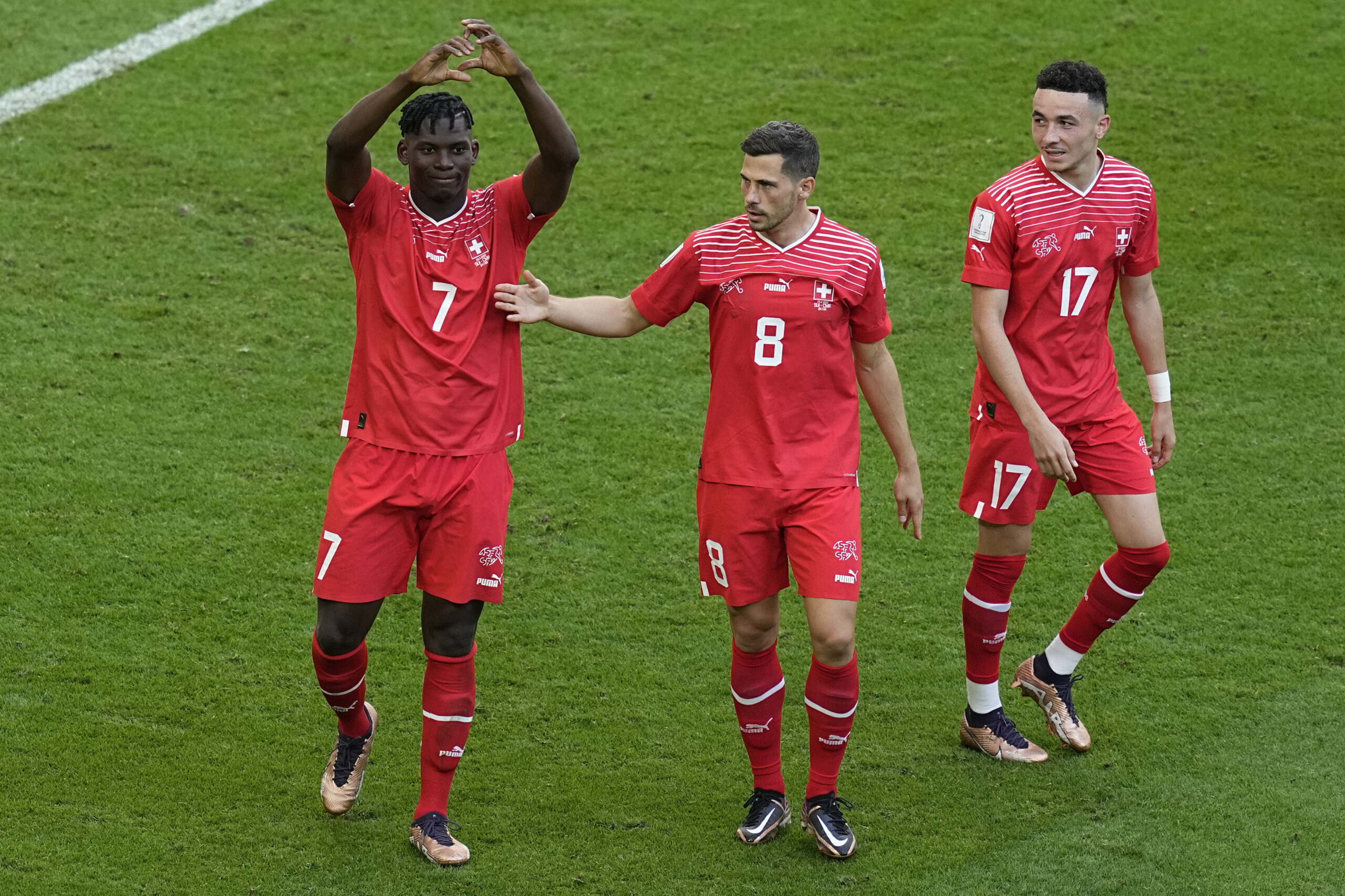
Rules Panel: Sending Swiss Player off in World Cup Quarterfinals against Argentina Was Wrong/ Newslooks/ WASHINGTON/ J. Mansour/ Soccer’s rule-making body confirmed that VAR protocol was incorrectly used when Switzerland’s Breel Embolo received a second yellow card against Argentina. The 72nd-minute dismissal changed the World Cup quarterfinal shortly after Switzerland equalized, with Argentina eventually winning 3-1 in extra time. IFAB said mistaken identity reviews can identify the player responsible for an offense but cannot be used to reconsider or change the offense itself.

Quick Look
- Embolo was sent off in the 72nd minute.
- The score was tied 1-1 when he received his second yellow card.
- Argentina won 3-1 after extra time.
- Embolo was penalized for allegedly simulating a foul.
- Leandro Paredes was initially shown a yellow card.
- VAR officials intervened under the mistaken identity provision.
- IFAB said that protocol was applied incorrectly.
- The mistaken identity rule cannot currently be used to change the underlying offense.
- IFAB may revise the protocol for future competitions.
- UEFA welcomed the clarification.
- UEFA also called for shorter reviews and a lighter VAR intervention threshold.
Full Rewritten Story
IFAB Confirms Error in Embolo Sending-Off
GENEVA — Soccer’s rule-making body clarified its referee guidance Monday, confirming that Switzerland forward Breel Embolo should not have been sent off during the World Cup quarterfinal against Argentina through the VAR procedure that was used.
Embolo received a second yellow card in the 72nd minute after video officials reviewed an incident involving Argentina midfielder Leandro Paredes.
Switzerland had recently equalized to make the score 1-1 when the decision reduced the team to 10 players.
Argentina went on to win 3-1 after extra time.
VAR Intervention Changed the Match
Embolo fell after being challenged by Paredes.
The referee initially showed Paredes a yellow card, apparently determining that the Argentine midfielder had committed a foul.
VAR officials then alerted the referee that Paredes had not committed the offense.
Instead, Embolo was booked for simulation. Because it was his second yellow card, he was sent off.
The red card changed the momentum of the quarterfinal and generated strong complaints from Switzerland.
“Mistaken Identity” Rule Was Misapplied
The FIFA-backed International Football Association Board, known as IFAB, said the mistaken identity section of the VAR protocol was not eligible for use in that type of incident under the rules governing the World Cup.
Mistaken identity reviews are intended to correct situations in which a referee penalizes an offense but shows the resulting card to the wrong player.
The rule permits officials to identify the person who actually committed the penalized offense.
It does not currently allow VAR to reconsider whether the original offense occurred or replace it with a different violation.
IFAB Explains Review Limitation
IFAB said a card “can only be reviewed to identify the player who committed the offense that was penalized; the offense itself cannot be reviewed/changed.”
In the Switzerland-Argentina incident, VAR did more than identify a different player.
It effectively changed the original decision from a foul by Paredes to simulation by Embolo.
Under the current protocol, that change was not permitted through the mistaken identity provision.
Future Competitions Could Use Expanded Rule
IFAB has been reviewing the wider VAR protocol since March.
The panel acknowledged that incidents such as Embolo’s dismissal are part of that review and suggested that an expanded interpretation could be approved for future tournaments.
“The use of the mistaken identity clause to deal with simulation during the FIFA World Cup 2026 was well received,” IFAB said.
However, the organization stressed that any new application must wait until the review process is completed.
“However, it may not be used as such until that review is concluded,” IFAB said.
The clarification means officials cannot continue applying the provision in the same manner merely because the outcome was considered desirable.
Switzerland Coach Condemned Decision
Switzerland coach Murat Yakin strongly criticized the dismissal after the quarterfinal in Kansas City.
“The referee made the wrong decision,” Yakin said.
“I know they will protect their referee but this rule destroyed our game today, and it’s very painful, and to be eliminated in that way hurts a lot.”
The ruling does not change the match result or restore Switzerland to the tournament.
It does, however, confirm that the process used to send Embolo off did not comply with the existing VAR protocol.
Favoritism Complaints Follow Argentina
Argentina’s victory fueled accusations that refereeing decisions had favored Lionel Messi’s team during the World Cup.
Egypt, which faced Argentina in the previous round, was among those raising complaints.
IFAB’s clarification addressed the technical application of the mistaken identity protocol rather than allegations of favoritism.
No evidence was presented in the supplied report establishing that referees intentionally favored Argentina.
IFAB Writes Soccer’s Rules
IFAB is responsible for writing and updating the Laws of the Game.
The organization includes FIFA-appointed representatives and officials from the four British soccer federations: England, Scotland, Wales and Northern Ireland.
Its annual meeting is normally held in February or March.
Changes approved at those meetings take effect for upcoming seasons or major international competitions.
The panel also provides interpretations and clarifications when incidents expose uncertainty about how existing rules should be applied.
UEFA Welcomes Explanation
European soccer’s governing body described IFAB’s statement as “welcome explanations.”
UEFA hosted referee leaders from its 55 member federations to establish decision-making standards for the upcoming season.
The organization emphasized that video officials should intervene only when a decision is clearly wrong or when the referee misses an obvious incident.
“VAR is not meant to re-referee the game,” UEFA said.
The statement reflected concern that excessive intervention can undermine the authority of the on-field referee and disrupt matches.
UEFA Calls for Shorter Reviews
UEFA also wants video reviews completed more quickly.
“Lengthy, microscoping reviews are often a symptom revealing that the decision on the field was not clearly and obviously incorrect, and should therefore be limited,” the organization said.
UEFA set the threshold for intervention at situations “when a referee decision is blatantly incorrect or when the referee has missed a clear incident.”
The guidance is intended to produce fewer interruptions and greater consistency.
World Cup VAR Earned Some Praise
FIFA’s overall use of VAR at the World Cup received favorable assessments after a club season marked by frustration with lengthy reviews, particularly in England’s Premier League.
The Embolo incident nevertheless demonstrated that even technology-supported decisions can be flawed when officials apply the underlying protocol incorrectly.
IFAB’s clarification is intended to prevent the same interpretation from being used before the protocol is formally amended.
Referees Told to Fight Time-Wasting
UEFA also supported the stricter time-wasting rules approved by IFAB in March and enforced by FIFA during the World Cup.
“Referees will be instructed to strictly and consistently enforce the new rules,” UEFA said.
The measures are designed to increase active playing time and discourage teams from delaying restarts.
Guidance Will Affect European Competitions
UEFA will apply its updated refereeing principles across men’s and women’s club and international competitions.
Those events include the Champions League, men’s Nations League, qualifying for the 2028 European Championship and qualification playoffs for the 2027 Women’s World Cup.
The governing body hopes a lighter and more consistent use of VAR will reduce controversy while preserving the system’s ability to correct major errors.
For Switzerland, the clarification arrives too late to affect its World Cup elimination. For future competitions, however, the Embolo incident could help reshape the rules governing video intervention.






You must Register or Login to post a comment.